Breaking the Groundhog Day Loop: How Prompt Caching is Reshaping AI Agent Economics on Amazon Bedrock

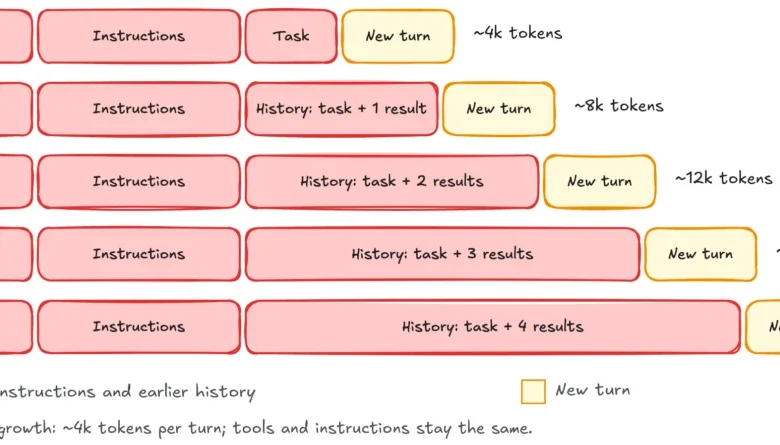
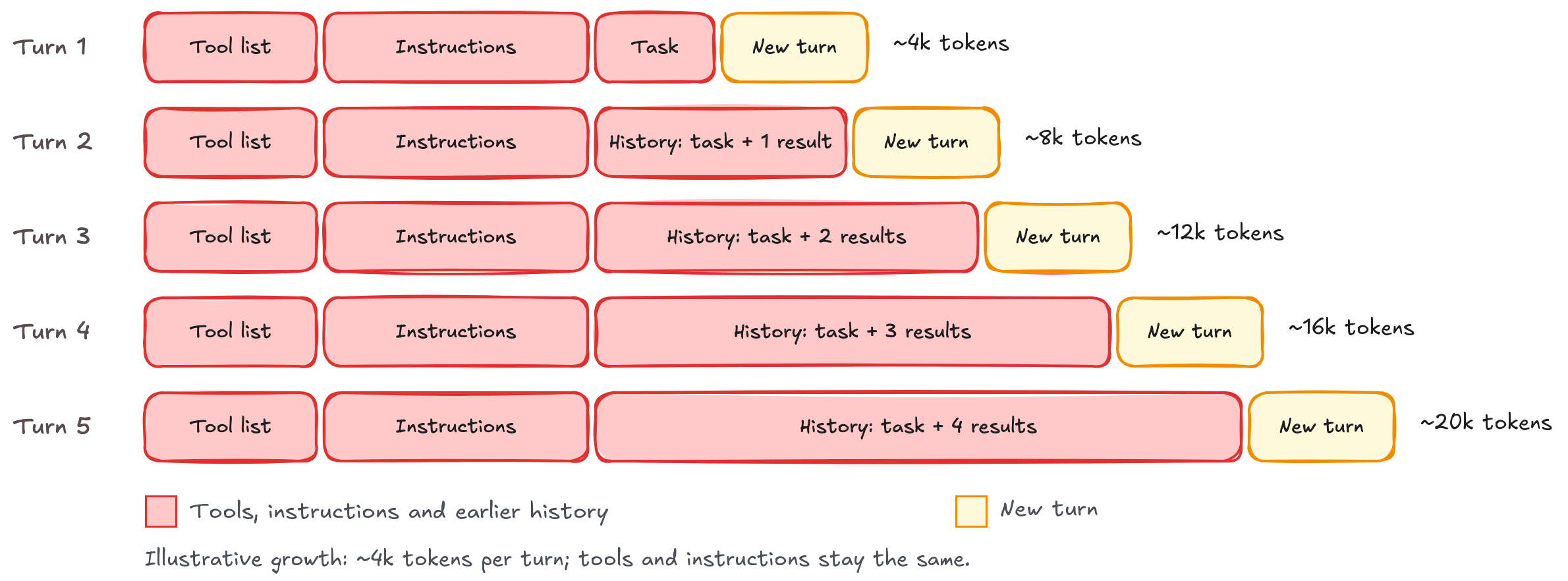
In the 1993 classic film Groundhog Day, Bill Murray’s meteorologist character Phil Connors finds himself trapped in a temporal anomaly, waking up to the exact same radio alarm and small-town setting every single morning. Nothing he accomplishes or learns carries over permanently unless he manually reconstructs his actions from absolute scratch. For artificial intelligence agents operating in enterprise environments today, this cinematic curse is a daily engineering reality. Every time an autonomous agent takes a processing step—whether calling an external tool, reading execution results, or deciding its next operational move—it is forced to resend its entire historical context to the underlying large language model (LLM). This repetitious data ingestion includes tool definitions, core system instructions, every previous tool call, and all preceding outputs. Because foundational LLMs operate fundamentally as next-token predictors devoid of persistent internal memory between individual API requests, they must re-read their entire operational life story continuously. By the twentieth turn of a complex software development or data analysis session, the model is paying the token computational tax for turns one through nineteen over and over again.
This architectural limitation has long created a financial bottleneck for organizations deploying multi-turn AI agents at scale. However, the introduction of advanced prompt caching mechanisms on platforms like Amazon Bedrock is systematically breaking this costly cycle. By caching static inputs and establishing intelligent boundaries for growing conversation histories, enterprise developers can dramatically cut input costs, accelerate response latency, and maintain operational consistency. This comprehensive operational shift is redefining how generative AI workloads are priced, managed, and scaled across cloud architectures.
The Architecture of AI Amnesia and the Economics of Repetition
To understand the financial implications of unoptimized agent workflows, one must examine the precise telemetry of a standard LLM invocation. When an agent is deployed without caching protocols, its initial request contains foundational parameters, developer instructions, and an extensive catalog of accessible software tools. On turn one, the model processes these inputs and formulates its initial response. On turn two, however, the application layer must bundle the original developer prompt, the initial tool configurations, the first user request, the model’s prior output, and the newly generated tool execution results into a single payload.
As the agent progresses through a multi-step workflow involving database queries, API lookups, and validation checks, the input token count swells exponentially. Industry benchmarks indicate that in extended coding or customer support sessions, input tokens can easily swell into tens of thousands per turn. Without optimization, organizations bear the full financial burden of these redundant inputs on every single API call. In financial terms, this architectural inefficiency translates to bloated operational expenditures, slower response times, and limited scalability for autonomous systems intended to operate continuously in production environments.
The Mechanics of Prompt Caching: Prefill and Key-Value Vectors
Prompt caching alters this economic equation by intercepting the prompt processing pipeline before token generation begins. When an LLM evaluates a prompt, it executes a computational phase known as prefill. During prefill, the model processes every input token simultaneously, constructing its internal key and value (KV) vectors. These vectors constitute the model’s working state, establishing the foundational neural context required before the first output token can be written.
Prompt caching captures and stores this working state—encompassing system instructions, tool definitions, contextual content, and historical interactions—within the service infrastructure. When a subsequent API request initiates with an identical input token prefix, the prompt caching service bypasses the resource-intensive prefill phase entirely, loading the saved KV state directly from memory. The model then processes only the newly appended delta of information introduced in the latest payload.
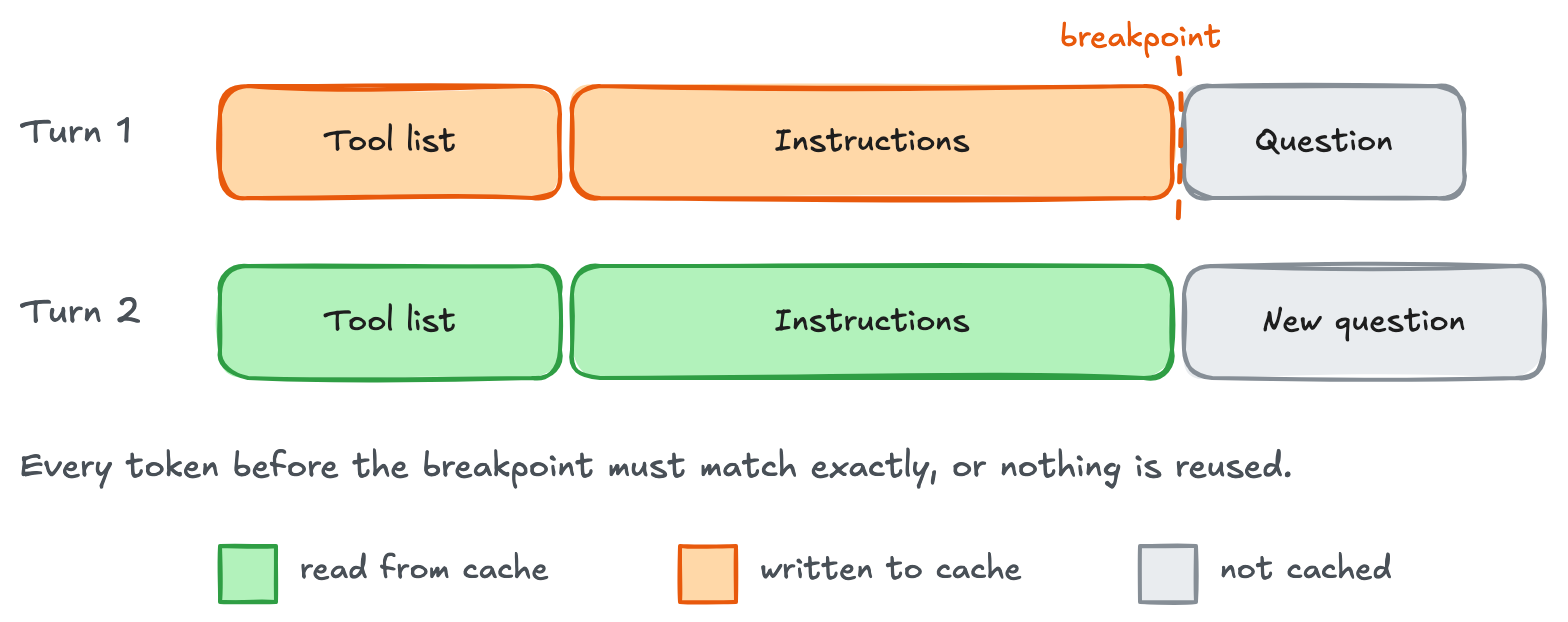
Cloud infrastructure providers generally offer two distinct approaches to this caching architecture: implicit and explicit. Implicit caching allows the cloud service—such as Amazon Bedrock—to automatically determine optimal breakpoints where reusable prefixes end as a conversation naturally expands. Explicit caching, conversely, empowers developers to programmatically designate precise endpoints using dedicated markers like prompt_cache_breakpoint. Industry specialists recommend combining both methodologies to establish a reliable, cached baseline while letting the underlying infrastructure manage the dynamic expansion of ongoing dialogue histories.
Cost Reductions and Empirical Performance Data
Recent performance evaluations conducted on advanced architectures, such as deployments utilizing GPT-6 Astra models on Amazon Bedrock, illustrate the profound financial impact of implementing prompt caching. In a standardized six-turn agent workload characterized by an 8,000-token startup prefix and subsequent turns adding approximately 2,000 tokens each, traditional unoptimized execution imposed steep cumulative costs. Implementing static, one-time caching for the static prompt components reduced total session expenditure significantly, while deploying rolling explicit breakpoints achieved input cost reductions of approximately 61 to 64 percent compared to uncached baselines.
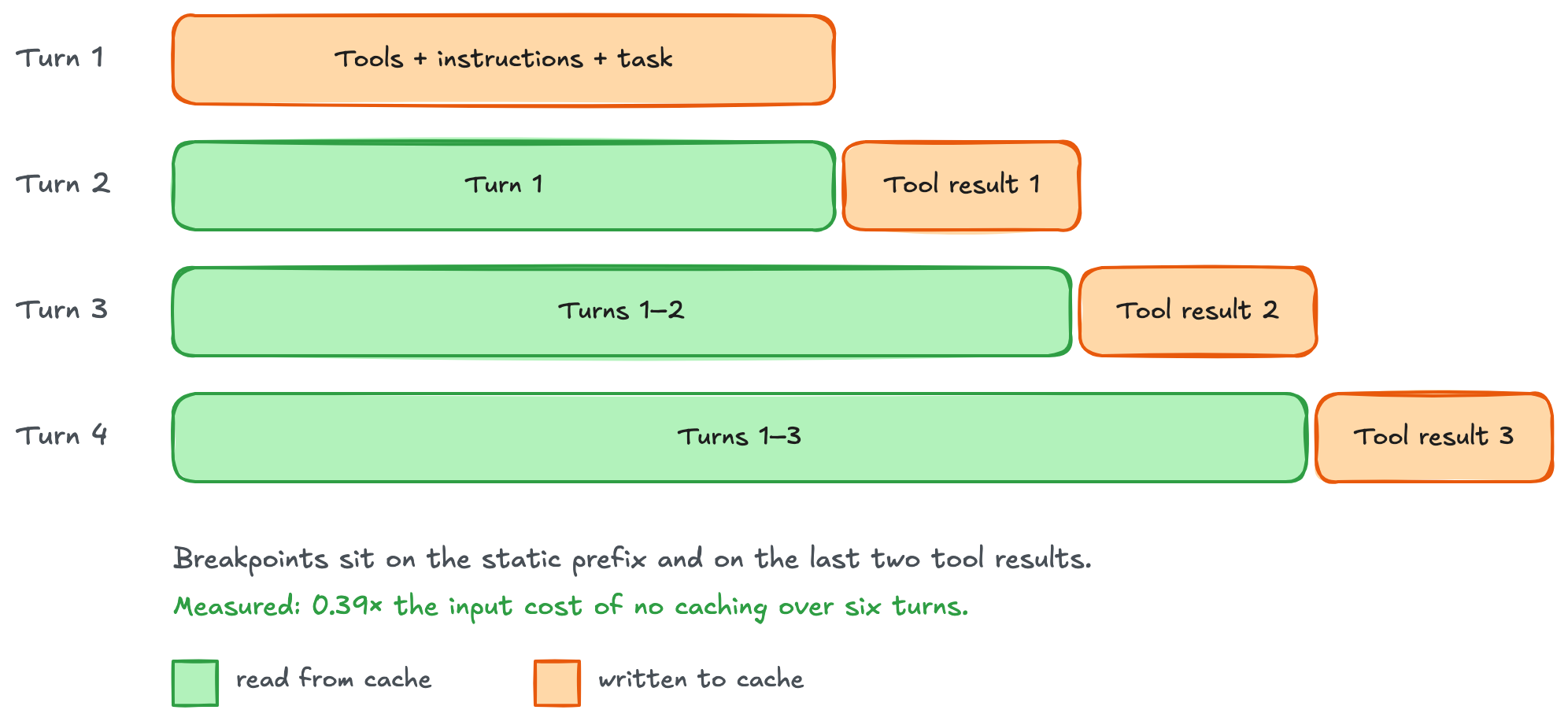
For enterprise financial officers and cloud architects, these efficiency gains directly translate to predictable budgeting for large-scale AI deployments. By ensuring that static assets—such as regulatory compliance guidelines, extensive software libraries, and complex tool definitions—are written to cache only once and subsequently read at a fraction of standard input pricing, organizations can scale their agentic operations without linear cost escalation. Furthermore, because cached tokens require minimal prefill computation, end-to-end latency drops noticeably, ensuring that autonomous agents remain highly responsive during time-sensitive operations.
Managing Tool Evolution and Dynamic Capabilities
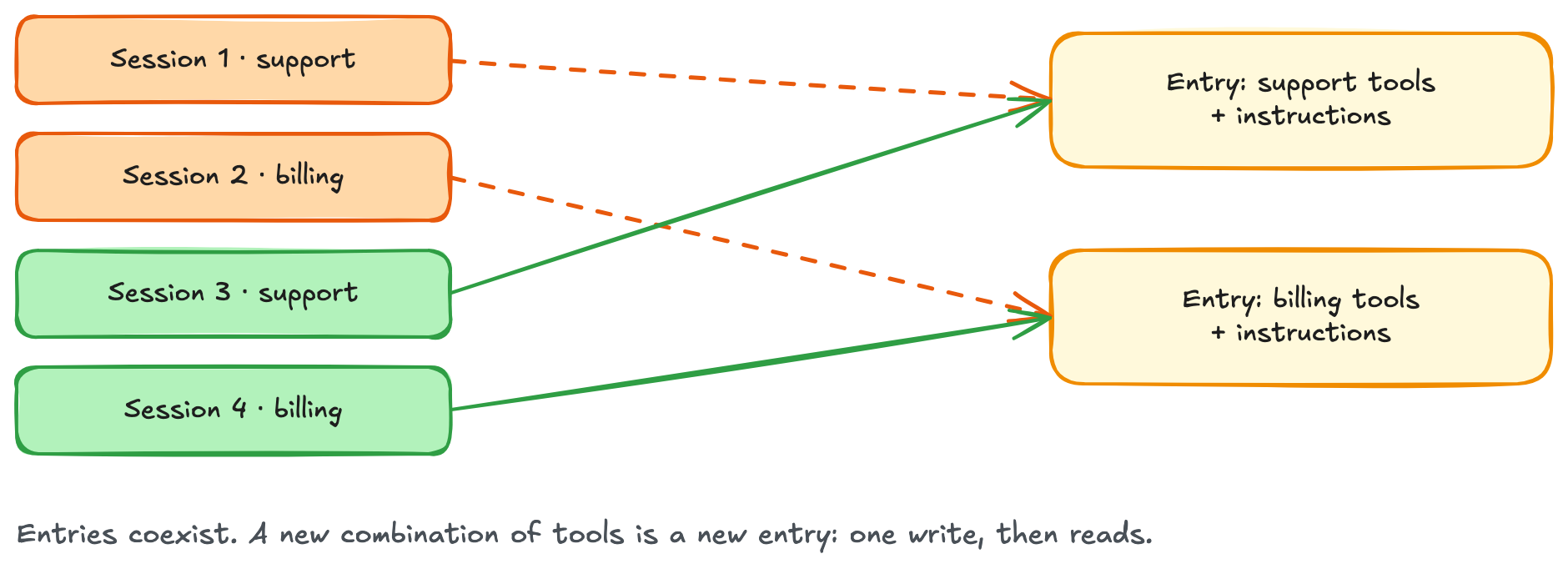
A common engineering challenge in agentic workflows is the management of dynamic tool catalogs. Enterprise agents frequently need to acquire new capabilities or access specialized functions mid-session based on user requirements. Historically, modifying an agent’s tool definitions—such as adding, removing, or reordering functions—would instantly invalidate the cached prefix, triggering a costly cache miss and forcing the system to re-compute the entire prefill state.
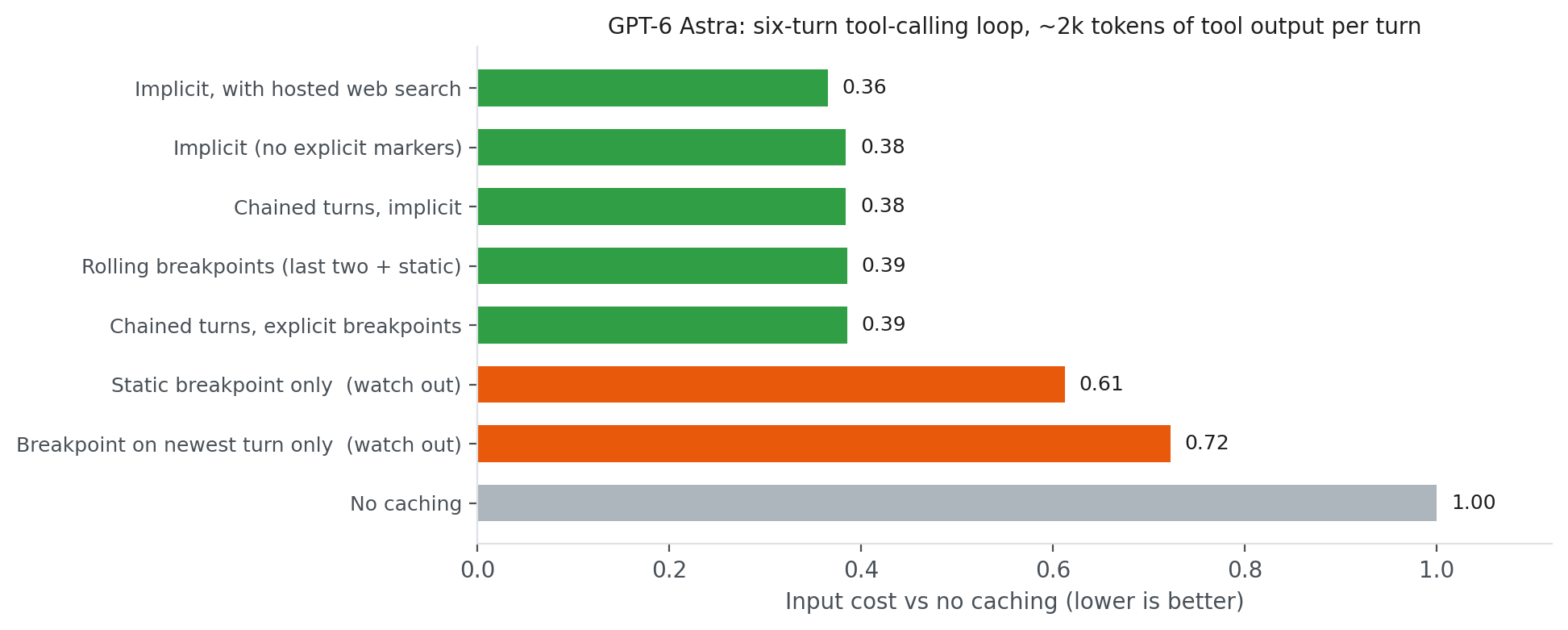
To mitigate this limitation, modern runtime environments utilize native extensions like additional_tools for advanced models on Amazon Bedrock. This architecture allows developers to append new tool definitions to an active session without disrupting the integrity of the initial, cached prefix. For instance, if an agent executing a customer support workflow suddenly requires a get_due_date function to resolve a specialized query, the application can register the new tool dynamically while keeping the foundational TOOLS catalog untouched. The underlying caching service reads the pre-existing cached prefix seamlessly and writes only a minor extension for the newly introduced function, preserving overall cost efficiency.
Similarly, developers can manage tool accessibility across different stages of a workflow using strict parameter constraints like allowed_tools. By keeping the global tool catalog stable and utilizing runtime restrictions to govern which functions are active during specific conversational turns, organizations ensure byte-for-byte consistency across prompts, thereby maximizing cache hit rates.
Scaling Subagents and Side Calls in Enterprise Frameworks
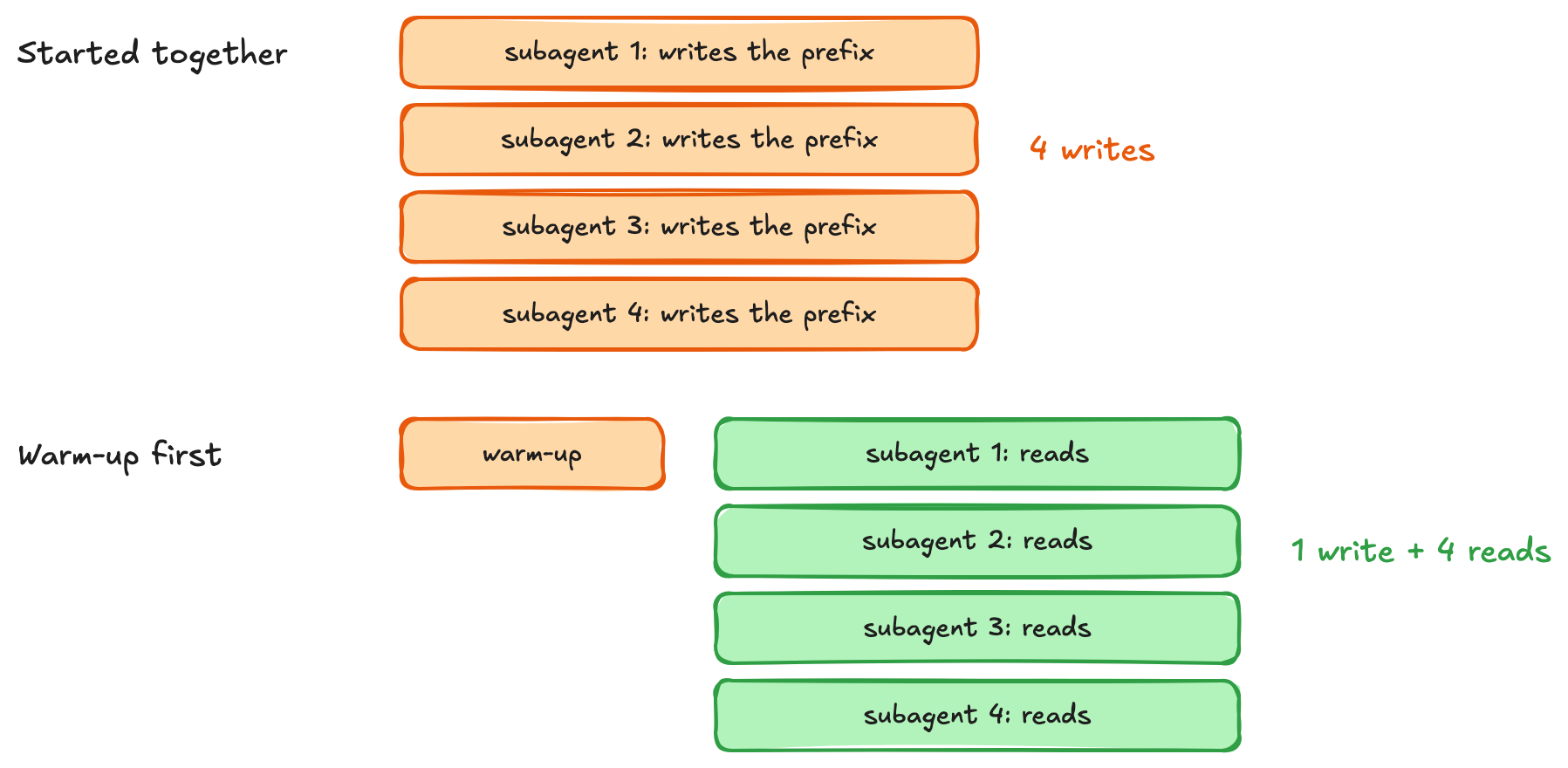
Complex enterprise AI applications frequently rely on multi-agent architectures, where a primary orchestrator agent delegates specialized sub-tasks to subordinate helper agents. Without proper optimization, spinning up multiple subagents can introduce massive computational redundancy, as every helper agent redundantly ingests the identical background instructions and tool definitions.
To solve this, engineering teams employ a "warm once, then fan out" design pattern. The application issues a preliminary warm-up request to populate the cache with the shared system prompt and tool definitions. Once the caching service confirms that the prefix is active—verified via usage telemetry tracking cache_write_tokens and cached_tokens—the system launches parallel worker threads using asynchronous execution frameworks. Each subagent inherits the identical shared prefix and model parameters, appending only its specific task-dependent input at the terminal boundary.
This approach extends naturally to side calls, such as automated summarization tasks or quality-assurance auditing. By performing a deep copy of a completed conversation history and routing it to a secondary helper agent alongside specialized instructions, organizations can process extensive dialogue transcripts efficiently. The helper leverages the pre-cached historical context, drastically lowering the computational overhead of administrative and analytical oversight tasks.
Monitoring, Governance, and Operational Best Practices
Successfully operating prompt-cached AI agents in production requires robust observability and adherence to strict governance frameworks. Cloud administrators utilize dedicated metrics—such as CacheReadInputTokenCount and CacheWriteInputTokenCount within Amazon CloudWatch—to track cache utilization rates in real time. Organizations can further analyze cost distribution by filtering AWS Cost Explorer data by usage type, isolating cache reads, cache writes, and uncached inputs to ensure optimal resource allocation.
However, security professionals emphasize that prompt caching introduces specific governance considerations. Because system instructions, proprietary policies, and sensitive tool definitions are retained within the caching layer across multiple sessions, maintaining rigorous access controls and data isolation protocols is paramount. Establishing unique, deterministic cache keys via cryptographic hashing ensures that distinct user sessions or organizational tenants do not inadvertently share or leak contextual data.
Conclusion: Waking Up to Sustainable AI Economics
Just as Phil Connors ultimately escaped his perpetual temporal loop by breaking his repetitive cycles and integrating the knowledge gained across successive days, modern enterprise AI is moving past its own version of operational amnesia. By anchoring static system prompts, implementing intelligent implicit and explicit cache boundaries, and managing dynamic tool additions without invalidating underlying KV states, developers are transforming AI agents from expensive, repetitive novelties into economically viable enterprise tools. As organizations across industries adopt these advanced prompt caching strategies on platforms like Amazon Bedrock, the economic calculus of generative AI is fundamentally shifting, paving the way for scalable, highly responsive, and cost-effective autonomous systems in the modern cloud landscape.