In the rapidly evolving landscape of artificial intelligence development, engineers are increasingly moving beyond simple chat interfaces toward autonomous agents capable of performing complex, multi-step workflows. As these systems move from experimental prototypes to production-grade applications, the fundamental method by which they interact with the digital world—known as the action primitive—has become a critical architectural decision. Developers must navigate the nuanced differences between traditional tool calling and modern code execution, a choice that directly influences system latency, operational costs, and overall decision-making accuracy.
Defining the Action Primitive
An action primitive represents the foundational mechanism that allows a large language model (LLM) to translate a logical decision into a tangible outcome, such as querying a SQL database, invoking a REST API, or manipulating local files. Every major agent framework, including those provided by industry leaders like Anthropic, OpenAI, and LangChain, relies on these primitives to bridge the gap between human language and machine operations.
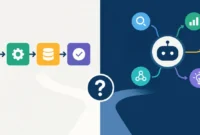
Tool calling, the industry standard for the past several years, operates on a request-response loop. When a model determines that an external action is necessary, it generates a structured output—typically in JSON format—which a host application intercepts. The application then executes the function, captures the result, and feeds that data back into the model’s context window. This process is inherently linear; the model must "see" each individual result before it can formulate the next step in its reasoning chain.
Conversely, code execution represents a significant paradigm shift. Rather than requesting one action at a time, the model is permitted to write a comprehensive script—utilizing Python or TypeScript—to be executed within a secure, sandboxed environment. This environment acts as a buffer. The model provides the script, the sandbox executes it, and only the final, synthesized output is returned to the model. This method minimizes the "chatter" between the model and the application, allowing for more complex operations that would otherwise bloat the model’s context window.
Chronology of Development
The shift toward code execution has been accelerated by the demand for higher-order reasoning. In 2024, the publication of the CodeAct paper by researchers at the University of Massachusetts Amherst and other institutions provided the academic bedrock for this transition. The researchers demonstrated that agents utilizing executable code rather than discrete JSON tool calls achieved a 20% improvement in success rates for complex, multi-step tasks.
By late 2025, major AI providers began integrating these concepts into their commercial offerings. Anthropic’s introduction of "Programmatic Tool Calling" in November 2025 marked a watershed moment. By allowing specific tools to be called from within a sandboxed script via an allowed_callers configuration, providers enabled developers to offload orchestration logic—such as loops, conditional branching, and data aggregation—directly to the execution environment. This effectively moved the intelligence of the agent from the prompt-response cycle into the program logic itself.
The Cost of Context Bloat
The primary driver behind the adoption of code execution is the management of the context window. To illustrate the impact, consider an agent tasked with auditing employee expenses. If an agent is tasked with identifying which of twenty employees exceeded a Q3 travel budget, a standard tool-calling approach would require the model to process every individual line item for every receipt. This could involve over 2,000 line items and roughly 50KB of raw data.
In a standard tool-calling architecture, the model must read all of this data to perform a simple summation. This is not only inefficient in terms of compute and latency but also increases the likelihood of "lost in the middle" phenomena, where the model loses track of intermediate values due to the sheer volume of information. Code execution solves this by allowing the agent to write a script that iterates through the data, performs the calculation, and returns only the final summary to the model. In real-world testing, this transition has resulted in token reductions of up to 98.7% for specific document-processing workflows.
Comparative Analysis: Performance and Accuracy
Empirical data suggests that the benefits of code execution extend well beyond cost reduction. Internal benchmarks conducted by AI labs during the release of advanced tool-use features showed that on complex research tasks, token usage dropped by an average of 37%, while accuracy on the GAIA (General AI Assistants) benchmark increased from 46.5% to 51.2%.
The implications for developers are significant. When an agent is tasked with comparing values or aggregating large datasets, the model’s performance is often hampered by the requirement to track state across multiple turns of conversation. By delegating this to a script, the agent avoids the "reasoning tax" associated with managing intermediate state. However, it is essential to recognize that code execution is not a universal panacea.
Strategic Selection: When to Choose Which Primitive
For organizations evaluating these architectures, the decision should be dictated by the nature of the task.
Tool Calling remains the superior choice when:
- Single-Turn Interactions: The task requires only one or two simple lookups (e.g., "What is the current temperature in London?"). The overhead of initializing a sandboxed environment for a single call creates unnecessary latency.
- Reasoning-Heavy Tasks: If the model must analyze a document to find a specific nuance or sentiment, the data needs to be present in the model’s context window.
- Simplicity and Auditability: Tool calls are discrete, easily logged, and inherently auditable. In highly regulated environments where every action must be traced to a specific model decision, the "black box" nature of a complex script may present compliance challenges.
Code Execution is preferred when:
- High-Volume Data Processing: The task involves large datasets where the model only needs the result (e.g., identifying the top three performers from a dataset of 500 records).
- Complex Logic: The task requires orchestration, such as "if this value is X, then perform Y, otherwise perform Z."
- Data Sensitivity: Keeping large, sensitive payloads within a secure sandbox and out of the model’s primary context window is a superior security posture.
The Hybrid Reality
Modern production-grade agents rarely rely exclusively on one primitive. Leading architectures now employ a "hybrid" approach, utilizing a central controller that dispatches tasks to either the standard tool-calling interface or a code execution sandbox based on the complexity of the request.
This tiered strategy allows developers to treat their infrastructure as a spectrum. A simple weather lookup uses the low-latency tool-calling path, while a comprehensive market analysis report triggers the code execution sandbox. This modularity ensures that the system is optimized for speed where possible and for capacity where necessary.
Implications for the Future
The evolution of these primitives signals a maturing industry. We are moving away from treating AI agents as simple chatbots and toward treating them as components in a larger, software-defined ecosystem. The ability to programmatically define how an agent interacts with the world is becoming as important as the model’s inherent intelligence.
As developers continue to adopt these patterns, the focus will likely shift toward more robust sandboxing and better observability tools for generated code. Ensuring that the "scripts" generated by LLMs are safe, performant, and reliable remains the final frontier. For now, the takeaway for engineering teams is clear: the choice of action primitive is not merely a stylistic preference, but a foundational architectural decision that will define the efficiency, scalability, and ultimate success of their AI-driven agents. Organizations that master the balance between these two primitives will be best positioned to build systems that are not only smarter but significantly more capable of handling the rigors of real-world production environments.