WordPress 7.0 Unveils PHP-Only Block Registration: A New Era for Theme Developers

For over seven years, the evolution of the WordPress block editor has been inextricably linked to the mastery of React and the complexities of modern JavaScript build pipelines. Since the introduction of the Gutenberg project in 2017, developers seeking to build custom blocks were required to bridge a significant technical gap: managing NPM packages, configuring Webpack or similar bundlers, and maintaining dual registration systems in both PHP and JavaScript. With the release of WordPress 7.0, the platform has officially introduced a streamlined approach, allowing developers to register and render blocks using exclusively PHP. This development marks a pivotal shift in the WordPress ecosystem, effectively lowering the barrier to entry for a vast segment of the community that has historically relied on classic PHP-based theme development.
A Historical Context of Block Evolution
The journey to this moment has been long and contentious. When the block editor, codenamed Gutenberg, was first merged into WordPress 5.0 in December 2018, it represented a paradigm shift toward a component-based architecture. However, the requirement for JavaScript-heavy development alienated a substantial portion of the WordPress agency and freelance market. For years, developers argued that the complexity of the "Block API" was prohibitive for those who specialized in server-side logic.
Between 2019 and 2024, the WordPress Core team introduced incremental improvements—such as the block.json file—to standardize metadata. Despite these efforts, the "dual-language" requirement remained a bottleneck. Data from developer surveys conducted by industry platforms suggested that nearly 40% of WordPress professionals cited "learning curve" and "build tool maintenance" as the primary reasons for delaying the transition from classic themes to modern block themes. WordPress 7.0’s new PHP-only registration is the direct institutional response to this data, aiming to accelerate the industry-wide adoption of full-site editing.
The Mechanism of Simplified Registration
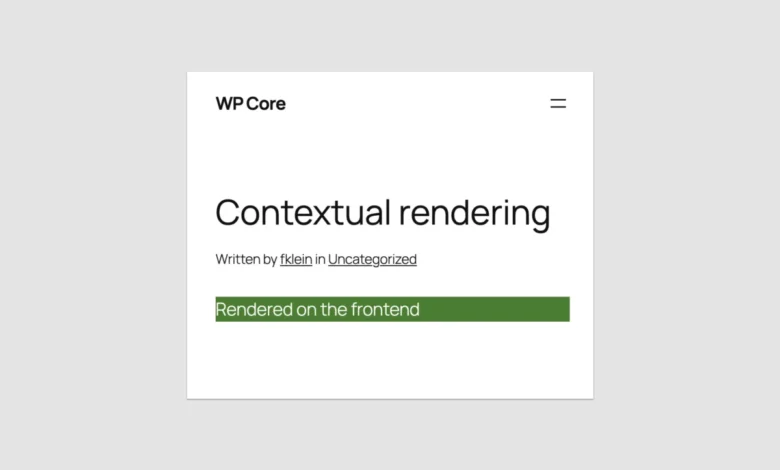
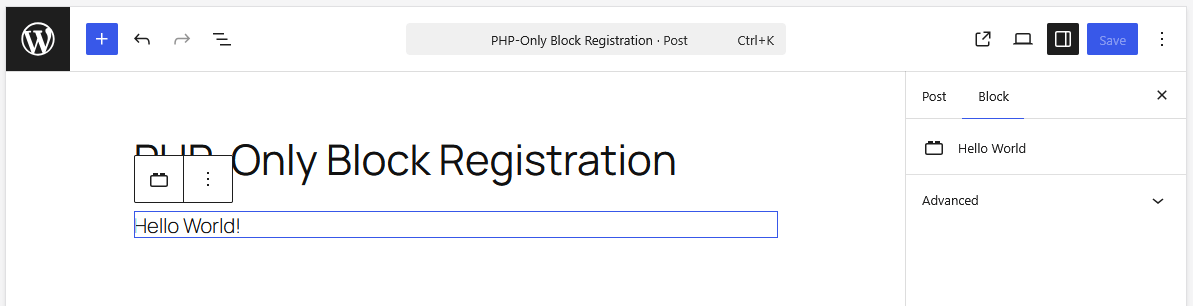
The core of this feature lies in the autoRegister flag within the register_block_type function. By setting this value to true, WordPress automatically generates the necessary client-side bridge required for the block to appear within the editor interface.
Under the hood, this function acts as a bridge between the server-side rendering (SSR) and the REST API. When a developer registers a block using only PHP, they define the title, attributes, and a render_callback function. WordPress then handles the serialization of these attributes and the asynchronous fetching of the block’s HTML preview via the REST API. This process allows a block to function in the editor without the developer writing a single line of React.
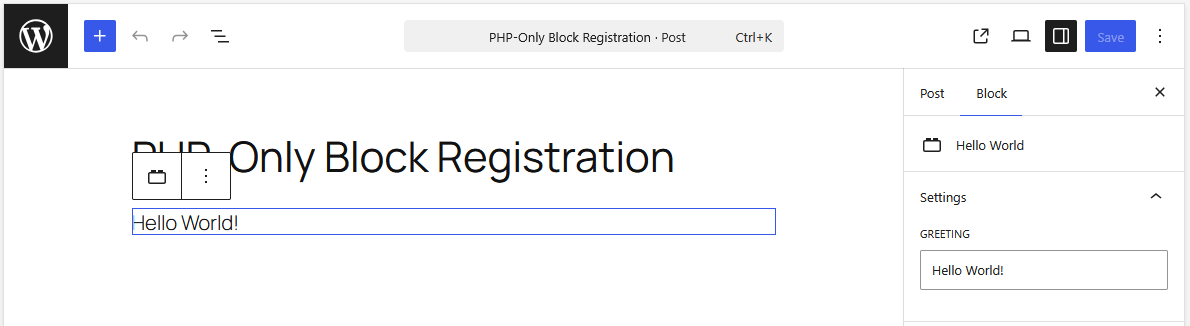
For example, creating a standard "Hello World" block now requires only a few lines of PHP:
function register_simple_block()
  register_block_type('namespace/hello-world', [
    'title' => 'Hello World',
    'render_callback' => function ()
      return sprintf('<div %s>Hello World!</div>', get_block_wrapper_attributes());
    ,
    'supports' => ['autoRegister' => true],
  ]);

add_action('init', 'register_simple_block');
This change fundamentally simplifies the development lifecycle. Developers no longer need to manage a package.json file or run npm run build commands to see their changes reflected in the dashboard.
Architectural Limitations and Design Trade-offs
While the introduction of PHP-only blocks is a milestone for accessibility, it is not a panacea for all development challenges. The architecture inherently relies on the REST API to fetch rendered HTML, which introduces specific constraints.
First, there is a lack of interactivity within the editor preview. Because the block is essentially an iframe-like injection of server-side HTML, developers cannot attach JavaScript event listeners to the block’s internal DOM nodes. Any attempt to manipulate the preview using client-side scripts is rendered moot by the fact that the editor periodically re-renders the block, clearing previous states.

Second, the system suffers from "stale data" issues. Because the PHP render_callback is decoupled from the client-side JavaScript state of the editor, a block will not automatically update if a user changes a related value—such as a post title—in a different part of the editor. This renders the approach unsuitable for dynamic blocks that depend on real-time client-side updates without a full page refresh.
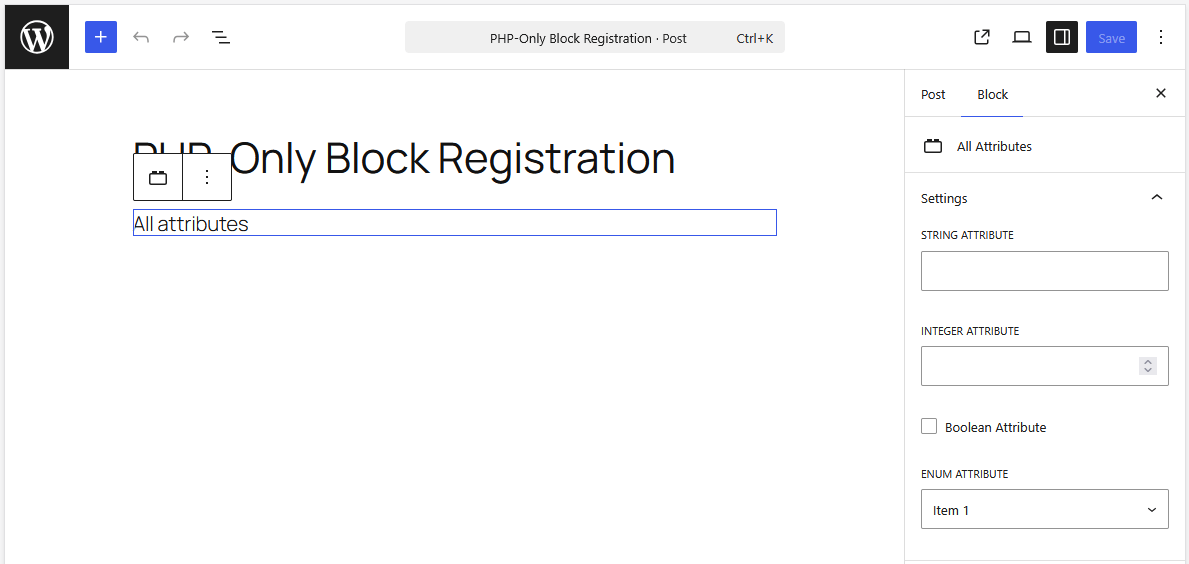
Furthermore, the attribute support is currently restricted to basic data types: strings, integers, and booleans. Advanced interfaces, such as multi-line text areas, image media pickers, or complex object arrays, are not yet supported through this PHP-only registration. As of the current release, developers must utilize the settings sidebar for all user interactions, limiting the creative possibilities for in-canvas editing.

The Strategic Value: Migrating Legacy Infrastructure
The true "killer use case" for this feature is the mass migration of legacy websites to block-based architectures. Many established WordPress sites remain on classic themes because they are powered by complex, custom-built PHP functionality that would be too costly to re-engineer in React.
For these developers, the ability to wrap existing PHP logic in a server-side block provides a path to modernization. Instead of performing a full rewrite, an agency can simply encapsulate legacy template parts into a block structure. This significantly reduces the overhead of migrating to block themes, allowing for a phased transition where parts of the site can be converted to blocks while maintaining critical legacy features.

In terms of market impact, this is expected to increase the adoption rate of block themes among large-scale enterprise websites that have previously viewed the transition as a high-risk, high-cost endeavor. By lowering the cost of migration, WordPress 7.0 effectively extends the life of existing codebases while pushing them into the modern editor environment.
Best Practices for Implementation
To maximize the effectiveness of this new feature, developers should adhere to a few established best practices:

- Iframed Editor Compatibility: To ensure that custom styles do not leak between the editor and the rest of the dashboard, developers should prioritize working within the iframed post editor. WordPress 7.1 is expected to make this the default standard, and aligning with Block API Version 3 now will save developers significant time in the near future.
- Strategic Use of Placeholders: Where a perfect editor preview is technically difficult or impossible to achieve, developers should employ placeholders. This improves the administrative UX by clearly indicating the block’s purpose without requiring the expensive overhead of a fully rendered interactive component.
- Unique Class Prefixes: Because PHP-only blocks generate standard CSS classes, developers should implement a BEM-inspired naming convention or unique prefixes to prevent style collisions with the default WordPress Core styles.
- Selective Alignment: Using the
supportsargument to enable specific alignments—such asleft,right, orwide—allows developers to offer modern design controls to end-users without the complexity of building custom alignment logic from scratch.
Implications for the WordPress Ecosystem
The arrival of PHP-only block registration is a clear signal that the WordPress project is entering a phase of maturity. After years of pushing the "JavaScript-first" agenda, the core maintainers have acknowledged that the sustainability of the platform depends on its developer base. By providing a path for PHP-centric developers, WordPress is effectively reinforcing its competitive advantage against headless CMS alternatives that often require entirely separate front-end development stacks.
While it is clear that this feature will not replace the need for JavaScript-powered blocks for highly interactive interfaces—such as custom page builders or complex data visualizations—it effectively partitions the development market. Complex, interactive features will continue to demand high-level React expertise, while utility-based features, structural components, and legacy integrations can now be handled by the broad base of PHP developers.
Ultimately, the wait for this feature may have been long, but it arrives at a time when the ecosystem is ready to consolidate. By reducing the reliance on external build pipelines and lowering the technical barrier for theme creators, WordPress 7.0 empowers a wider community of developers to contribute to the next generation of web publishing. Whether this will lead to a surge in block theme adoption remains to be seen, but the infrastructure is now in place to make that transition a reality for thousands of developers who were previously left behind.