Designing reliable memory systems for AI agents has emerged as the defining engineering challenge for developers transitioning from static LLM applications to persistent, autonomous agentic systems. While early-stage AI models operated within a stateless vacuum—resetting their entire understanding of the world the moment a session ended—the current generation of agents requires a durable, evolving state to maintain continuity. As these agents are increasingly deployed to manage complex workflows, from financial analysis to automated software engineering, the architecture of their memory systems has moved from an optional feature to a mission-critical component. When built effectively, these systems allow agents to carry state, facts, and past decisions across time; however, when built poorly, they introduce "memory debt," where systemic failures become persistent, difficult to debug, and prone to compounding over weeks or months of operation.
The Evolution of Agentic State Management
The necessity for sophisticated memory architectures follows a clear chronological trajectory in the development of Large Language Models. Initially, the industry relied entirely on "context windows," where all relevant information was crammed into a single prompt. As context windows expanded, developers initially believed this would solve the memory problem. However, research conducted throughout 2024 and 2025 demonstrated that "context stuffing" is inefficient, expensive, and leads to degradation in reasoning performance—a phenomenon often referred to as the "lost in the middle" effect.
By early 2026, the consensus among machine learning engineers shifted toward externalized memory systems. Unlike system prompts, which are static instructions, or retrieval-augmented generation (RAG) pipelines, which query static documents, "memory" is defined as information the agent writes to external storage during runtime. This distinction is vital: memory is a dynamic, read-write interaction that reflects the agent’s own learning and experience.
A Layered Taxonomy of Memory
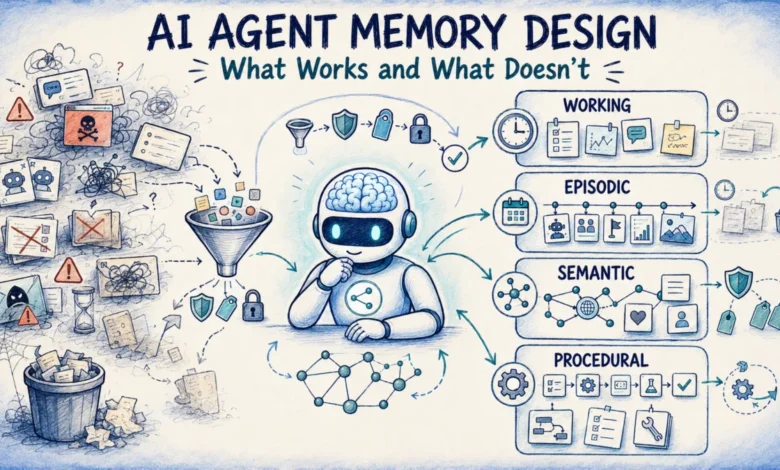
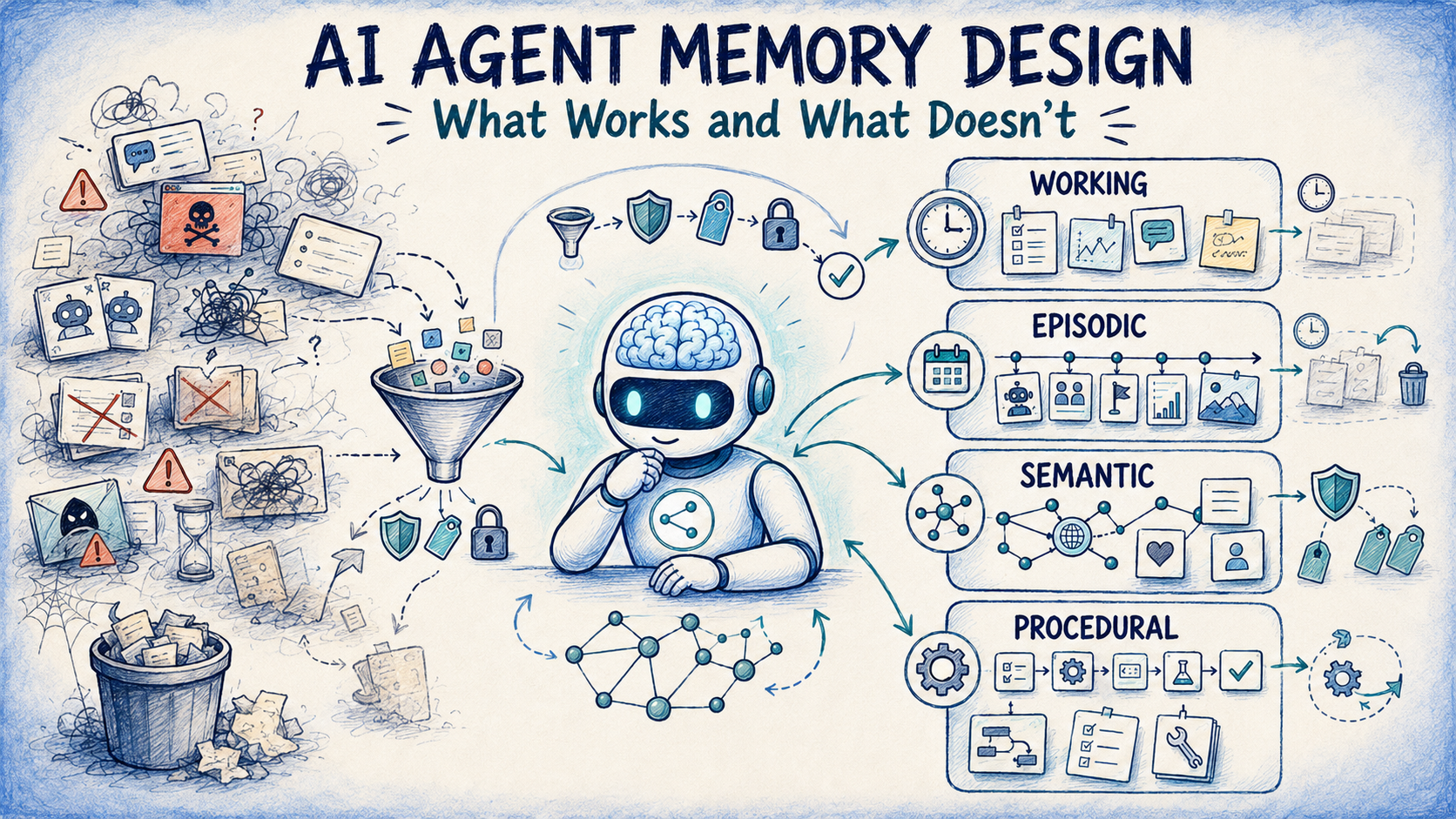
To avoid architectural collapse, leading AI labs and platforms have moved toward a four-tier memory taxonomy. Collapsing these layers into a single database—a common mistake for early-stage teams—inevitably leads to "noisy retrieval," where the agent struggles to differentiate between a fleeting intermediate calculation and a hard-coded business rule.
- Working Memory: The high-velocity scratchpad for active tasks. It utilizes short-lived, low-latency storage, typically an in-memory database like Redis, where intermediate results are stored with strict Time-to-Live (TTL) policies.
- Episodic Memory: The record of "what happened." This layer stores past interactions, tool execution logs, and historical decision paths. Vector databases are most effective here, allowing the agent to perform semantic searches to recall how it handled similar problems previously.
- Semantic Memory: The "knowledge base" of the agent. This includes facts, user preferences, and domain-specific constraints that are updated over time. It typically requires a hybrid approach, combining vector search for broad queries and exact key-value lookups for factual verification.
- Procedural Memory: The repository of "how to do things." This stores successful action patterns and refined workflows. When an agent discovers a more efficient way to execute a task, that logic is promoted here to guide future behavior.
Strategic Implementation: Importance Scoring and Provenance
One of the most common pitfalls in memory design is the "write-everything" approach. Storing every step of an agent’s internal monologue is not only cost-prohibitive but actively detrimental to performance, as it pollutes the retrieval pool with trivial data.
Engineers are increasingly implementing hierarchical memory systems that rely on "importance scoring." Before any data is committed to long-term storage, a lightweight evaluation layer—often a smaller, faster model—assesses the entry. Entries are assigned a score based on confidence and relevance. For instance, a confirmed factual constraint (e.g., "The user prefers Python over JavaScript") receives a high-importance score, while a failed experimental step might be discarded or flagged for deletion.
Furthermore, the integration of "provenance metadata" has become standard in robust systems. Every memory entry must now be tagged with its origin: which agent generated it, which tool was used, the specific input hash, and a "trust level." This creates a clear audit trail. When an agent exhibits degraded performance, developers can filter memory by provenance to isolate whether the issue stems from an incorrect user input, an unreliable external API, or a hallucinated fact generated by a sub-agent.
The Dangers of Compression and Hallucination
A recurring theme in recent AI research is the danger of "memory compression" through summarization. When systems become too large, developers often summarize older conversation histories to save space. While intuitive, this practice is a leading cause of "information drift."
Data indicates that summarization is a lossy process. When an agent summarizes a complex interaction, it invariably discards edge cases, constraints, and specific technical parameters. Over several iterations, the original context is diluted, and the agent begins to operate on a stylized, inaccurate version of the truth. Worse, if an agent hallucinates a fact in one session and that hallucination is included in a summary, it becomes "baked" into the persistent memory. In subsequent sessions, the agent retrieves this hallucination as high-confidence ground truth, creating a self-reinforcing feedback loop of error.
Industry experts now advocate for "structured extraction" rather than free-form summarization. By using strict Pydantic schemas or JSON-based extraction prompts, agents can be forced to pull only verifiable facts from a conversation, ensuring that the stored information remains accurate, typed, and queryable.
Security and the Threat of Memory Poisoning
As agents are given the ability to write to long-term memory, the attack surface expands significantly. A critical vulnerability is "MemoryGrafting," where an external input contains hidden, malicious instructions. If the agent processes this input and saves it to its episodic memory, it essentially "plants" a command that will trigger every time that memory is retrieved.
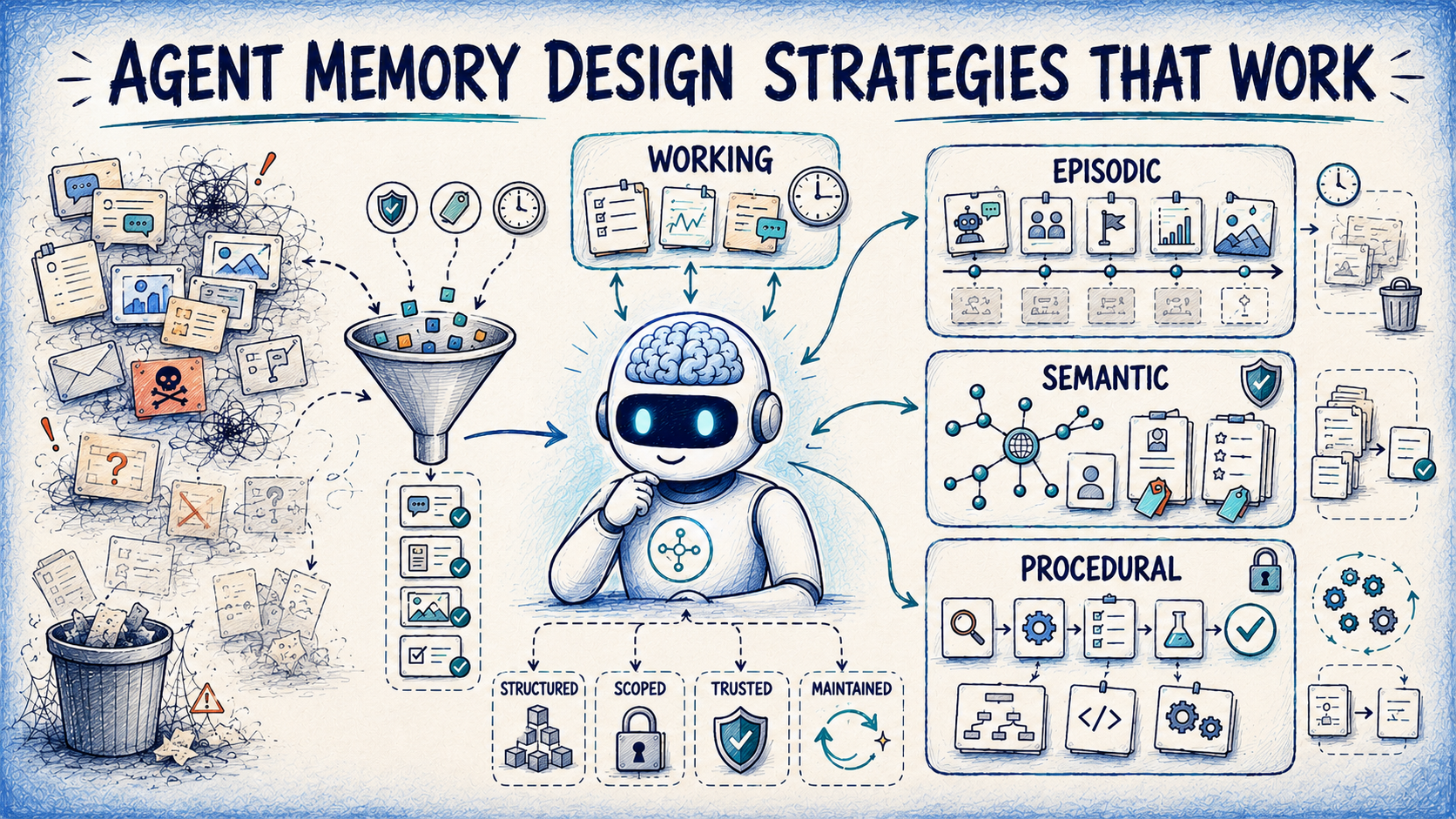
To mitigate this, sophisticated systems now employ a "sanitization layer." Before any information is written to long-term storage, it undergoes a security check. Low-trust content—such as data scraped from the web or provided by unverified users—is scanned for directive-like language. If the content contains hidden instructions or commands that could override the agent’s core safety guidelines, the write operation is aborted. By applying trust levels (e.g., Internal = 1.0, User = 0.5, External = 0.1), architects can ensure that only high-quality, verified information influences future agentic behavior.
Maintenance and the Problem of Unbounded Growth
Memory that is not actively managed becomes technical debt. Without routine maintenance, the cost of vector database queries rises, and the signal-to-noise ratio in retrieval drops. Modern production systems incorporate three primary maintenance routines:
- Confidence Decay: As time passes, the confidence score of certain memory entries is automatically reduced. If an agent does not frequently verify or "re-read" a fact, it becomes less likely to be retrieved, effectively pruning the system of stale data.
- Deduplication: Periodic processes identify semantically similar memories that have accumulated over time, merging them into a single, high-confidence entry to clear storage and focus retrieval.
- TTL-based Archiving: Non-essential episodic memory is moved from active, high-cost vector storage to cold, archival storage after a defined period, ensuring that active memory remains fast and relevant.
Future Implications for Autonomous Systems
The transition toward more robust memory architectures signifies a shift in how we conceive of AI agents. We are moving away from agents that are merely "conversational" and toward agents that are "stateful and continuous." The implications for industry are profound: in legal, medical, and engineering sectors, the ability for an agent to maintain a reliable, accurate, and verifiable history of its own work is the barrier between a useful assistant and a liability.
The current standard of "multi-layer, structured, and provenance-tracked memory" is not merely an engineering preference; it is a prerequisite for reliable automation. As these systems continue to scale, the focus will likely shift toward autonomous memory management, where agents are tasked with their own "garbage collection" and optimization routines. For now, the imperative remains clear: define the write policy before the system is deployed, enforce strict namespace boundaries between agents, and treat every memory entry with the same scrutiny as a database transaction in a high-stakes financial system. The resilience of the agent is only as strong as the memory it relies upon.