The paradigm of digital interaction is undergoing a profound transformation. As mainstream enterprise and consumer traffic steadily migrates away from traditional graphical user interfaces and toward intelligent conversational AI hosts like OpenAI’s ChatGPT and Anthropic’s Claude, organizations face a critical integration challenge. Historically, bridging backend services with natural language interfaces meant sacrificing rich user experiences for plain, unformatted text. Developing bespoke integrations for every proprietary AI platform introduced unsustainable engineering overhead and software brittleness.
To resolve this friction, developers and cloud architects are adopting open standards that allow applications to communicate seamlessly across multiple AI ecosystems without requiring redundant codebases. Leading this architectural shift are Model Context Protocol (MCP) Apps and Amazon Bedrock AgentCore. By extending the foundational Model Context Protocol with interactive HTML widgets that render directly within AI dialogue windows, this combination bridges the gap between text-based chat and fully functional application interfaces.
Background Context and Industry Evolution
The Model Context Protocol was originally conceived to standardize how AI models securely access external data sources and development tools. While effective at text retrieval, early iterations of MCP lacked a standardized framework for rendering complex, dynamic user interfaces inside host environments. Users asking an AI agent to display inventories, book appointments, or execute e-commerce transactions were routinely met with rudimentary bullet points or static tables.

The introduction of the MCP Apps extension changed this dynamic by allowing servers to publish self-contained HTML resources alongside traditional text payloads. AI hosts capable of parsing the extension can execute these widgets securely within their rendering engines. However, scaling and securing these distributed micro-servers presented significant operational hurdles for enterprise engineering teams. Infrastructure provisioning, session isolation, secure ingress management, and auto-scaling consumed valuable developer cycles that could have been spent optimizing core business logic.
Enter Amazon Bedrock AgentCore. Designed as a comprehensive, model-agnostic platform to build, connect, and optimize AI agents at scale, AgentCore provides the underlying scaffolding necessary to run production-grade MCP servers. Through specialized components such as the AgentCore runtime and AgentCore Gateway, Amazon Web Services (AWS) has automated the undifferentiated heavy lifting of serverless execution, allowing organizations to deploy secure, high-availability MCP applications with minimal configuration overhead.
Architecture and Technical Mechanics of the Solution
To demonstrate the practical application of this architecture, AWS engineering teams recently released a comprehensive reference implementation named Unicorn Rentals. Built around a serverless paradigm, the solution highlights how a single, unified MCP server can power feature-rich user experiences across disparate AI hosts like ChatGPT and Claude simultaneously.
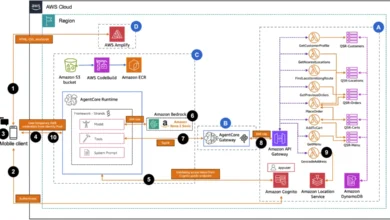
The architecture relies on a clear separation of concerns between protocol management, business logic, and persistent storage. At the outer perimeter, AWS WAF protects the endpoint with IP allowlisting, managed threat-detection rules, and rate-limiting protocols. Inbound requests from AI hosts hit the Amazon Bedrock AgentCore Gateway, which exposes a single, secure HTTPS endpoint. The Gateway authenticates inbound traffic and forwards requests securely to the AgentCore runtime using AWS Signature Version 4 (SigV4).
The AgentCore runtime operates as a managed, serverless, session-isolated environment tailored specifically for MCP workloads. It hosts a TypeScript-based application built on the official Model Context Protocol software development kits, incorporating the @modelcontextprotocol/ext-apps extension. Within this containerized environment, an Express.js server handles both MCP tool discovery (tools/list) and tool execution (tools/call), while simultaneously serving interactive HTML widgets via MCP resource endpoints (resource/list and resource/read).
Underneath the protocol layer, the architectural blueprint decouples the MCP server from the underlying enterprise systems. In the Unicorn Rentals reference implementation, a dedicated AWS Lambda function handles core business operations—such as inventory checks, reservation tracking, and financial calculations—while Amazon DynamoDB provides scalable, low-latency persistence. Because the MCP server functions merely as a thin protocol adapter, enterprises can easily substitute the sample Lambda function with existing microservices hosted on Amazon Elastic Container Service (Amazon ECS), Amazon Elastic Kubernetes Service (EKS), or legacy monolithic backends without altering the outward-facing AI interface.
Step-by-Step User Workflow and Widget Rendering
The efficiency of the MCP Apps framework becomes apparent when observing a live end-user transaction. The workflow proceeds through distinct phases of natural language interpretation, tool invocation, and dynamic widget rendering:
-
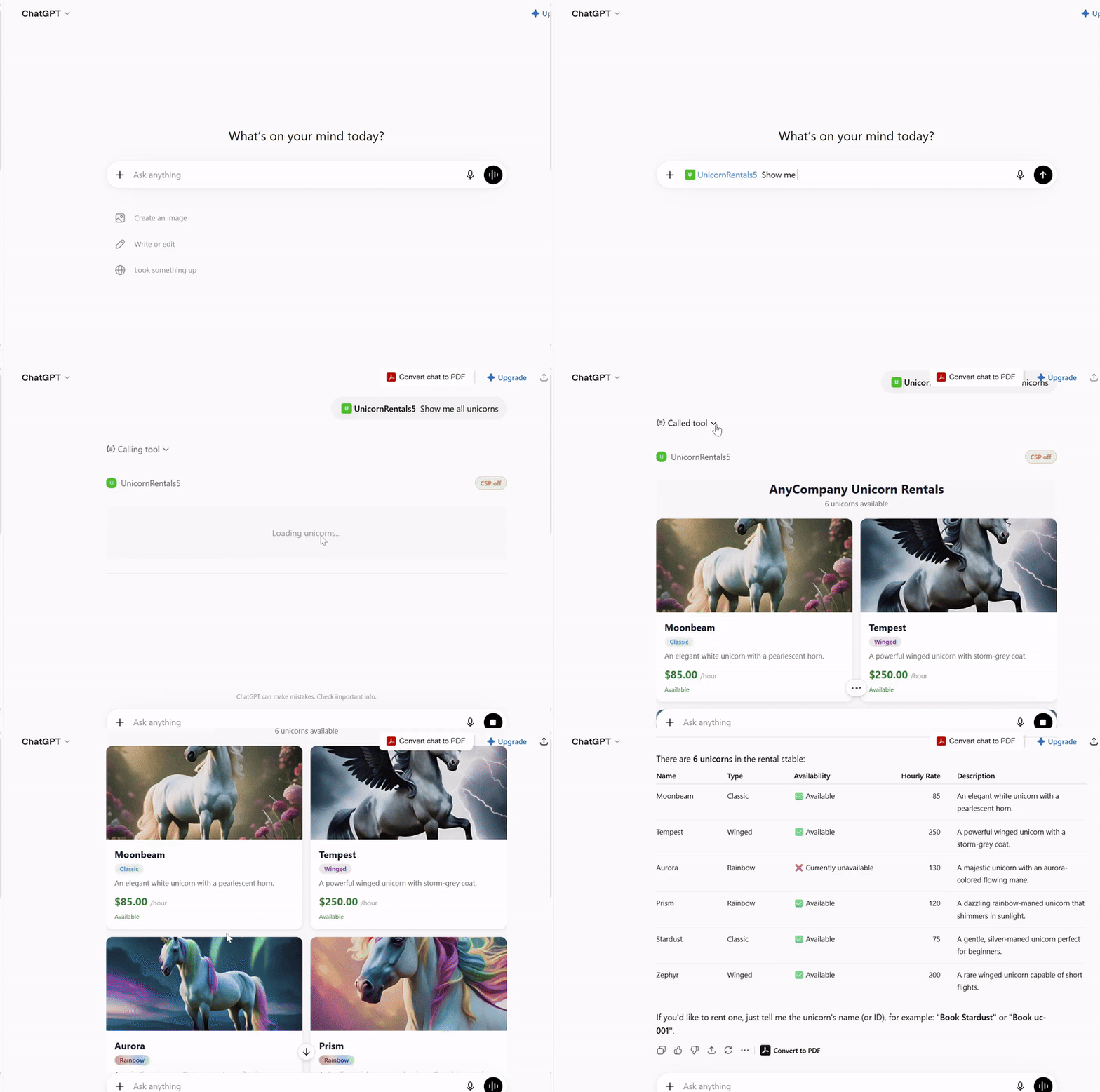
Inventory Discovery: A user initiates a session within an AI host by typing a natural language query, such as "Can you show all available unicorns?" The AI host interprets the intent, queries the MCP server via the AgentCore Gateway, and invokes the
list_unicornstool. Rather than returning a plain text list, the tool response includes a structured data payload and a metadata pointer (_meta.ui.resourceUri) directing the host to fetch the corresponding HTML widget resource. The host renders interactive cards for each inventory item, complete with images, descriptive text, hourly rental rates, and live availability statuses.
-
Transaction Execution: Upon reviewing the interactive cards, the user selects a specific item by typing, "I would like to book Stardust." The AI host triggers the
book_unicorntool. The backend Lambda function processes the reservation against the DynamoDB data store, records a unique booking identifier, and generates a confirmation payload that appears instantly inside the conversational interface. -
Status Monitoring: To check active rentals, the user issues a follow-up prompt: "Show me my unicorn bookings." Recognizing that a rich graphical widget is unnecessary for a simple status check, the system bypasses resource rendering and returns a concise, structured text response detailing the active rental duration and accumulated costs.
-
Service Termination: Concluding the transaction, the user requests to return the item. The system calculates the final billing amount based on elapsed time and hourly rates, updating the database and reporting the final ledger entry within the chat thread.
Deployment, Security, and Production Considerations
Deploying the architecture is streamlined through Infrastructure as Code (IaC) via the AWS Cloud Development Kit (CDK). Administrators clone the sample repository from GitHub, configure their environment variables, and execute a deployment script that provisions the necessary S3 storage buckets, Lambda functions, DynamoDB tables, and AgentCore runtime configurations.

From a security perspective, enterprise architects must implement robust trust boundaries. Because AI models process unstructured natural language, malicious prompt injections represent a persistent vector of risk. To mitigate this vulnerability, production deployments should enforce strict schema validations for all tool arguments at both the MCP server layer and the underlying backend service level. Furthermore, integrating Amazon Bedrock Guardrails allows organizations to filter harmful content, block unauthorized topics, and automatically redact sensitive personally identifiable information (PII) before data crosses the client boundary.
Observability and cost management are equally critical for enterprise adoption. Administrators can utilize Amazon CloudWatch to monitor AgentCore Gateway request metrics, Lambda execution latencies, and container health parameters. Establishing automated alarms for error rates and response thresholds ensures rapid incident response. Meanwhile, because AgentCore runtime employs a consumption-based pricing model tied directly to container uptime and invocation volume, right-sizing CPU and memory allocations prevents unnecessary cloud expenditure.
Implications and Future Outlook of Host-Agnostic AI
The convergence of Amazon Bedrock AgentCore and MCP Apps marks a significant milestone in the evolution of enterprise artificial intelligence. By decoupling user interface presentation from proprietary AI platforms, open standards like the Model Context Protocol liberate organizations from vendor lock-in.
Analysts note that this architecture fundamentally alters the economics of software integration. Historically, companies maintained separate engineering tracks for web applications, mobile apps, and conversational interfaces. With host-agnostic MCP applications, organizations can write their interface logic once and deploy it across any AI host that supports the standard. As conversational agents become the primary digital front door for modern commerce and enterprise productivity, tools that simplify secure, scalable, and visually rich agentic integration will form the bedrock of the next-generation digital economy.