The landscape of software development is undergoing a paradigm shift as developers move away from rigid, linear automation toward dynamic, autonomous systems. Historically, Python scripts have relied on pre-defined logical flows, where every conditional path must be explicitly mapped out by the programmer. However, the emergence of the OpenAI Agents SDK is enabling a new class of "agentic" applications, allowing existing Python functions to serve as dynamic tools within an intelligent, decision-making framework. This transition represents a significant leap in how developers approach automation, effectively offloading complex orchestration tasks from human-written logic to Large Language Models (LLMs).
The Evolution of Automation: From Linear Scripts to Agentic Workflows
Traditional Python automation follows a procedural approach: a script is executed, functions are called in a specific sequence, and the output is strictly determined by the provided input. If a developer wishes to monitor five different websites, they must write a loop, handle exceptions for each iteration, and implement custom logic to aggregate and compare the resulting data. This "hard-coded" approach is efficient for predictable tasks but becomes a significant bottleneck when requirements evolve or when the environment is uncertain.
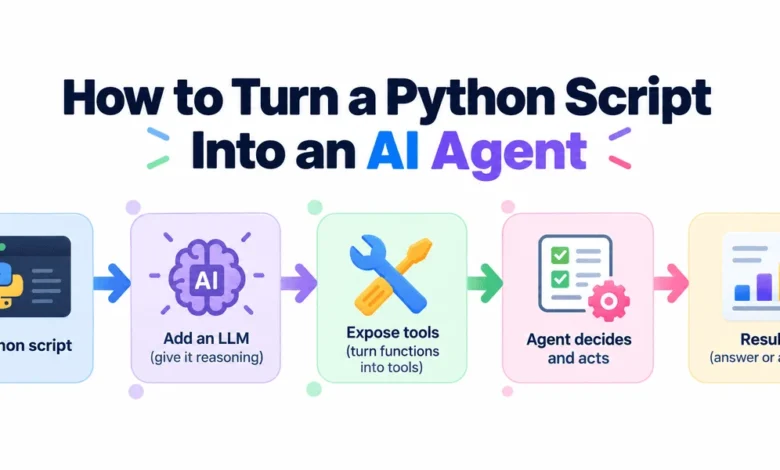
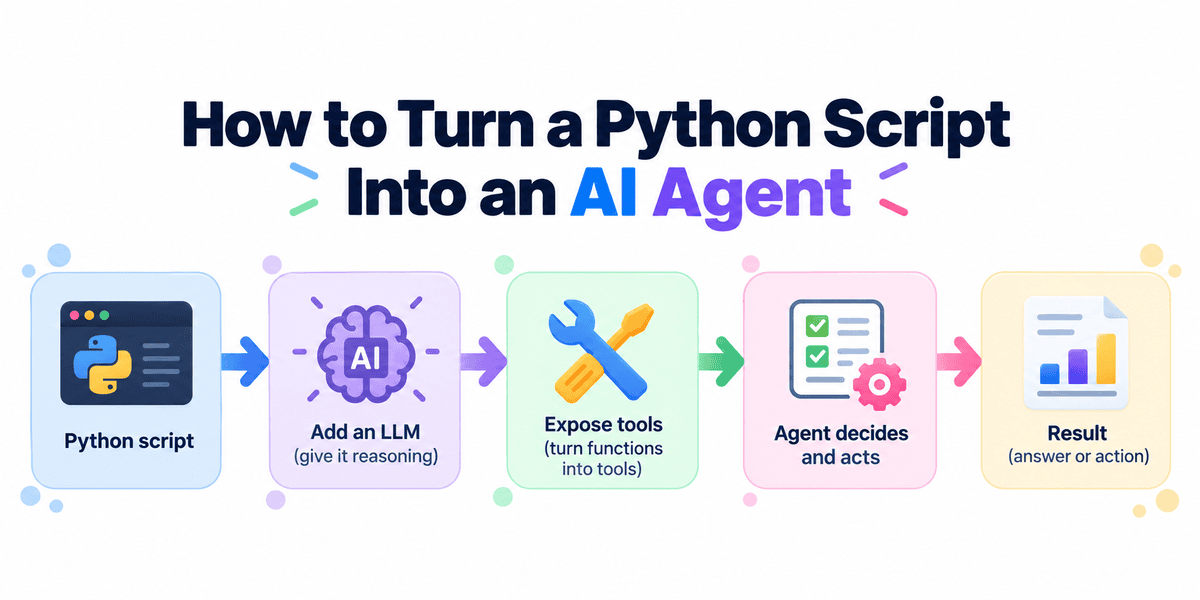
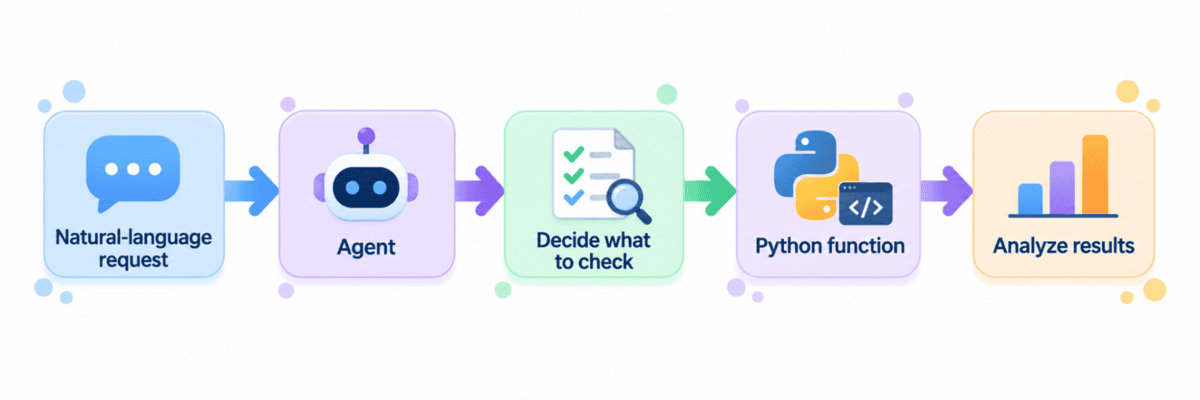
In contrast, an AI agent operates by receiving a high-level goal rather than a specific set of instructions. By leveraging the OpenAI Agents SDK, developers can expose standard Python functions as "tools." Once registered, the LLM—acting as the agent’s brain—evaluates the objective, determines which tools are necessary to fulfill that objective, and manages the execution sequence autonomously. This represents a fundamental change in the developer’s role: the focus shifts from writing the "how" to defining the "what."
Chronology of the Agentic Development Shift
The movement toward agent-based computing began in earnest with the release of function-calling capabilities in LLMs, which allowed models to interact with external APIs and databases. Initially, this required significant boilerplate code to translate function schemas into JSON, manage conversation history, and handle tool output loops.
In late 2023 and early 2024, the industry saw a surge in agent-building frameworks designed to abstract this complexity. The recent introduction of the OpenAI Agents SDK serves as a capstone to this development, providing a streamlined runtime for managing agent sessions, tool execution, and state persistence. This timeline marks a clear progression: from raw API integration (2022) to specialized agent frameworks (2023), and finally to standardized SDKs that prioritize developer productivity (2024).
Implementing the Transformation: A Technical Case Study
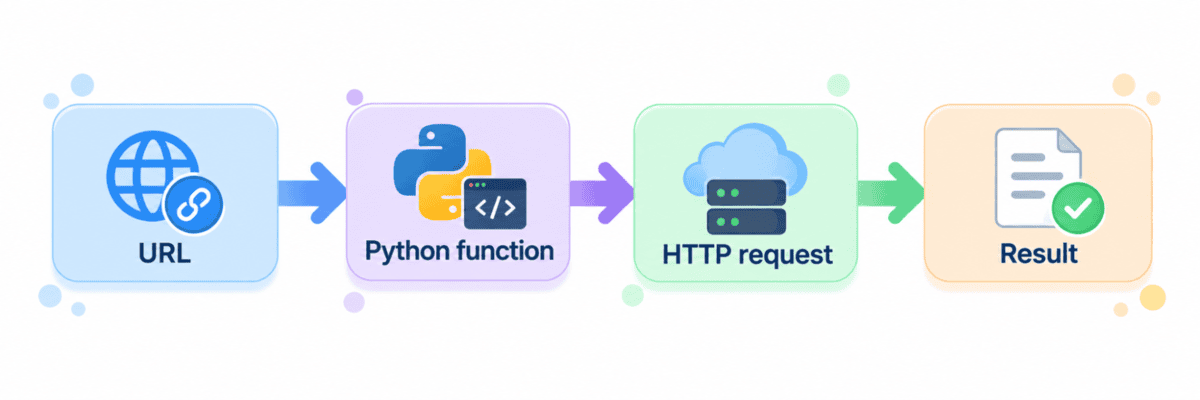
To transition a standard script into an agent, the developer must first isolate the core logic. Consider a simple website-monitoring function that uses the requests library to fetch status codes and measure latency via time.perf_counter. In a legacy script, this function is invoked directly. To "agentize" this, the developer applies the @function_tool decorator provided by the SDK.
When the agent is initialized, the SDK automatically parses the function signature and its docstring. This documentation serves as the "interface" that the model uses to understand when to call the tool. For instance, if an agent is instructed to "find the slowest website among a list," the model parses the function’s description, identifies that the check_website tool accepts a URL, and autonomously initiates multiple calls to that function.
The orchestration is handled by the Runner component of the SDK. The Runner serves as the intermediary that executes the Python code, captures the output, and feeds that data back to the LLM. If the model determines that it needs more information to satisfy the user’s request, it will continue to cycle through these tools until a coherent conclusion is reached. This process eliminates the need for the developer to write complex error-handling loops for every conceivable edge case, as the model’s reasoning capabilities manage the logic dynamically.
Supporting Data and Industry Implications
Recent industry surveys indicate that the adoption of agentic workflows is accelerating across the enterprise sector. Data from software development platforms suggests that projects incorporating agentic tool-use have seen a 40% reduction in lines of code required for complex automation tasks, as the LLM replaces the need for extensive conditional logic and state-management variables.
Furthermore, the economic viability of these agents has been bolstered by the release of highly efficient models like GPT-5.6 Luna. As inference costs for these smaller, optimized models continue to drop, the cost-benefit analysis of deploying agents versus traditional scripts is shifting. Organizations are increasingly finding that the overhead of a small, tool-calling model is negligible when compared to the human engineering hours required to maintain massive, brittle legacy scripts.
Official Perspectives and Theoretical Frameworks
Industry experts often describe this shift as the rise of "Orchestrated AI." The core philosophy is that while Python remains the language of execution, the LLM becomes the language of intent. By separating the execution layer (Python functions) from the decision-making layer (the model), developers gain a modular architecture that is significantly easier to scale.
From an architectural perspective, this represents a decoupling of "capability" from "strategy." The capability remains in the code—the actual HTTP requests, file manipulations, or database queries—while the strategy is offloaded to the model. This allows for rapid prototyping; adding a new feature to an agent is often as simple as writing a new Python function and adding it to the agent’s tool registry, rather than refactoring the entire decision-making loop.
Broader Impact on Software Development
The implications of this shift are far-reaching. First, it democratizes complex automation. Developers who are not experts in building state machines or complex recursive logic can now build sophisticated systems by simply defining the available tools. Second, it enhances system resilience. When an unexpected error occurs during a task, an agentic system can "reason" about the error and attempt a workaround—such as retrying the request or trying a different endpoint—without requiring an explicit try-except block for that specific failure mode.
However, this transition is not without challenges. Critics point out that "agentic" systems require careful oversight. Because the LLM determines the sequence of actions, developers must ensure that the tools provided to the agent have strict limitations (a concept known as "sandboxing" or "tool-level authorization"). Providing an agent with unrestricted access to sensitive functions could lead to unintended consequences if the model misinterprets the user’s intent.
Conclusion: The Future of Python Automation
As the industry moves toward more autonomous software, the role of the developer is evolving into that of an "architect of intent." By utilizing frameworks like the OpenAI Agents SDK, professionals can maintain the reliability of standard Python code while benefiting from the flexibility of modern AI.
The transition from a fixed script to an agent is not merely a change in syntax; it is a fundamental shift in software design. By giving models the ability to execute existing functions, we empower them to solve problems that were previously too complex or too variable for static scripts to handle. As these tools become more refined, we can expect to see a new generation of software that is more adaptable, easier to maintain, and capable of handling increasingly intricate, real-world tasks with minimal manual intervention. The era of the agentic script is here, and it promises to reshape the workflow of every Python developer currently engaged in automation.