Amazon Redshift Enhances Semi-Structured Data Handling with Expanded SUPER Data Type Capabilities

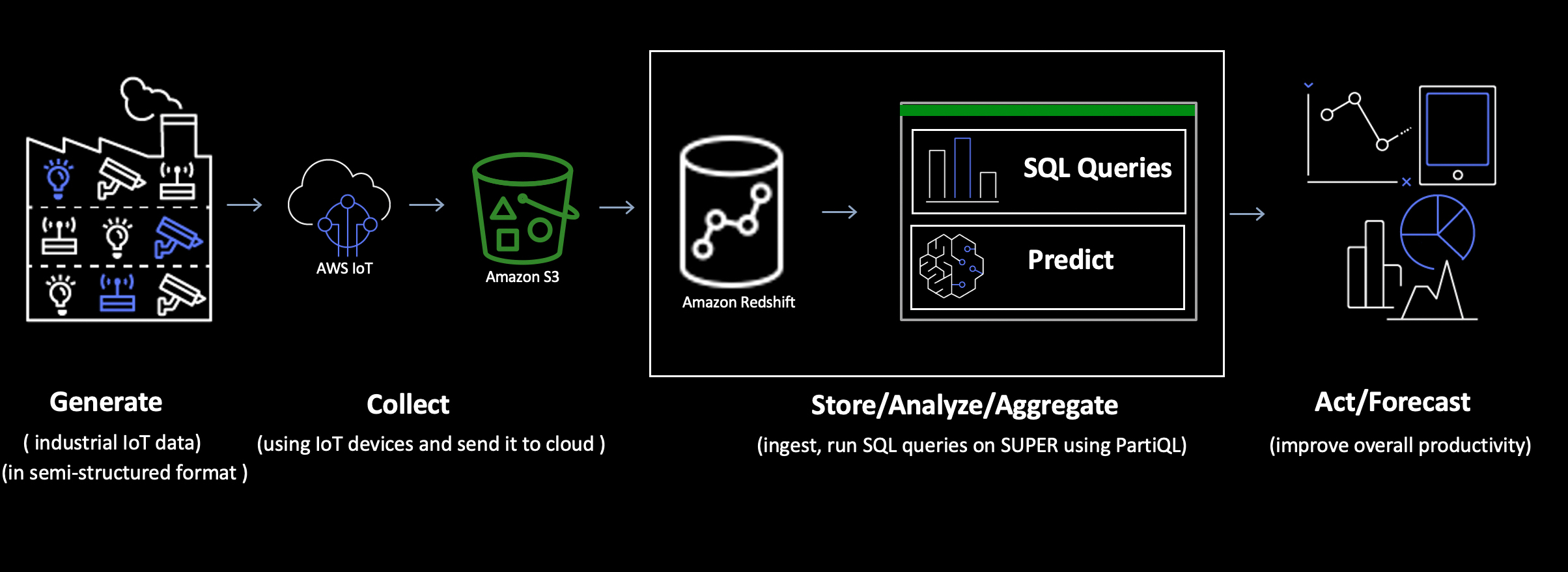
Storing, managing, and analyzing large-scale, semi-structured data has historically presented a significant hurdle for data warehouse architects. Organizations frequently grapple with the limitations of traditional relational database schemas, which often require data to be shredded, truncated, or split into cumbersome fragments to fit within standard character constraints. Amazon Web Services (AWS) has addressed these operational bottlenecks by significantly expanding the capabilities of the SUPER data type within Amazon Redshift. By introducing support for large strings up to 16 million bytes and enabling compatibility with case-insensitive database collations, AWS is streamlining the ingestion and analysis of complex datasets such as IoT telemetry, web logs, and extensive JSON-based customer profiles.
The evolution of modern data architectures has seen a shift toward semi-structured formats like JSON, Avro, and Parquet. These formats offer flexibility for developers but often clash with the rigid requirements of legacy data warehouses. Before these enhancements, users were restricted by a 65,535-byte VARCHAR limit, forcing data teams to implement complex workarounds to prevent data loss. The update to the SUPER data type removes these barriers, allowing for the ingestion of full-length documents and complex nested arrays without compromising integrity.
Chronology of Data Management Challenges
The challenge of managing semi-structured data in Redshift dates back to the initial adoption of cloud-native data warehousing. Early iterations of cloud data stores were designed primarily for structured, tabular data. As the volume of web-scale data grew, the industry faced a "truncation crisis." In 2021, the introduction of the SUPER data type and the PartiQL query language provided a foundation for handling nested data. However, as enterprise data requirements expanded to include large-scale legal documents, detailed product catalogs, and exhaustive audit logs, the 64KB limitation became a primary point of friction for data engineers.
By 2025, the industry saw a surge in demand for "unstructured-to-structured" workflows. AWS responded by iterating on the SUPER data type throughout late 2025 and 2026. The integration of large string support and case-insensitive collation represents the most recent milestone in this timeline, effectively allowing Amazon Redshift to serve as a unified platform for both traditional structured data and high-velocity semi-structured inputs.
Technical Deep Dive: Scaling Beyond 65,535 Bytes
The core of the recent enhancement lies in the "large string support" feature. By setting the enable_large_strings_opt_in parameter, organizations can now process individual strings within a SUPER column up to 16 million bytes. This capability is not merely a storage upgrade; it fundamentally changes how in-memory string functions operate.

Previously, operations involving SUBSTRING, LISTAGG, or pattern matching on strings exceeding 65,535 bytes would frequently trigger errors or result in incomplete datasets. With the current update, Redshift performs these operations in memory, ensuring that complex transformations—such as merging multi-megabyte audit logs—can occur without disk spills or truncation. This is a critical development for industries such as healthcare and finance, where complete documentation and audit trails are non-negotiable.
Case-Insensitive Migration and Compatibility
One of the most significant barriers to migrating legacy on-premises databases to Amazon Redshift has been the discrepancy in collation behavior. Many enterprise legacy systems operate on case-insensitive collation, where "User123" and "user123" are treated as identical. In contrast, standard cloud data warehouses have historically enforced strict case sensitivity. This discrepancy often necessitated extensive, high-risk code refactoring during migration projects.

With the latest support for SUPER data types in case-insensitive databases, AWS has provided a bridge for legacy systems. This allows architects to maintain application-level logic while leveraging the power of Redshift’s modern querying capabilities. By supporting COLLATE CASE_INSENSITIVE at the database level while offering the flexibility to specify case_sensitive for individual columns, Redshift offers a hybrid approach that minimizes the disruption of migration cycles.
Industry Implications and Strategic Value
The shift toward treating semi-structured data as a first-class citizen has profound implications for data strategy. According to industry analysts, the ability to store and query large-scale JSON documents in a single, unified data warehouse reduces the "data gravity" problem—the tendency for data to become siloed in specialized NoSQL stores.

For an organization, the primary benefits are twofold:
- Operational Efficiency: Data engineers no longer need to spend significant development hours writing ETL (Extract, Transform, Load) pipelines to flatten or segment JSON documents before they enter the data warehouse.
- Performance Optimization: By keeping data in its native semi-structured format, organizations can use PartiQL to query nested attributes directly. When combined with best practices—such as promoting frequently accessed fields to materialized views or using explicit type casting—query performance remains high despite the increased complexity of the underlying data.
Best Practices for Implementation
To maximize the efficacy of these new features, AWS recommends a rigorous approach to configuration. The most critical setting for teams is enable_case_sensitive_super_attribute. When this is set to true, query engines recognize field names exactly as they are stored, preventing the common "NULL return" issue caused by automatic case conversion.
Furthermore, the practice of "promoting" frequently queried attributes remains essential. While the SUPER data type is robust, extracting critical metrics into standard columns for high-frequency dashboarding continues to be the most efficient path to sub-second query latency. For complex analytical workloads, developers should leverage materialized views that pre-compute transformations, ensuring that the heavy lifting of parsing large strings is handled at the time of data ingestion or view refresh rather than during every user request.
Looking Toward the Future of Data Warehousing
The integration of these features reflects a broader trend in the data warehousing sector: the blurring of lines between relational and non-relational storage. As AI and Machine Learning models require increasingly diverse datasets—ranging from raw sensor telemetry to dense, human-written text—the ability of a warehouse to handle this variety without sacrificing speed or simplicity will define the competitive landscape.
The recent updates from Amazon Redshift represent a maturation of the cloud data stack. By addressing the "micro-pain points"—like the 65,535-byte limit and rigid collation rules—AWS is lowering the barrier to entry for complex data analytics. Organizations that adopt these practices will find themselves better equipped to handle the exponential growth of unstructured data, turning raw logs and documents into actionable insights without the need for the fragmented, expensive infrastructure of the past.
Summary of Strategic Advantages
- Scalability: Handling objects up to 16 million bytes enables the storage of full legal documents, extensive sensor histories, and complex event logs in a single column.
- Flexibility: Compatibility with case-insensitive databases facilitates a seamless transition for enterprises moving from legacy environments.
- Performance: In-memory string processing removes the latency penalties associated with disk-spilling and traditional truncation methods.
- Simplicity: Native support for PartiQL and JSON parsing eliminates the need for complex pre-ingestion preprocessing, reducing the overall complexity of the data pipeline.
As data engineering teams continue to optimize their workflows, the focus will likely remain on reducing the time between data ingestion and insight generation. The enhancements to the SUPER data type provide a robust, scalable mechanism to achieve this, ensuring that Amazon Redshift remains a foundational component of the modern enterprise data strategy. As adoption grows, the industry can expect further refinements in how these tools interact with external data catalogs and real-time streaming interfaces, further cementing the warehouse’s role as the central nervous system of the digital enterprise.