From Architectural Debuts to Collectible Resin: Dezeen Spotlights October’s Defining Design Innovations

The global design calendar experienced a surge of creative output over the past month, marked by notable debuts at prestigious international fairs and galleries. From London’s historic Mayfair to the avant-garde spaces of Paris and Helsinki, contemporary designers and architects have continued to challenge the boundaries of material science, structural engineering, and functional art. In a comprehensive review curated by Dezeen’s Jane Englefield, several standout pieces have captured the attention of the international architecture and interior design communities. This month’s product roundup reflects a broader industry shift toward tactile authenticity, mechanical ingenuity, and structural transparency, highlighting works that bridge the gap between industrial fabrication and handcrafted storytelling.
Main Facts and Debutant Highlights of the Month
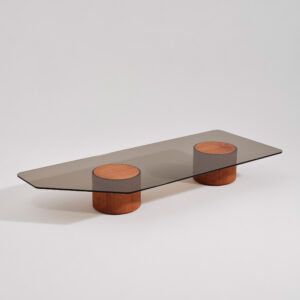
The October design landscape was defined by several high-profile launches, chief among them being the architectural foray of London-based Studio Hagen Hall. Louis Hagen Hall, co-founder of the practice, introduced his first-ever piece of furniture: the SHH-001 coffee table. Conceived initially for a residential project known as Pine Heath—a modernist Hampstead renovation featuring a complex corner sofa layout—the table was engineered to resolve the negative space left by the seating arrangement. Eschewing traditional hardware, the design relies entirely on gravity and precise geometry, comprising only two cherry veneer legs and a heavy, recyclable brown smoked glass tabletop. The piece draws direct inspiration from the organic, structural philosophies of modernist American architect John Lautner, emphasizing seamless integration between architecture and interior fixtures.
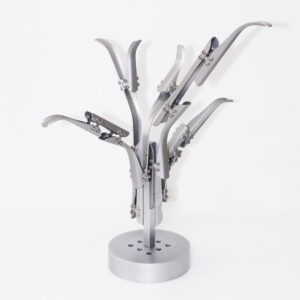
Simultaneously, the material experimentation trend was advanced by Austrian-born, Netherlands-based designer Flora Lechner. Having previously garnered critical acclaim at London’s Max Radford Gallery for her industrial, robot-like aluminium chandeliers, Lechner translated her distinctive aesthetic into the Exo 01 vase. Challenging the traditional definition of a vessel, the Exo 01 functions primarily as an architectural support structure rather than a passive container. Constructed from industrial aluminium clips bound together by stainless steel bolts, the design borrows its structural logic from medical orthopedic braces used to align and support parts of the human body. The piece features a water-retaining base that anchors the skeletal frame, allowing individual flower stems to be mechanically clamped and displayed in rigid, sculptural arrangements.
Chronology of October Design Fairs and Gallery Exhibitions
The timing of these product reveals coincided with the peak of the autumn design season, anchored heavily by major collectible design events. Chief among these was PAD London, the renowned annual collectible design fair held in Berkeley Square, Mayfair. Running through mid-October, the fair served as a primary launchpad for international galleries and independent studios seeking to present limited-edition works to global collectors, curators, and interior architects.
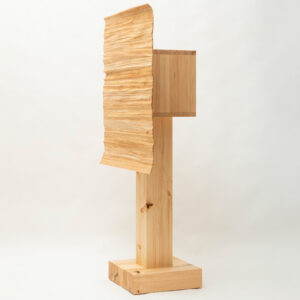
In the weeks leading up to and during PAD London, European galleries hosted significant solo and group presentations. In Paris, Spazio Nobile Gallery served as the venue for the debut of the Pleats Cabinet No. 1 by Helsinki-based designer Didi Ng Wing Yin. Known for working exclusively with locally sourced Finnish timber, Ng unveiled a cabinet constructed from a robust blend of fir and pine, treated with traditional tung oil. The piece’s defining feature is its delicately pleated door, brought to life through a proprietary, labor-intensive technique involving wood splitting, brushing, and carving.
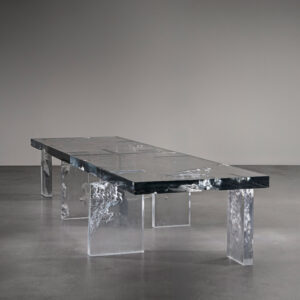
Meanwhile, London’s Carpenters Workshop Gallery played host to Dutch architect and designer Anne Holtrop, who debuted his Low-relief collection. Holtrop, globally recognized for his unrefined, geological aesthetic that mimics volcanic craters and rugged mountain ranges, utilized cast glass to create tables whose raw, heavy legs were directly inspired by ancient stone reliefs he studied during field research in Aswan, Egypt.
Supporting Data and International Representation at PAD London
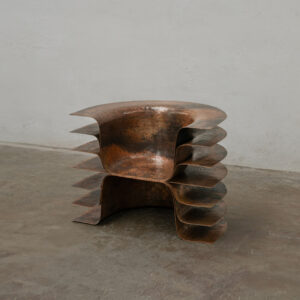
PAD London remains a vital economic and cultural barometer for the high-end collectible design market. This year’s iteration featured a diverse roster of international exhibitors, including Mexico-based creator Manu Bañó, whose work was prominently displayed within the "Objects with Narratives" exhibition framework. Bañó presented a duo of striking, patinated brass chairs (designated as the OBJ-05 series) crafted from stacked, sculptural slabs of metal. These pieces represent a material evolution in Bañó’s ongoing exploration of heavy industrial metals like brass and stainless steel, reinforcing a growing market appetite for monolithic, monumental furniture.
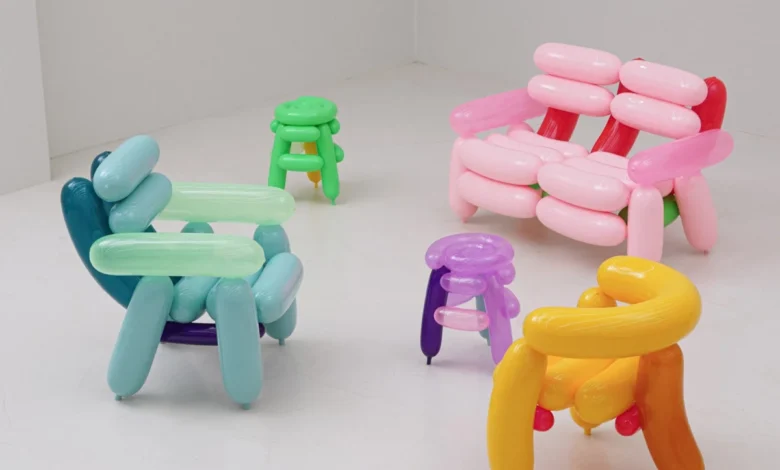
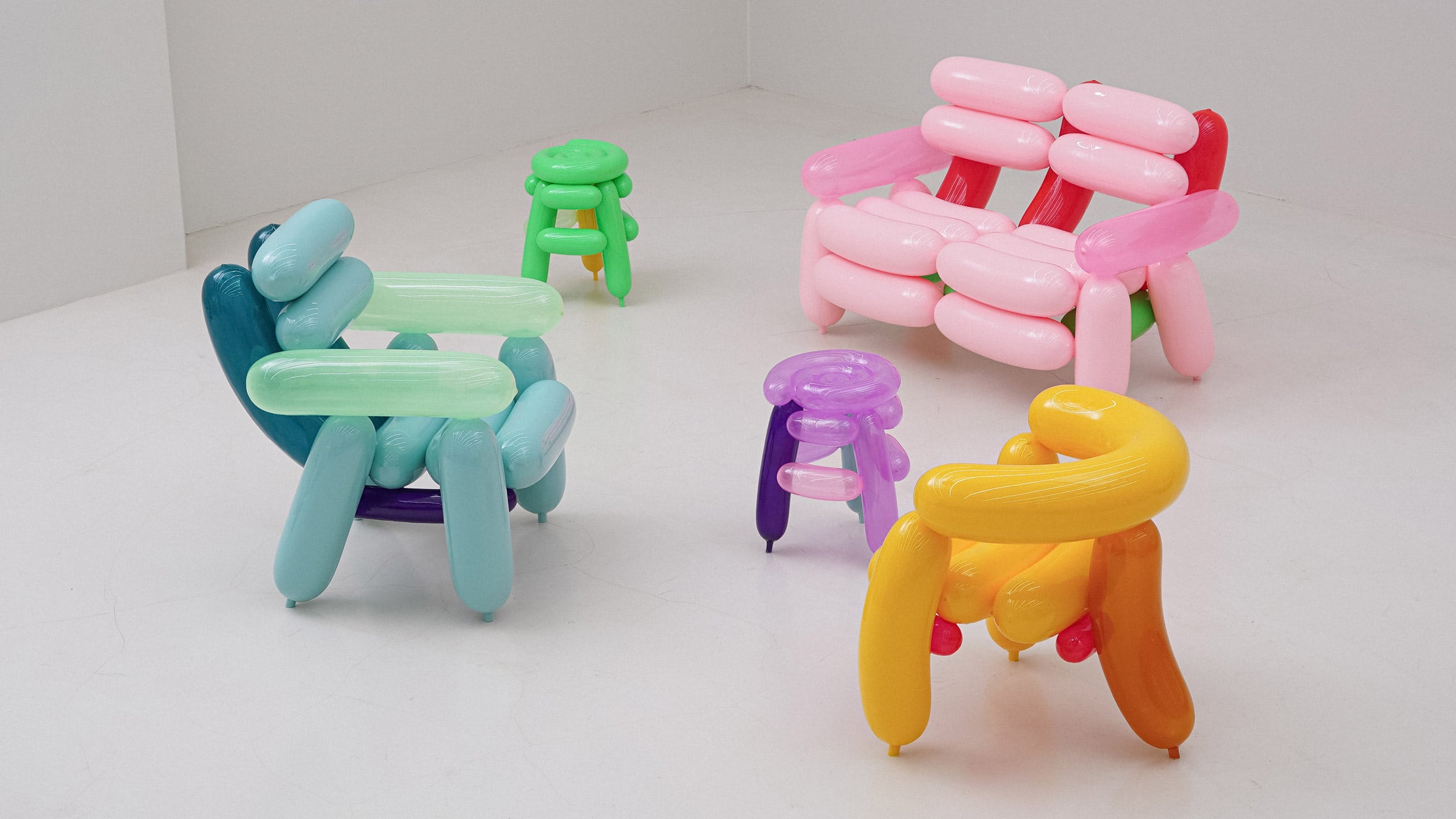
Sharing space in the collectible circuit was South Korean designer Seungjin Yang, whose whimsical yet technically demanding Ballon furniture series made a strong impression at the fair. Yang exhibited a collection comprising a sofa, two armchairs, and two stools. The creation process requires up to two weeks of meticulous labor per piece, during which real balloons are repeatedly coated and reinforced with layers of colourful epoxy resin until the structure achieves load-bearing integrity. Despite their deceptive appearance of fragility, the resulting items possess the physical strength necessary for everyday functional seating.
Official Responses and Creator Statements
The theoretical underpinnings of these newly launched works point to a unified desire among contemporary creators to expose the mechanics of their craft. Discussing the conceptual framework behind his debut cabinet, Didi Ng Wing Yin emphasized the deliberate juxtaposition inherent in his material choices.
"I wanted to explore the dynamic contrast between form and texture," Ng stated in an interview. Elaborating on the structural anatomy of the Pleats Cabinet No. 1, he added, "The chunky pedestal base is built from straightforward architectural beams that retain their natural knots and raw characteristics, providing a heavy, structural anchor for the light, organic silhouette of the pleated cabinet door."
Similarly, Flora Lechner articulated a functional philosophy that redefines everyday objects through structural engineering. "Exo 01 approaches the vase more as a support structure than as a container," Lechner noted, drawing a direct parallel between botanical display and anatomical stabilization. "Inspired by braces used to hold and align parts of the body, the work applies this principle to flowers."
Broader Impact and Market Implications
The collective reception of these October design launches underscores several critical movements within the contemporary furniture and decorative arts sectors. First, the blurring lines between architecture and furniture design—exemplified by Studio Hagen Hall’s architectural integration and Anne Holtrop’s geological glass casting—demonstrate a rising demand for bespoke, site-specific interior objects that treat domestic space as a cohesive landscape.
Second, the heavy reliance on sustainable or locally sourced materials, such as Didi Ng’s Finnish timber and Studio Hagen Hall’s recyclable smoked glass, highlights an ongoing industry imperative to merge high-end collectible status with ecological responsibility. As galleries and collectors increasingly value transparency in fabrication, items that display their structural joints, natural timber knots, or mechanical fixings without concealment are commanding significant attention.
Ultimately, October’s product highlights signal that the market for collectible design is prioritizing narrative-driven craftsmanship. By transforming industrial hardware into aesthetic centerpieces—whether through aluminium clips, epoxy-coated resins, or stacked brass slabs—designers are proving that structural honesty and material innovation remain the most potent currency in modern product development.