Mastering Python Context Managers Beyond File Handling for Robust System Architecture

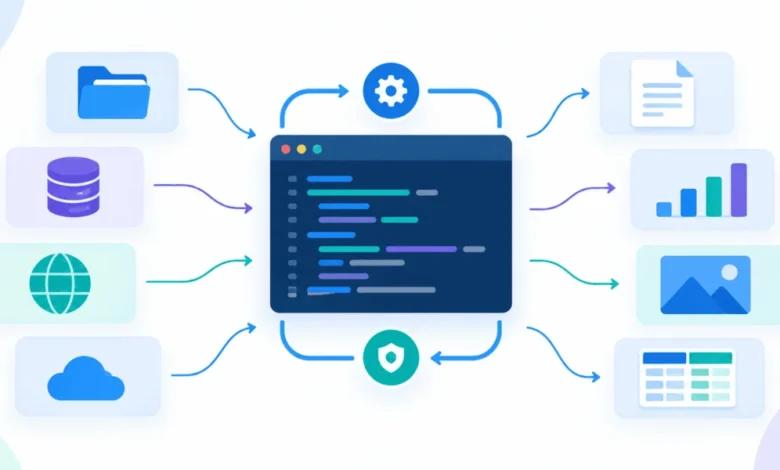
In the landscape of modern software engineering, the Python with statement is frequently introduced as a convenient shorthand for file operations, ensuring that a file descriptor is closed automatically regardless of whether an operation succeeds or crashes. However, this interpretation significantly understates the power of the Python context manager protocol. When leveraged correctly, context managers serve as the foundation for sophisticated resource lifecycle management, error handling, and state synchronization. By abstracting setup and teardown logic into a unified, predictable interface, developers can eliminate common sources of "stale state" bugs that often plague production machine learning pipelines and complex data processing scripts.
The Problem of Brittle Housekeeping
To understand the necessity of robust context management, one must look at the "happy path" bias prevalent in junior-level script development. In many data evaluation pipelines, developers write scripts that perform extensive housekeeping: creating temporary directories for extracted datasets, modifying environment variables to point toward high-speed caching disks, suppressing noisy logging output from third-party libraries, and initiating performance timers.
In a traditional, linear script, these cleanup tasks are performed at the bottom of the file. This creates a critical vulnerability: if an error occurs during the evaluation process—such as a malformed record in a dataset—the execution flow is interrupted, and the cleanup code is never reached. This leads to "zombie" resources. A machine running a high-frequency evaluation suite may quickly accumulate gigabytes of uncleaned scratch files, while an environment variable pointing to a deprecated cache path can cause subsequent runs to fail silently. Furthermore, a logger set to a low-verbosity level during an error-handling phase can obscure the very tracebacks needed to diagnose the failure, leaving the next operator to debug a system that has been left in a state of partial configuration.
Deconstructing the Protocol: Boundary Management
At its core, the context manager protocol is a mechanism for defining a scope-bound contract. The Python data model specifies that the with statement triggers two primary methods: enter() and exit(). When the interpreter hits a with block, it invokes enter(), assigns the returned value to the target variable (if provided), and proceeds to execute the internal block. The guarantee provided by the interpreter is absolute: the exit() method will be executed regardless of whether the block finishes normally, encounters a return statement, or raises an unhandled exception.
This mechanism acts as a boundary rather than a mere utility. For example, by implementing a custom class with these methods, developers can build a "Timer" that precisely measures execution time. Unlike a simple start/stop print statement, a context-managed timer ensures that even if an evaluation process crashes, the elapsed time is recorded and logged before the stack trace is presented to the user. This is critical for performance profiling in high-load environments where identifying the precise moment of failure is as important as measuring success.
Streamlining Logic with Decorators and Generators
For developers who find class-based implementation too verbose for simple tasks, the contextlib module provides the @contextmanager decorator. This tool allows a developer to write a generator function that yields control once. Everything defined before the yield statement acts as the setup phase, and everything placed in a finally block following the yield acts as the mandatory teardown.
This approach is particularly effective for managing logging configurations. Consider a scenario where a machine learning model’s evaluation logic generates thousands of lines of redundant information. A context manager can capture the current logging level, set it to a more restrictive state, and—crucially—restore the original state in a finally block. This ensures that the global logging configuration is not permanently altered by a single sub-process, preserving the integrity of the broader application environment.
Automated Lifecycle Control for Filesystem Resources
One of the most significant improvements in modern Python development is the deprecation of manual temporary file management in favor of the tempfile.TemporaryDirectory class. In legacy systems, developers often relied on hardcoded directory names like "/tmp/scratch." If two instances of a script were run simultaneously, they would overwrite each other’s data, leading to race conditions.
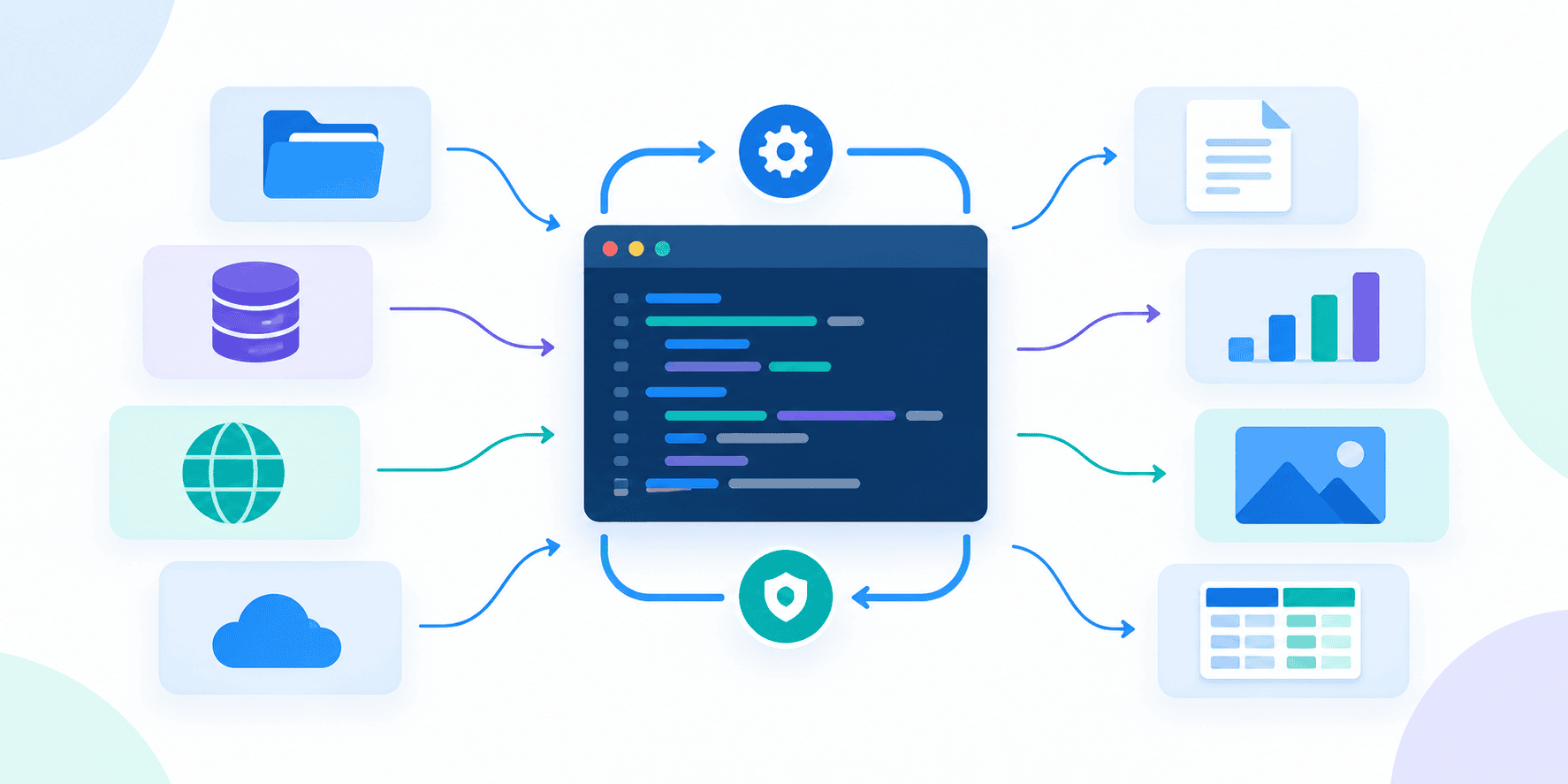
By using TemporaryDirectory, the developer delegates the creation and destruction of the filesystem path to the Python runtime. The directory is created with a unique, secure name, and the entire structure is recursively deleted upon exit of the with block. This not only prevents disk bloat but also ensures that no sensitive or transient data persists on the machine after the process terminates. As of Python 3.12, the introduction of the delete=False parameter provides a controlled mechanism for preserving artifacts during post-mortem analysis, offering a safer alternative to commenting out cleanup code.
Managing Dynamic Resource Stacks
As applications scale, developers often face scenarios where the number of resources—such as multiple open file handles for data shards—is not known until runtime. Nesting multiple with statements is impractical for dynamic lists. This is where the ExitStack utility becomes indispensable.
ExitStack serves as a registry for resources. A developer can iterate over a list of files, opening each and registering it with the stack using the enter_context() method. The stack keeps track of these resources and ensures they are closed in reverse order upon exiting the block. Furthermore, ExitStack supports callbacks for non-context-manager tasks, such as triggering a notification or resetting a network connection. By centralizing the cleanup logic, developers prevent the "callback hell" often associated with manual error handling in complex I/O operations.
Reversible State Changes and Global Variables
Perhaps the most subtle but dangerous class of bugs involves the modification of global states, such as environment variables (os.environ) or configuration dictionaries. These changes are global to the process, affecting all threads and coroutines simultaneously.
The unittest.mock.patch.dict() function is a powerful, often overlooked tool for managing these changes. While its name implies a testing context, its utility is universal. It creates a transactional change to a dictionary: if the key existed, it is modified and then restored to its original value; if the key did not exist, it is added and then removed. This is the gold standard for applying temporary configuration overrides, such as disabling parallelism in a library or pointing to a test-specific model cache.
Strategic Selection Criteria
To maintain clean, readable code, developers should adhere to a strict selection hierarchy when choosing how to manage resources:
- Class-based Managers: Use when the resource carries persistent state that the calling code must access after the block has finished (e.g., a timer or a database connection pool).
- @contextmanager: Ideal for simple, linear setup-teardown tasks where no complex state tracking is required.
- Standard Library Managers: Always prefer built-in tools like tempfile or contextlib.chdir whenever possible to reduce custom code surface area.
- ExitStack: Reserve for dynamic resource allocation where the quantity of managed items is determined by data input at runtime.
The Broader Implications for System Stability
The transition from manual resource management to context-based architecture is more than a stylistic preference; it is a fundamental shift toward defensive programming. In large-scale machine learning engineering, where processes often run for hours on expensive cloud infrastructure, the reliability of the cleanup phase is paramount.
When cleanup logic is decoupled from the success path and instead tied to the lifetime of the scope, the system becomes inherently more resilient to unforeseen errors. It reduces the likelihood of manual intervention, minimizes the risk of resource leaks, and ensures that the system state is predictable. Ultimately, the adoption of context managers transforms the "hidden" failure states—those that occur at 2:00 AM during a batch run—into manageable, observable, and recoverable events. As Python continues to evolve, the mastery of these patterns remains a hallmark of high-quality, production-ready engineering.