From Excel to Enterprise AI: How a Glasgow Gastroenterologist Built a 10-Terabyte Research Operating System

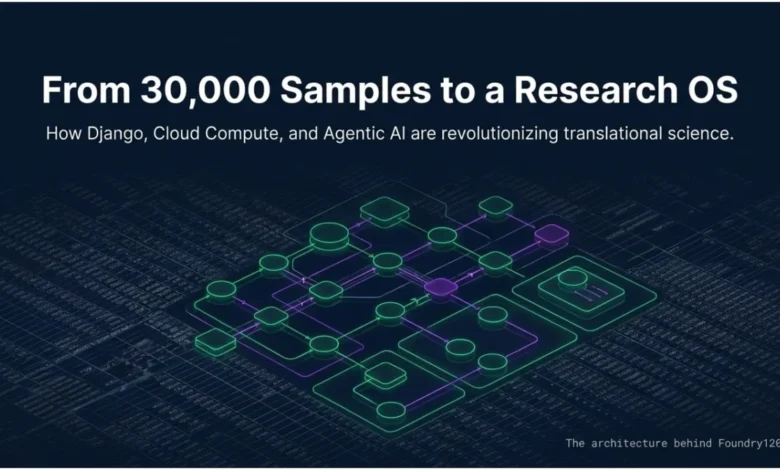
Modern medical research generates staggering volumes of data, yet the administrative backbone of many clinical studies remains surprisingly primitive. In 2020, Dr. Shaun Chuah, a gastroenterologist and clinical researcher at the University of Glasgow, faced a logistical hurdle common to large-scale epidemiological investigations. Planning a multi-center study tracking inflammatory bowel disease (IBD) across three cities and dozens of hospitals, Chuah calculated that his team would soon be responsible for tracking roughly 30,000 biological samples. When he inquired with peers about how such massive quantities of physical specimens and associated clinical data were managed, the prevailing answer was Microsoft Excel. Recognizing that spreadsheets would inevitably lead to data fragmentation, compliance errors, and administrative gridlock, Chuah embarked on a six-year software engineering journey that would transform him from a novice programmer into the architect of Foundry120, a robust clinical research operating system backed by agentic artificial intelligence.
The Genesis of Foundry120 and the Limits of Traditional Tools
At the onset of the project in 2020, Chuah’s programming repertoire was minimal, consisting largely of hand-coding basic HTML in Windows Notepad during his high school years, alongside occasional R or Python scripts used strictly for generating basic statistical graphs. Commercial laboratory information management systems (LIMS) existed, but they were often prohibitively expensive, required months of procurement and configuration, and were fundamentally designed for high-throughput hospital diagnostics rather than fluid, highly customized academic research trials.
Faced with these constraints, Chuah turned to the Python-based Django web framework. Drawn to its reputation as a "web framework for perfectionists with deadlines," he began reading the official Django documentation and studying developer resources such as the book Two Scoops of Django and Harry Percival’s Test-Driven Development with Python.
The initial iteration of the application was designed to solve a straightforward operational problem: sample tracking. By utilizing QR code labels affixed to blood, stool, and saliva samples, researchers could scan items into the database upon collection at various hospital sites, ensuring chain-of-custody integrity. However, as the study progressed through its multi-year timeline, the nature of the challenge evolved from tracking physical containers to managing complex, high-dimensional datasets.
Scaling into Big Data and Cloud Infrastructure
As biological samples were processed through various experimental pipelines, the resulting data flooded the research group. A subset of the cohort underwent cell-free DNA sequencing, yielding individual FASTQ.GZ files ranging from 5 to 10 gigabytes per participant. Other assays generated microbiome datasets, spatial transcriptomics, and massive genotyping files.
Initially, this data was scattered across local laptops and university network file shares, constrained by strict storage quotas and siloed organization. To overcome these bottlenecks, Chuah migrated the architecture to the cloud, specifically leveraging Microsoft Azure Blob Storage within the University of Glasgow’s institutional tenancy. This transition shifted the infrastructure paradigm from rigid, capped local drives to scalable cloud storage, though it introduced new financial and administrative considerations regarding long-term data retention mandates, which typically require clinical datasets to be preserved for a decade or more.
To support this influx of data while maintaining rigorous security and compliance standards, the technical stack matured. Foundry120 evolved to pair a Django-powered backend with a TypeScript and React frontend. This hybrid approach allowed the team to leverage Python’s rich data science ecosystem for analytical pipelines while utilizing JavaScript and TypeScript to manage the asynchronous, interactive interfaces required for modern web applications. Furthermore, the platform integrated continuous integration and continuous deployment (CI/CD) pipelines via GitHub Actions, enabling rapid, automated updates to production environments within minutes.
Integrating Agentic AI into Clinical Research
In its most recent phase of development, Foundry120 incorporated an agentic AI system named Helix. Unlike conversational chatbots that merely retrieve generalized information from a static knowledge base, Helix functions as a tool-using, self-correcting agent capable of executing complex workflows.
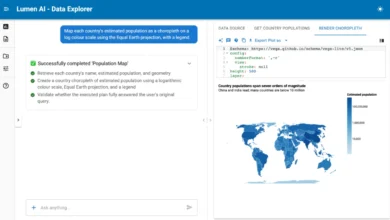
In a typical translational science workflow, a researcher might want to identify all biological samples belonging to clinical participants treated with a specific therapeutic agent who also possess matching microbiome profiles. Historically, performing this query required manually joining disparate clinical databases with laboratory records, a process that could consume days of tedious data wrangling. With Helix, researchers can issue natural language queries to interrogate the system.
The AI operates within strict architectural guardrails. Rather than directly accessing raw data or executing arbitrary commands, Helix interacts through Django-mediated backend APIs. When an analytical task is requested, Django orchestrates a secure virtual machine sandbox, transfers the necessary subsets of data from Azure Blob Storage, executes the required Python or analytical code (such as generating Matplotlib visualizations), and returns the verified output to the user. This architecture ensures that role-based access controls (RBAC) are strictly enforced, ensuring compliance with strict healthcare regulations such as GDPR and institutional review board (IRB) protocols.
Implications and Future Outlook for Academic Computing
The development of Foundry120 highlights a broader paradigm shift in academic and medical research. As experimental technologies produce exponentially larger datasets—ranging from multi-terabyte genomic sequences to high-resolution digital pathology and radiology scans—traditional on-premise computing clusters struggle to keep pace with fluctuating computational demands. The ability of cloud-native platforms to dynamically spin up hundreds of CPU cores for parallel processing, execute heavy workloads, and subsequently spin down resources offers a highly cost-effective model for universities.
At the same time, the integration of agentic AI into data management alters the day-to-day role of clinical researchers. Rather than spending weeks writing custom scripts to parse data tables, researchers increasingly act as supervisors and verifiers of AI-generated analyses. While challenges regarding model reliability and data hallucinations remain pertinent in high-stakes medical contexts, tools like Helix demonstrate how domain-specific guardrails can tame general-purpose models into reliable laboratory assistants.
As Foundry120 continues to expand beyond its origins in Glasgow’s inflammatory bowel disease research group, its evolution underscores the growing accessibility of advanced software engineering. By combining mature frameworks like Django with modern cloud storage and agentic AI, self-taught developers in specialized fields can build enterprise-grade infrastructure tailored precisely to the demands of twenty-first-century science.