Maxon revolutionizes 3D workflows by integrating third-party AI assistants into Cinema 4D via Model Context Protocol


The landscape of professional creative software is undergoing a seismic shift as major industry players pivot toward AI-assisted workflows. Following Adobe’s integration of AI-driven tools within the Creative Cloud suite earlier this year, Maxon has officially announced a significant expansion of its capabilities for Cinema 4D. By implementing native support for the Model Context Protocol (MCP), Maxon now enables 3D artists to leverage third-party artificial intelligence engines—including Claude, ChatGPT, and Codex—directly within their production environments. This integration marks a departure from proprietary "black box" AI, opting instead for an open-protocol approach that prioritizes artist control and data integrity.
The Evolution of AI in 3D Production
For decades, 3D modeling and animation software—specifically industry stalwarts like Cinema 4D—have been characterized by steep learning curves and time-intensive manual labor. Tasks such as hierarchy organization, scene management, and repetitive material application have long occupied a significant portion of an artist’s billable hours.
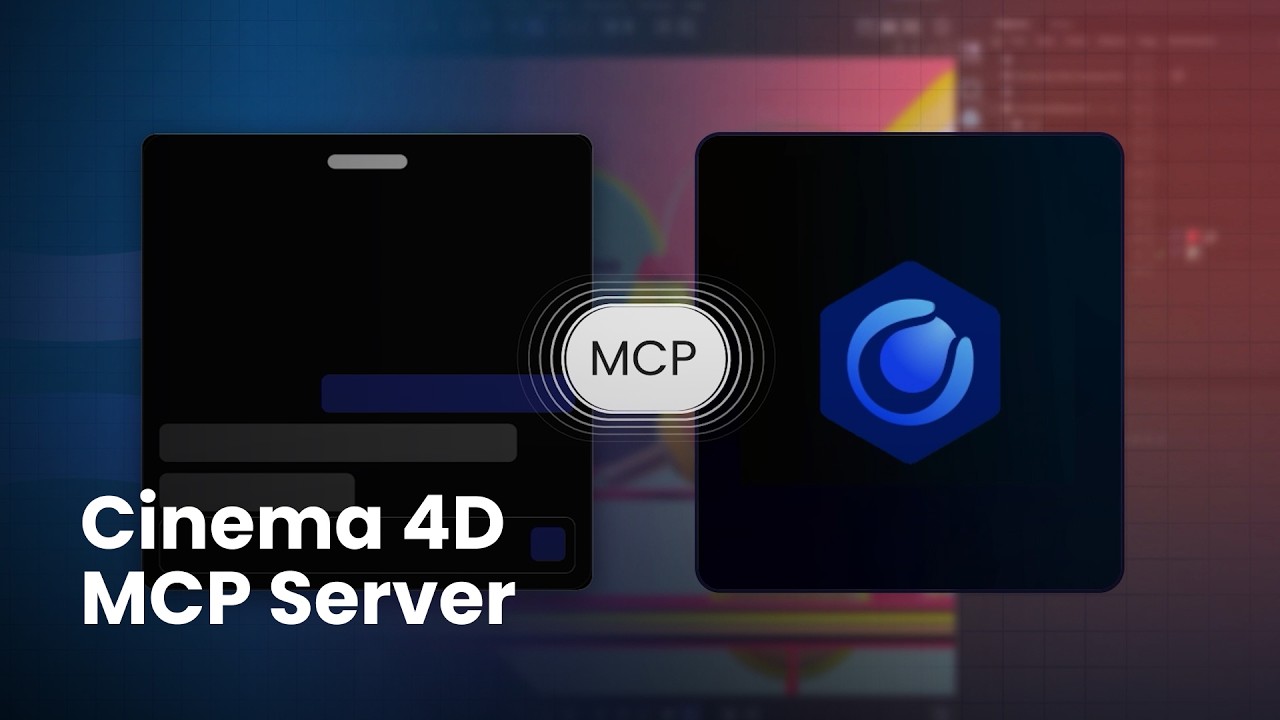
The integration of MCP (Model Context Protocol) into Cinema 4D version 2026.4 and later represents a strategic response to these bottlenecks. Rather than developing a bespoke, siloed AI, Maxon has opted to provide a bridge. MCP acts as a universal language between the software and various large language models (LLMs). This allows artists to issue natural language commands that the software interprets into precise, procedural actions.
This development is not an isolated incident but part of a broader trend of "AI augmentation" rather than "AI automation." In the past two years, the 3D industry has seen a push toward generative AI, such as the Tencent-backed HY 3D engine previously integrated by Maxon. However, the current shift toward MCP signals a transition from generating visual assets to managing complex project infrastructure.

Chronology of AI Integration at Maxon
The trajectory of Maxon’s AI adoption reflects a cautious, user-centric strategy:
- Early 2024: Adobe launches its internal AI assistant in Photoshop, setting a benchmark for in-app generative support.
- Mid-2024: Maxon introduces 3D model generation capabilities via the HY 3D AI engine, signaling an interest in external AI partnerships.
- Late 2024: Maxon begins testing of the Model Context Protocol (MCP) server architecture.
- Current Release: Official rollout of native MCP support in Cinema 4D 2026.4, providing cross-platform compatibility for Windows and macOS users.
- Forthcoming: The release of the specialized Cinema 4D iPad application, expected to further integrate these AI-assisted workflows into mobile production environments.
Technical Functionality and Workflow Optimization
The power of the MCP integration lies in its ability to execute specific, high-friction tasks without requiring the user to switch applications or manually navigate deep-level menus. According to documentation provided by Maxon, the AI assistant can handle a diverse array of procedural operations, including:
- Hierarchy Management: Automatically organizing complex, imported CAD or DCC files into consistent, project-standard hierarchies.
- Scene Automation: Generating render queue jobs, organizing light setups, and creating multiple scene variations based on external data sources like CSV or JSON files.
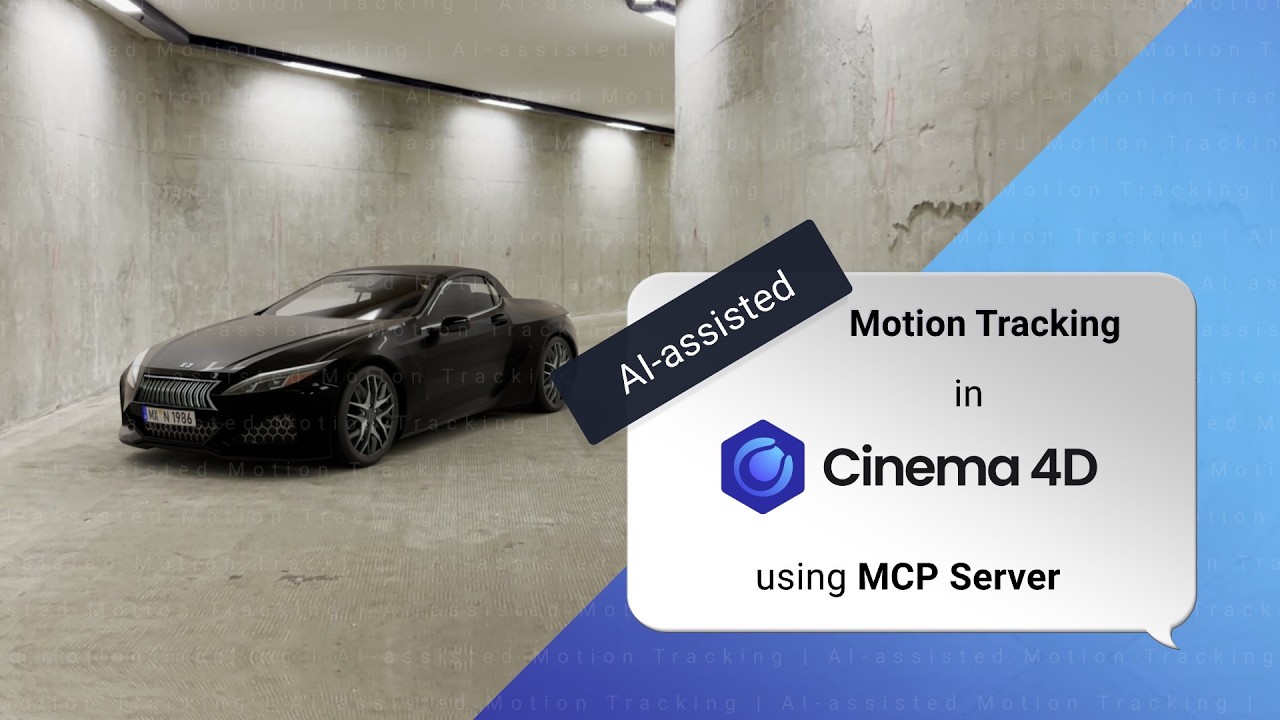
- Technical Rigging and Tracking: Assisting with the initial setup of basic camera tracking, applying UV mapping parameters, and facilitating preliminary rigging tasks.
- Multipass Rendering: Automating the preparation of render passes, which historically requires significant manual setup time to ensure proper output for compositing.
Unlike cloud-based generative tools that often result in "baked" or static assets, the output of an MCP-driven command in Cinema 4D remains native scene data. This distinction is vital for professional studios; because the AI operates through the software’s existing API, every change is reflected in the undo history and remains fully editable by the artist.
Data Security and the "Human-in-the-Loop" Mandate
One of the primary concerns regarding AI in professional creative pipelines is the security of intellectual property and the potential for "hallucinated" errors. Maxon has addressed these concerns by implementing a "Human-in-the-Loop" architecture.
The MCP server is disabled by default. When enabled, it is protected by an MCP adapter access token, ensuring that only authorized AI agents can interface with the software. Furthermore, artists can exercise granular control by selecting which specific groups of tools the AI is permitted to access. This "sandboxing" ensures that the AI cannot inadvertently overwrite critical project files or make unauthorized changes to sensitive pipeline assets.
Transparency is maintained through a local audit log, which records every instruction issued to the AI and every subsequent action taken. This provides supervisors with the ability to review automated processes for errors, ensuring that the AI functions as a tool for efficiency rather than a replacement for creative oversight.
Broader Implications for the 3D Industry
The integration of LLMs into 3D software signals a shift in the role of the 3D artist. If a machine can handle the "janitorial" aspects of scene management—naming objects, organizing layers, and setting up render passes—the artist is liberated to focus on higher-level creative tasks: lighting, composition, and visual storytelling.
From a market perspective, this move puts pressure on competitors like Autodesk (Maya/3ds Max) and Foundry (Modo/Nuke) to either build their own AI ecosystems or adopt open protocols like MCP. The industry is moving toward a standard where "prompt-based" interaction will eventually be as common as mouse-and-keyboard input.
However, this transition is not without risk. Critics argue that relying on third-party LLMs for complex pipeline tasks could create a dependency on external service providers. Furthermore, the accuracy of these models remains a point of scrutiny; while an AI can accurately organize a hierarchy, it may struggle with the nuanced, non-linear creative decisions that define high-end animation and visual effects.
Expert Analysis and Future Outlook
Industry analysts view the MCP approach as a pragmatic middle ground. By choosing not to build its own proprietary LLM, Maxon avoids the immense legal and technical burden of training a large-scale model, while simultaneously granting its users access to the most advanced AI technology available on the market.
"The value proposition here is not in the generation of the art itself, but in the compression of the production timeline," says a spokesperson from a prominent digital production house familiar with the integration. "If I can save thirty minutes a day on scene organization, that is an extra two and a half hours of creative work per week, per artist. In a studio of fifty people, that is a massive gain in productivity."
Looking forward, the success of this integration will likely be measured by the stability of the API and the ease with which users can write custom "instructions" for the AI. As the technology matures, we can expect to see the emergence of specialized "AI agents" pre-trained for specific disciplines—such as architectural visualization, character animation, or product design—that can be loaded into the Cinema 4D environment via the MCP bridge.
Conclusion
Maxon’s decision to adopt the Model Context Protocol in Cinema 4D is a clear indication that the future of 3D production is collaborative. By providing a bridge to powerful third-party AI assistants while maintaining a strict, locally-controlled, and audit-ready framework, Maxon has effectively sidestepped many of the ethical and technical pitfalls that have plagued early AI implementations in other sectors. As the industry continues to grapple with the role of artificial intelligence, this "protocol-first" strategy provides a robust template for how professional software can evolve without compromising the integrity of the creative process. With the upcoming iPad application set to further democratize these tools, the barrier to entry for complex 3D production continues to lower, even as the ceiling for creative output rises.