How AI Can Act as a Strategic Thought Partner in Data Storytelling and Contextual Framing


The modern corporate landscape is inundated with data, yet organizations frequently struggle to transform raw analytics into compelling, actionable narratives. At the core of this challenge lies a fundamental disconnect between exploratory data analysis—uncovering what the numbers say—and explanatory communication—conveying what those numbers mean to decision-makers. Recognizing this persistent hurdle, professionals across industries are increasingly turning to artificial intelligence not as a replacement for human judgment, but as an interactive, on-demand thought partner designed to sharpen strategic context before a single chart or slide is built.

Background Context and the Evolution of Data Communication
For years, established methodologies in data visualization and business communication have emphasized that effective data storytelling begins long before software is opened or color palettes are selected. Frameworks popularized by training organizations such as Storytelling with Data (SWD) dictate that context must be established first. Analysts must thoroughly understand their audience, define clear objectives, articulate what is at stake, and develop a single, cohesive point of view—often encapsulated in a concise "Big Idea."

Historically, establishing this foundational context relied heavily on solo reflection or scheduling time with busy colleagues to pressure-test ideas. While peer review remains valuable, it is frequently constrained by calendar availability and human fatigue. The integration of modern generative artificial intelligence models, such as Anthropic’s Claude or OpenAI’s ChatGPT, introduces a scalable alternative. These tools offer continuous availability to critique framing, challenge assumptions, and introduce alternative viewpoints during the critical early stages of project planning.
Chronology of the Strategic Process: A Case Study in People Analytics
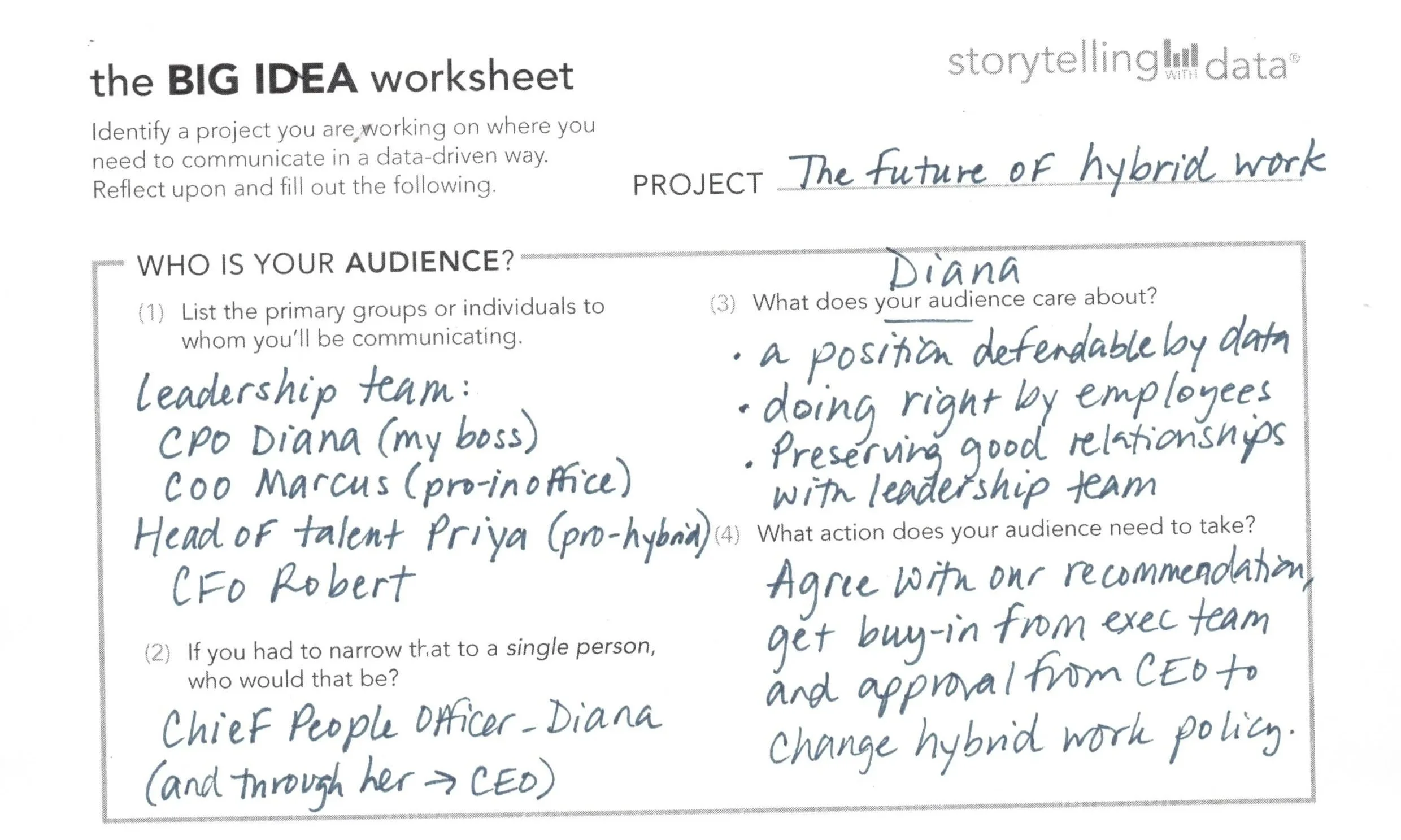
To understand how AI functions effectively as a thought partner, industry practitioners often examine simulated or anonymized real-world deployments. A primary example involves a People Analytics Manager at a mid-sized professional services firm tasked with evaluating the efficacy of the company’s mandatory hybrid work policy.
The timeline of this project illustrates a methodical approach to blending human domain expertise with AI-driven inquiry:
- Initial Data Discovery: The analytics team spent weeks gathering and analyzing internal metrics, correlating employee performance ratings with physical office attendance patterns, tracking collaboration network densities, and measuring employee attrition trends.
- Formulating the Hypothesis: The data revealed a nuanced reality rather than a binary outcome. A rigid, one-size-fits-all policy requiring three days in the office and two days remote was failing to optimize productivity across diverse business units. The team formulated a recommendation to transition toward a differentiated model tailored to specific roles and team typologies.
- Engaging the AI Thought Partner: Rather than immediately drafting slide decks, the manager engaged an AI model. Following a structured framework—such as the SWD Big Idea worksheet—the manager established the project’s parameters, including project goals, audience demographics, and desired outcomes.
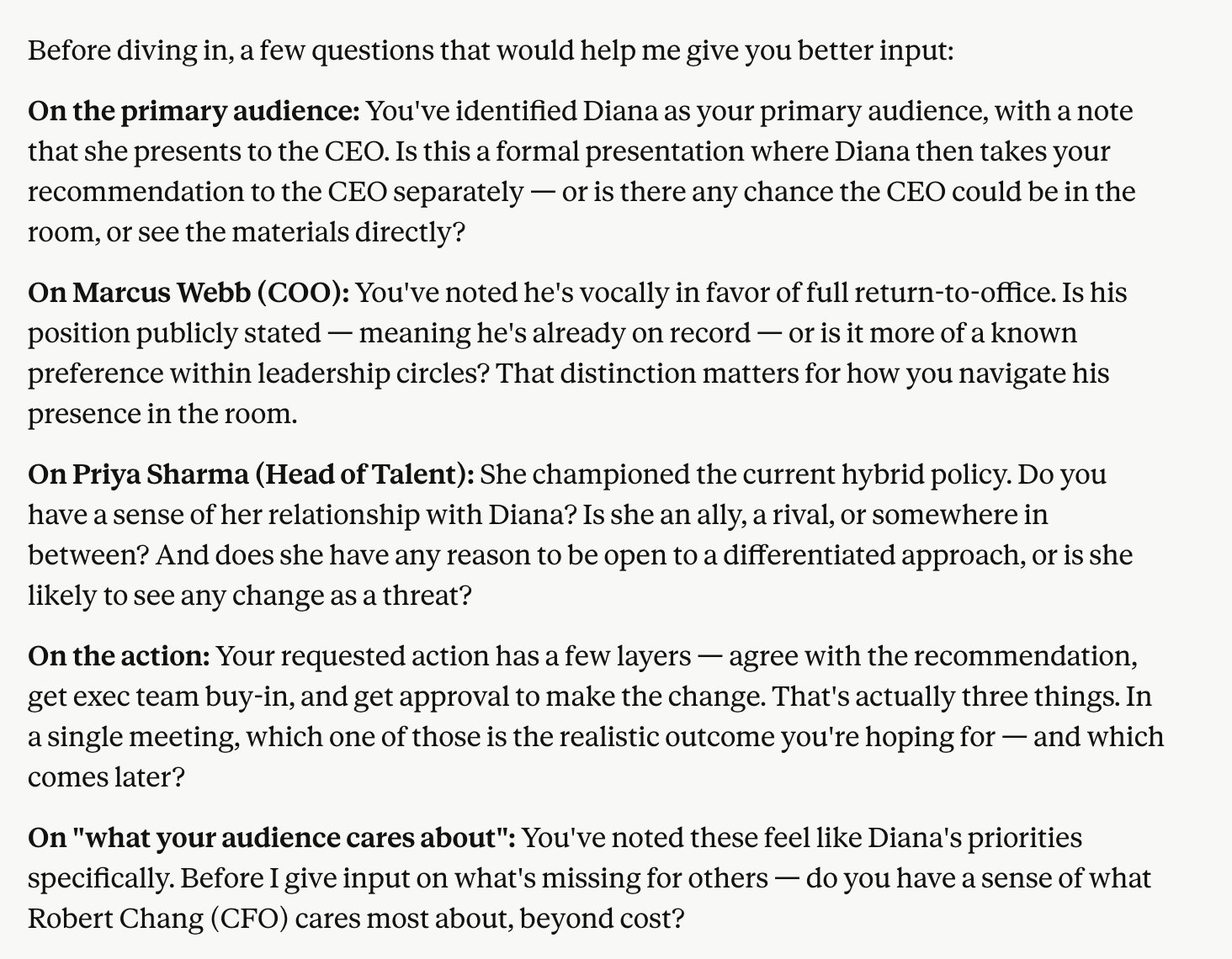
- Audience Mapping and Refinement: The manager initially framed the primary audience around a single executive sponsor, Diana. However, through structured prompts and iterative questioning, the AI prompted the manager to account for the broader executive committee—including stakeholders with conflicting priorities, such as Priya, who championed flexibility for talent acquisition, and Robert, who focused heavily on corporate real estate expenditures.
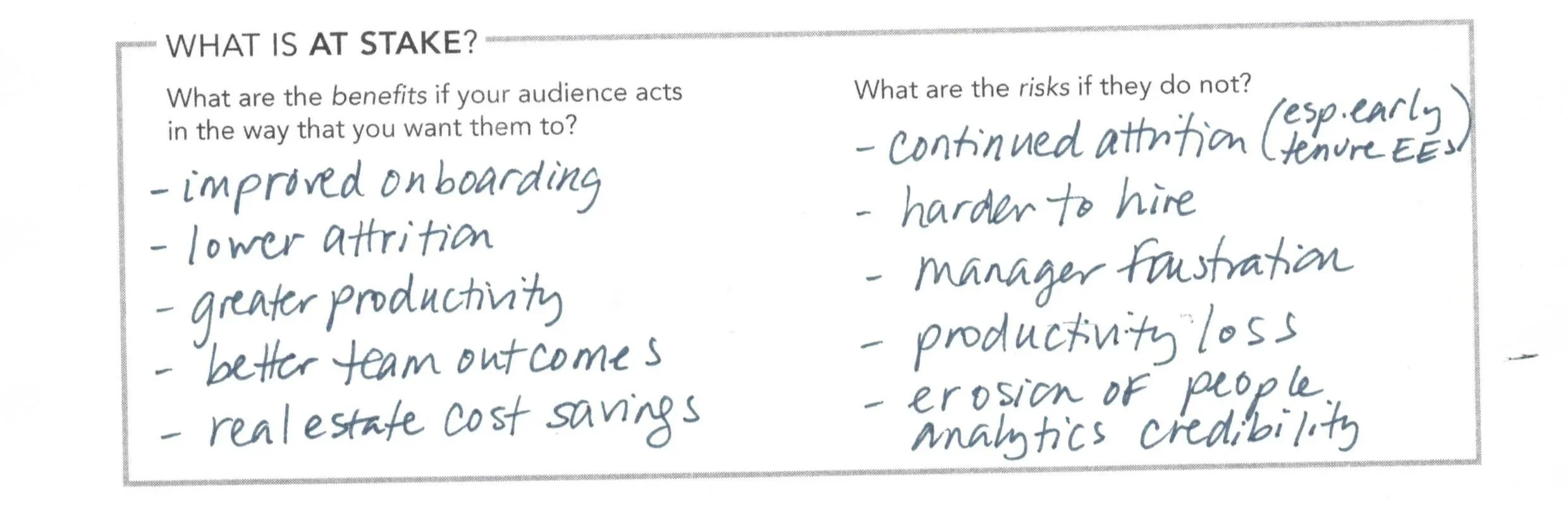
- Defining the Stakes and Crafting the Big Idea: By evaluating the risks of maintaining the status quo against the benefits of the proposed policy, the manager refined the core message. The dialogue culminated in a single, powerful declarative statement designed to secure executive alignment without inviting premature debate over speculative metrics.
Supporting Data and Strategic Implications
The integration of generative AI into qualitative planning phases addresses a well-documented vulnerability in corporate decision-making: confirmation bias. Analysts frequently anchor prematurely to their own preliminary conclusions, failing to anticipate the objections of skeptical stakeholders.
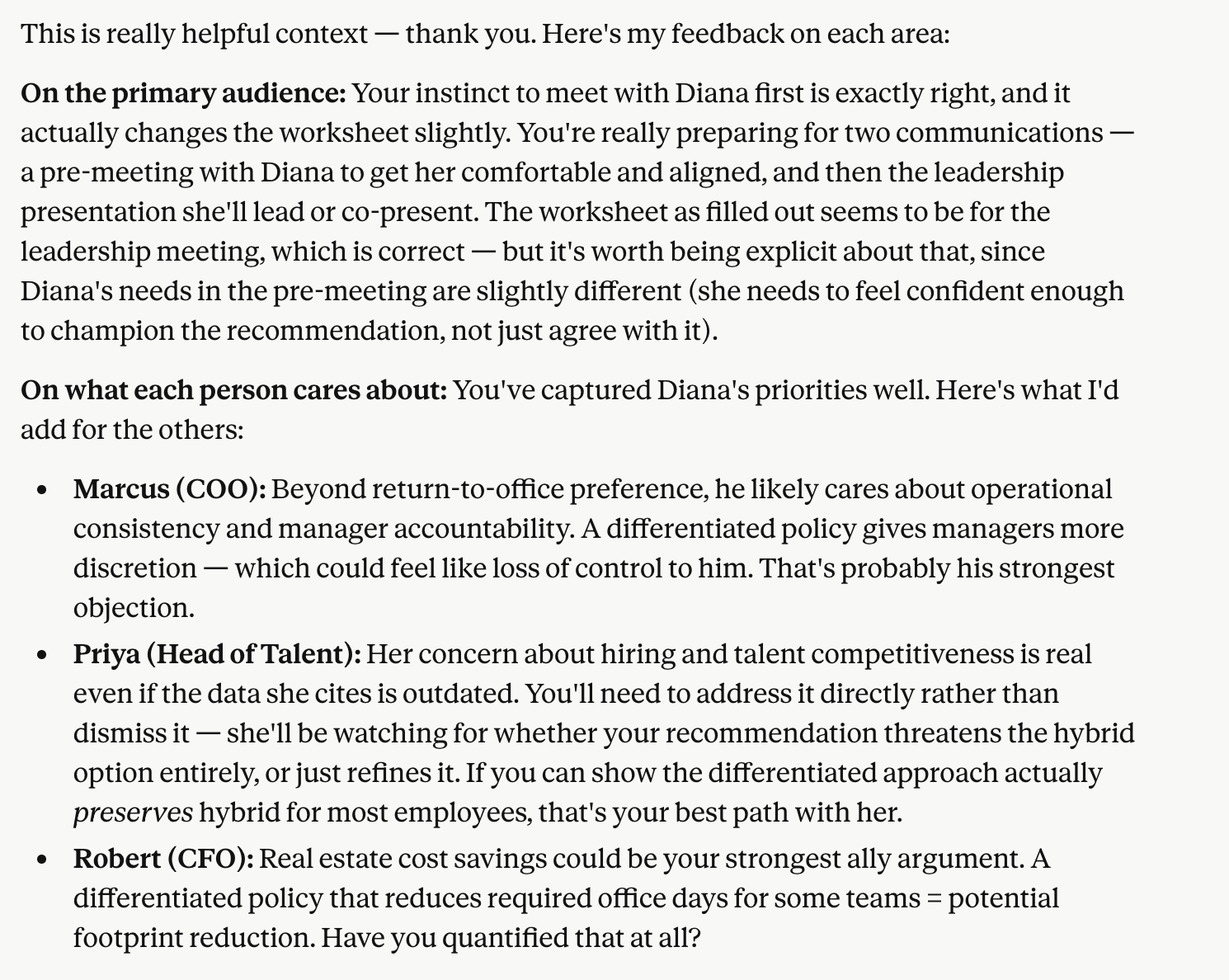
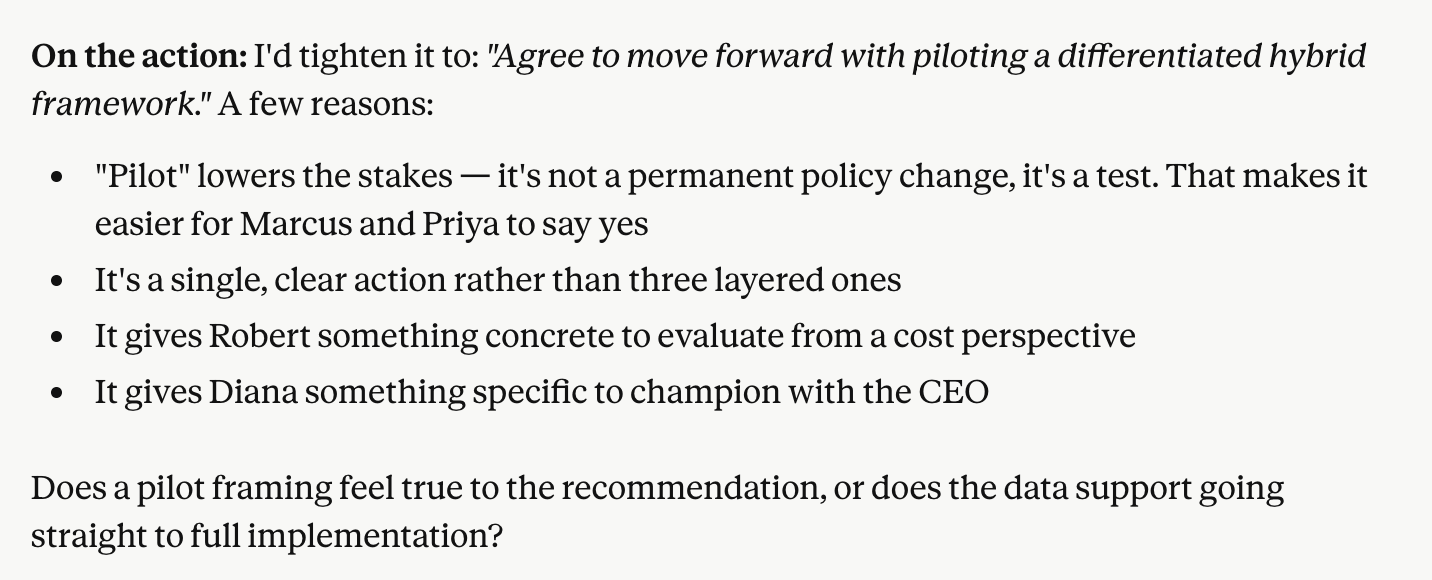
When utilized effectively, AI challenges users to defend their premises. For instance, in the hybrid work scenario, the AI model questioned the vagueness of internal metrics regarding "productivity gains" and pushed the analyst to ground the narrative in defensible organizational impacts, such as reduced real estate overhead and minimized management friction. Furthermore, the AI suggested framing the policy shift as a permanent operational restructuring rather than a temporary pilot, recognizing that meaningful reductions in commercial real estate footprints cannot be achieved through short-term testing.
Industry analysts note that leveraging AI for contextual framing yields measurable efficiency gains. By stress-testing the narrative architecture before visualization begins, teams reduce rework, accelerate stakeholder consensus, and safeguard the credibility of internal analytics departments. When leadership commissions rigorous data analysis and subsequently acts upon it, it reinforces an organizational culture rooted in empirical decision-making. Conversely, poorly framed insights often result in discarded reports and diminished faith in internal data capabilities.
Official Responses and Best Practices for AI Integration
While technological integration offers substantial benefits, industry experts emphasize critical boundaries for practitioners. AI models excel at synthesis, questioning, and structural organization, but they lack contextual ownership of the enterprise environment. Consequently, professionals are advised to adhere to established best practices when utilizing AI as a strategic partner:
- Maintain Human Sovereignty: AI outputs should be treated as starting points and provocative critiques rather than definitive directives. The human practitioner must always retain ultimate editorial control over the strategic narrative.
- Go Analog First: Before feeding project details into an LLM, practitioners benefit from drafting initial thoughts manually—using pen and paper—to ensure the core perspective originates from genuine human analysis rather than algorithmic suggestion.
- Context is King: The quality of AI assistance is directly proportional to the specificity of the input. Vague prompts yield generic advice, whereas detailed parameters regarding organizational politics, audience psychology, and specific constraints produce high-value critical feedback.
Broader Industry Impact
As artificial intelligence continues to mature within enterprise environments, its role in data storytelling is shifting from a tactical utility—such as generating code or summarizing text—to a strategic catalyst. By shifting AI engagement to the pre-visualization phase, organizations are discovering that the most powerful application of artificial intelligence is not in building the final product, but in helping humans think more rigorously about why they are communicating in the first place.