The Evolution of Baseline: Context and Strategic Significance
The Baseline project, an initiative spearheaded by the web development community and major browser vendors, serves as a clear indicator of feature maturity. By labeling features as "Newly available" or "Widely available," the initiative reduces the cognitive load on developers who previously had to rely on fragmented "Can I Use" data. The January 2026 release cycle emphasizes the transition of complex JavaScript architecture and precise CSS layout tools into the standard toolkit, signaling a shift toward more predictable, maintainable, and high-performance web applications.
Newly Available Features: Enhancing Modern Web Architecture
The features categorized as "Newly available" this January represent tools that have achieved consistent support across all major browser engines.
The Navigation API and SPA Routing
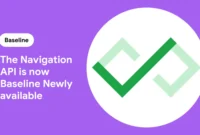
Perhaps the most consequential addition is the Navigation API. For years, the legacy History API has been a point of contention for developers building Single Page Applications (SPAs). The Navigation API replaces the clunky event-based patterns of the past with a centralized, promise-based interface. By providing a standardized way to intercept navigation, handle state, and manage history entries, this API effectively eliminates much of the boilerplate code that previously plagued SPA routing. Industry analysts suggest that this will significantly reduce the surface area for bugs in client-side navigation, leading to more resilient user experiences.
JavaScript Modules in Service Workers
The integration of ES modules into service workers addresses a long-standing request from the developer community. Previously, service workers were restricted to older script-loading mechanisms, which hindered code reuse between the main thread and background tasks. With the support for type: 'module', developers can now utilize standard import and export statements within their service workers. This standardization aligns service workers with the broader JavaScript ecosystem, facilitating better tree-shaking, cleaner dependency management, and a unified architecture across different execution contexts.
CSS Styling and Advanced Selectors
The introduction of the :active-view-transition pseudo-class provides a much-needed hook for the View Transitions API. By allowing developers to target the root element during a transition, the platform now enables more sophisticated visual effects without the need for complex state-management hacks.
Additionally, the suite of root-relative CSS units—specifically rcap, rch, rex, and ric—expands the precision of typographic layouts. These units enable developers to set dimensions relative to the root font’s characteristics, such as cap-height or character width. This is particularly vital for internationalized web projects where the physical dimensions of text can vary drastically between Latin and CJK (Chinese, Japanese, Korean) scripts, ensuring that layouts remain stable regardless of the user’s language settings.
Widely Available Features: Strengthening the Core
Widely available features are those that have seen stable support for a longer period, making them safe for use in virtually all production environments.
The Two-Value Display Property
The transition of the multi-keyword display property syntax to "Widely available" status represents a move toward greater logical consistency. By allowing developers to explicitly define both outer and inner display types (e.g., display: inline flex), the W3C has moved to clarify the distinction between how an element sits within its parent container and how its own children are structured. This syntax is not merely stylistic; it provides a more readable and modular approach to CSS layout that prevents common errors associated with the shorthand legacy properties.

Advanced Animation Control
The animation-composition property is another critical addition to the CSS specification. It provides a standardized way to define how simultaneous animations interact. Before this property, developers often struggled with "animation overrides" where later CSS rules would simply overwrite earlier ones. With options like add and accumulate, developers can now layer complex animations mathematically, creating more fluid and sophisticated user interface transitions.
Immutable Array Transformations
JavaScript’s evolution continues with the broader adoption of "Array by copy" methods, such as toReversed(), toSorted(), and toSpliced(). In the past, array manipulation in JavaScript almost universally resulted in the mutation of the original data, a frequent source of state-related bugs in complex applications. By returning a new copy of the array, these methods encourage functional programming patterns, which are inherently easier to debug and test.
Broader Implications for the Web Ecosystem
The January 2026 digest highlights a trend toward "platform-native" solutions. By integrating features like the Navigation API and advanced CSS units into the browser itself, the reliance on heavy third-party polyfills is significantly reduced.
From a performance standpoint, this is a major victory. Polyfills often carry significant payload costs, increasing the time-to-interactive (TTI) for users on mobile or lower-end devices. Native implementations are highly optimized by browser engines, ensuring that these features run with minimal overhead.
Furthermore, the standardization of these tools fosters a more consistent developer experience. As these features become "widely available," the need for complex "transpilation" or "feature detection" logic in build pipelines diminishes. This creates a more stable foundation for the next generation of web frameworks, which can now build upon these primitives rather than reinventing them.
Chronology and Development Roadmap
The roadmap leading to this January release began with intense collaboration between the W3C Web Platform Working Group and major browser engine teams (Chromium, Gecko, and WebKit). The following timeline summarizes the progression of these features:
- Q3 2025: Initial proposal and draft specifications for the Navigation API and CSS root units are finalized.
- Q4 2025: Interoperability testing begins. Browser vendors implement the features behind flags for public feedback.
- January 2026: Finalization of Baseline status based on verified support across all major platforms.
- February 2026: Documentation and developer outreach efforts scale up to educate the community on the new standards.
Official Stance and Community Feedback
While the W3C rarely issues individual statements on specific monthly digests, the consensus among core contributors to the Baseline initiative is that the project is successfully achieving its goal of "platform predictability."
Feedback from the developer community, gathered through the official GitHub issue tracker, has been largely positive. Many developers have noted that the clarity provided by the Baseline digest allows them to make more informed decisions about when to adopt new technologies. The most requested features for upcoming months focus on better native support for scroll-driven animations and enhanced hardware-accelerated image processing, areas which are currently under active discussion.
Conclusion
The January 2026 Baseline digest is more than just a list of new features; it is a testament to the stability and maturity of the modern web platform. By focusing on ergonomic improvements, standardized navigation, and more precise styling capabilities, the web continues to evolve into a powerful application runtime. For developers and businesses alike, these updates provide the necessary building blocks to create faster, more accessible, and more maintainable digital experiences. As the year progresses, the industry expectation is that the pace of these "Baseline" updates will remain steady, keeping the web at the forefront of digital innovation.