What is Important Edition 18: A Comprehensive Review of Recent CSS and Web Development Advancements

The landscape of modern web development is currently undergoing a period of rapid evolution, marked by the introduction of new CSS specifications, experimental browser features, and refined methodologies for UI component architecture. Over the past several weeks, the developer community has seen a concentrated effort to standardize interaction patterns—such as tooltip behaviors and dark mode toggles—while simultaneously pushing the boundaries of what is possible with browser-native APIs. This report outlines the most significant technical updates, the current state of browser compatibility, and the potential implications for front-end engineering workflows.
The Evolution of UI Interaction Patterns
A significant portion of recent discourse has centered on the optimization of user interface components, specifically tooltips. The debate revolves around the balance between user intent and system responsiveness. Developers Abhishek Jakhar and Chris Coyier have provided critical insights into the implementation of "delayed-then-instant" tooltip triggers. The technical objective is to prevent accidental activation through a hover delay while ensuring that once an interaction is initiated, the tooltip vanishes immediately upon mouse-out.
While legacy implementations often relied on complex JavaScript event listeners to manage these transitions, the emergence of "interest invokers" in Chromium-based browsers offers a more declarative path. By utilizing the interest-delay-start and interest-delay-end CSS properties, developers can offload the state-management burden to the browser engine. Although current support is limited to Chrome, the adoption of these properties represents a move toward native, performance-optimized interaction handling, allowing for progressive enhancement as other browser engines move to implement the specification.
Navigating the Geolocation API and HTML Elements
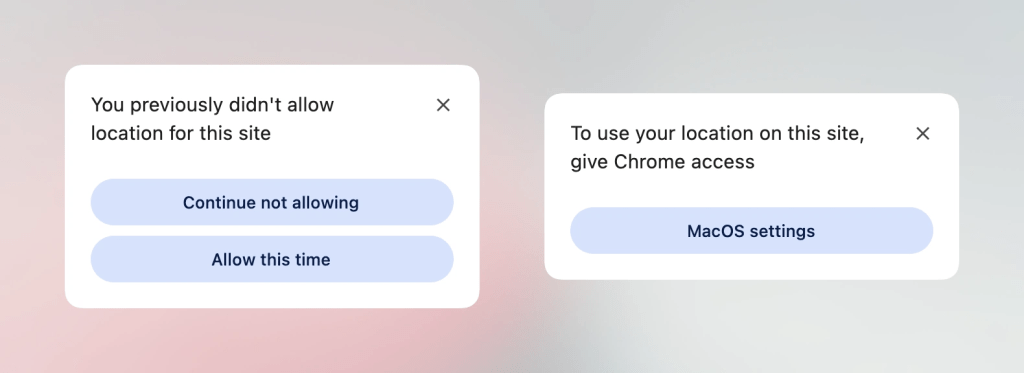
The integration of the <geolocation> HTML element marks a pivotal change in how web applications handle location-based data. Historically, the Geolocation API has been plagued by the complexity of external hardware dependencies, including GPS satellites, Wi-Fi triangulation, and cellular network data. These dependencies often resulted in intermittent failures and a cumbersome permission management process.
The new <geolocation> element simplifies the request lifecycle, though it introduces distinct styling restrictions that developers must account for in their CSS architecture. Because this feature is currently limited to specific browser implementations, industry experts have proposed hybrid strategies that utilize the <geolocation> element alongside legacy Geolocation API calls. This dual-track approach ensures that web applications remain functional across legacy environments while preparing for the eventual standardization of the new tag.
Advanced Syntax Highlighting and the Custom Highlight API
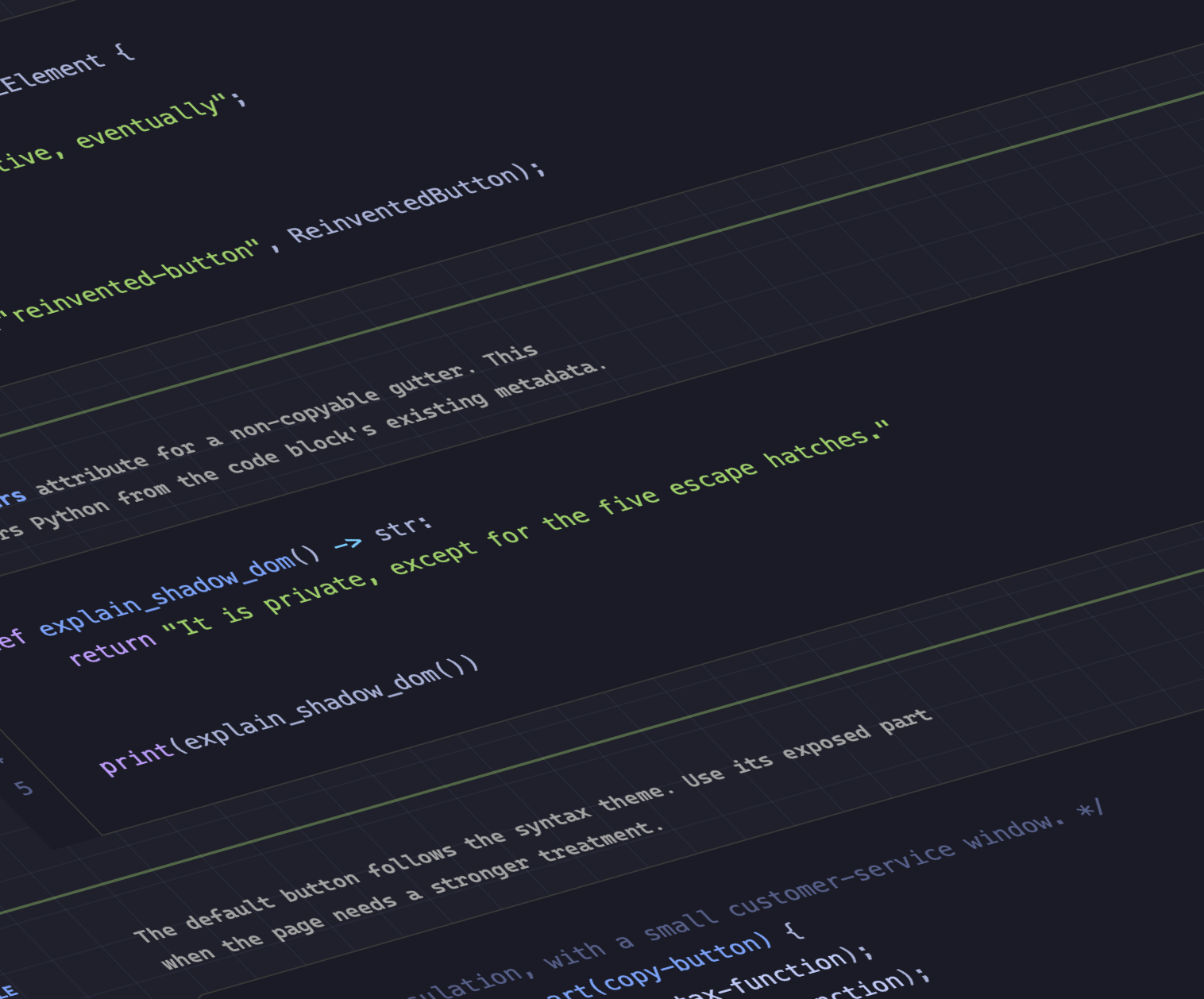
The introduction of the Custom Highlight API has provided a robust framework for text manipulation, most notably in the development of lightweight syntax highlighters. Dave Rupert’s "MicroLighter" project serves as a practical demonstration of how the ::highlight() pseudo-element can be leveraged to render syntax coloring without the heavy overhead of traditional DOM-node-based highlighters. By treating text highlighting as a rendering layer rather than a structural one, developers can achieve significant performance gains in applications that display large volumes of code, such as technical documentation platforms and online IDEs.
Structural Data and CSS Grid Variables
One of the most requested features in grid-based layout design is the ability to expose internal grid state to CSS variables. Recent advancements demonstrated by Temani Afif have shown that it is now possible to derive grid row and column information—and even specific coordinate indexes—directly into custom properties.
This functionality is particularly potent for complex layouts that require proximity-aware interactions. For instance, determining the "hover proximity" of a cursor relative to a specific grid cell allows for highly dynamic visual feedback loops. While current implementations often require that columns maintain equal widths, the ongoing evolution of the CSS Grid specification suggests that more flexible, variable-width grid tracking may be on the horizon.
The Tri-State Dark Mode Debate
User experience design in the era of system-wide dark mode has reached a crossroads. The industry is currently split between two-state (light/dark) and tri-state (light/dark/system-default) toggle implementations. While proponents of the two-state approach argue for simplicity and reduced cognitive load, advocates for the tri-state model—including browser architect Bramus—argue that users require an explicit "system default" setting to ensure the browser responds dynamically to OS-level changes.
The most effective current implementation appears to be the "auto-until-overridden" approach, which respects system preferences by default but allows for a persistent manual override that supersedes the system state. This design pattern satisfies both the need for automated synchronization and user autonomy.
Future Syntax: Class Prefix Selectors and named-feature()
Two of the most anticipated additions to the CSS specification are the class prefix selector and the named-feature() function. The class prefix selector, represented by syntax such as .something-*, promises to replace current, less performant attribute selectors like [class^="something-"]. By allowing browsers to optimize selector matching at the engine level, this feature could lead to cleaner, more maintainable codebases that are less prone to the performance penalties associated with complex regular expression-style attribute matching.
Simultaneously, the proposed named-feature() function for @supports queries seeks to resolve the problem of "undetectable" features. Currently, developers often struggle to query whether a browser supports specific, granular interactions—such as browser behavior during anchor positioning or transform-based layout shifts. By enabling named-feature(), the W3C aims to provide a reliable mechanism for feature detection, allowing developers to implement cutting-edge CSS features with a graceful fallback strategy that is guaranteed to function across diverse rendering engines.
Flex-Wrap Balancing and Layout Stability
The release of flex-wrap: balance in Chrome marks a significant milestone for responsive typography and component design. Mirroring the functionality of text-wrap: balance for block-level elements, this new property allows the browser to intelligently distribute flex items across multiple lines to ensure visual symmetry.
Historically, balancing flex items required either manual intervention or complex JavaScript calculations to determine the ideal break points. By offloading this task to the browser’s layout engine, developers can ensure that interfaces—particularly navigation bars and grid-based lists—remain aesthetically balanced regardless of the viewport width.
Industry Implications
The convergence of these features suggests a broader shift toward "browser-native" solutions for problems that were previously solved by JavaScript libraries. This transition is not merely cosmetic; it represents a fundamental change in how web applications are architected. As these APIs reach wider adoption, the dependency on third-party libraries for UI component management is expected to decline, leading to faster initial load times and more consistent behavior across different user agents.
The timeline for these features remains tied to the release cycles of the major browser engines (Blink, WebKit, and Gecko). While some features, such as named-feature(), have already gained traction in the Chromium ecosystem, their inclusion in the broader web standards ensures that they will eventually be available as a foundational component of the modern web platform. For professional web developers, the current task is to monitor these developments through progressive enhancement strategies, ensuring that today’s applications remain robust while leveraging the capabilities of tomorrow’s browser engines.