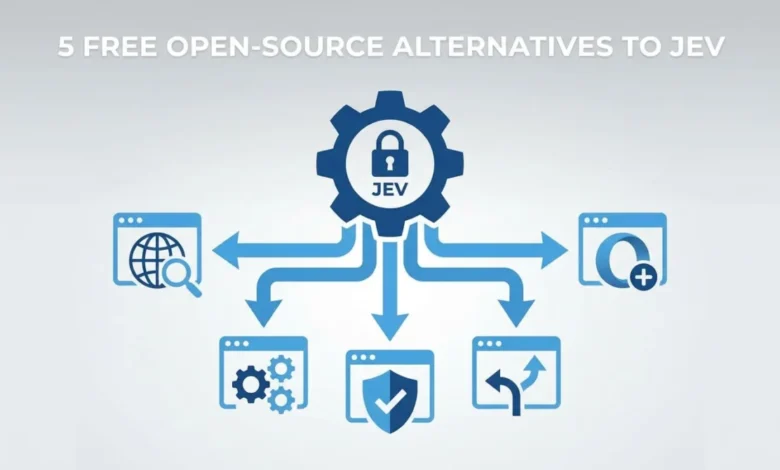
The rapid proliferation of Large Language Models (LLMs) has fundamentally altered the landscape of artificial intelligence, yet industry observers are increasingly noting that not every task necessitates the computational intensity of a generative response. As organizations scale their AI infrastructure, a new category of specialized tools known as "decision models" has emerged to handle high-frequency, low-latency tasks such as classification, scoring, and routing. While proprietary platforms like Jev have set an early industry standard for these functions, the rising demand for data sovereignty, cost control, and model transparency has spurred a robust ecosystem of open-source alternatives.
The Rise of Specialized Decision Models
Decision models differ from general-purpose LLMs by prioritizing calibrated confidence scores and structured outputs—such as discrete choices or numerical values—over conversational fluency. This shift represents a broader trend in the AI sector: moving away from "one-size-fits-all" models toward "right-sized" solutions. For many enterprise applications, using a massive, general-purpose model for a simple true/false classification is not only expensive but inefficient.
The industry timeline for this shift accelerated in early 2024, as developers began to push for local hosting of decision-making agents. By decoupling the decision logic from the proprietary cloud-based APIs provided by companies like TypeSafe, firms can reduce latency, ensure compliance with data residency requirements, and fine-tune models on proprietary datasets.
Mammoth-1: High-Performance Benchmarking
Developed by Base Labs at Baseten, Mammoth-1 is a 27B-parameter model derived from the Qwen3.5-27B architecture. It has gained significant attention following its performance in the Jev Decision Index 0.4 evaluation. With an impressive score of 71.24, Mammoth-1 has surpassed notable industry peers, including Perplexity’s Decider v1.2, which achieved 69.42, and the Jev 1.14 baseline at 62.2.
The technical implications of Mammoth-1 are clear: it provides a high-fidelity, MIT-licensed alternative for complex classification tasks and agentic workflows. However, the hardware requirements for a 27B model remain a barrier for smaller organizations. Deployment necessitates substantial GPU memory (VRAM), making it most suitable for enterprise-grade environments where performance accuracy outweighs infrastructure footprint.
vLLM Semantic Router D3: Multimodal Flexibility
For applications requiring versatility, the vLLM Semantic Router D3 series offers a tiered approach to decision-making. Spanning from 0.6B to 27B parameters, this model family is specifically designed for routing—a critical function for sophisticated AI agents that must decide which external tool or secondary model should process a specific request.
The inclusion of multimodal capabilities—supporting text, images, and video—positions D3 as a versatile orchestrator. By returning probability distributions rather than simple categorical labels, D3 allows developers to build more nuanced logic into their applications. When deployed through the vLLM System One endpoint, developers can select from the D3-Mini or D3-Flash variants to balance performance with available compute resources.
Perplexity pplx-decider v1.2: Advanced Question Processing
Perplexity’s contribution to this space, the pplx-decider v1.2, utilizes the Qwen3.8 architecture to provide a specialized decision engine. Its primary innovation lies in "joint question processing," a technique that enables the model to evaluate multiple queries against a single input simultaneously. This is particularly valuable for complex classification pipelines where the system must determine multiple attributes or candidate scores in a single inference pass.
Distributed under the Apache 2.0 license, this model is a significant asset for developers working on data-heavy pipelines. While it requires authenticated access via Hugging Face, the model’s ability to generate high-confidence estimates makes it a competitive choice for those building enterprise search or information retrieval systems.
H2O-Lightning-4B: Efficiency for Edge Deployment
Not every decision task requires the power of a 27B model. H2O-Lightning-4B, an open-source model released under the Apache 2.0 license, demonstrates that smaller, optimized models can effectively handle standard tasks like support ticket classification and request routing.
The availability of GGUF (GPT-Generated Unified Format) weights for this 4B model is a critical factor for adoption. By enabling local inference on hardware that may not support the massive memory footprint of larger models, H2O-Lightning-4B lowers the barrier to entry for smaller engineering teams. It serves as a compelling proof-of-concept that accuracy in decision-making is often a function of training quality rather than mere parameter count.
Kev: The Direct Jev Competitor
Kev has emerged as the most direct functional equivalent to the Jev platform. By leveraging the Qwen model architecture and offering sizes from 0.8B to 27B, Kev provides a scalable path for developers. Its most significant feature is its Jev-compatible API, which allows teams currently utilizing the TypeSafe Python SDK to migrate their existing codebase to a self-hosted, open-source alternative with minimal refactoring.
The ability to fine-tune Kev models on proprietary labeled data is a key differentiator. In a business context, this allows organizations to refine the model’s "decision logic" to match the specific nuances of their internal workflows, effectively turning a generic decision model into a bespoke enterprise asset.
Analysis: Economic and Strategic Implications
The migration toward open-source decision models carries significant implications for the AI industry. First, it marks a transition toward cost-efficiency. While proprietary APIs often operate on a pay-per-token or subscription basis, local hosting allows for predictable, fixed-cost infrastructure management.
Second, the "benchmark trap" remains a primary concern for developers. As noted by industry experts, a high score on the Jev Decision Index does not guarantee success in a production environment. The variance between a model’s performance on a benchmark dataset and its performance on a company’s unique, noisy, real-world data can be substantial. Consequently, the standard industry advice is to conduct rigorous, data-specific validation before deployment.
Third, the legal and compliance landscape is evolving. By choosing models under permissive licenses like MIT or Apache 2.0, firms mitigate the risks associated with vendor lock-in and potential changes to proprietary API pricing structures. However, these benefits come with the responsibility of maintenance, security patching, and hardware management.
The Road Ahead
Beyond the five models highlighted, the ecosystem is expanding with projects such as Laya and Cloudflare’s Clef, suggesting that the "decision model" segment will become increasingly crowded. For organizations, the decision to migrate should be guided by a clear assessment of three factors:
- Latency Requirements: Can the infrastructure support the memory overhead of a 27B model, or is a smaller 4B model sufficient?
- Data Sensitivity: Does the workflow involve PII (Personally Identifiable Information) that mandates on-premises processing?
- Integration Complexity: How much technical debt will be incurred by moving from a proprietary API to an open-source framework?
As the AI industry matures, the focus will likely shift from building larger "smarter" models to building faster, more reliable, and more transparent "decider" models. By leveraging these five open-source alternatives, developers can regain control over their AI infrastructure, ensuring that the critical decisions guiding their applications are transparent, secure, and cost-effective. The move away from proprietary black-box decision engines represents a maturing of the AI field—a shift from the "novelty" phase of AI to the "utility" phase.