The State of Web Development in Mid-2026: HTML Evolution, Main Thread Optimization, and New Security Vulnerabilities

The landscape of web development is undergoing a period of profound re-evaluation, marked by incremental yet highly anticipated updates to core web standards, a heightened focus on browser performance, and alarming discoveries regarding the security limits of cascading style sheets. As developers navigate the technological demands of mid-2026, industry bodies, security researchers, and independent creators are releasing vital updates that shape how modern web applications are conceptualized, built, and defended.
From the introduction of long-awaited structural elements in HTML to sophisticated security research exposing how CSS can be weaponized within email clients, the web ecosystem is experiencing a duality of progress and legacy remediation. This comprehensive report explores the major developments impacting frontend engineers, standards organizations, and security professionals in the current development cycle.
The Modernization of HTML: Catching Up in 2026
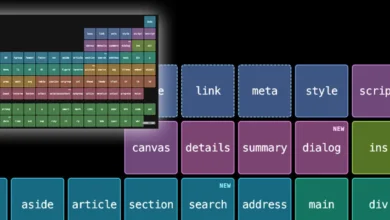
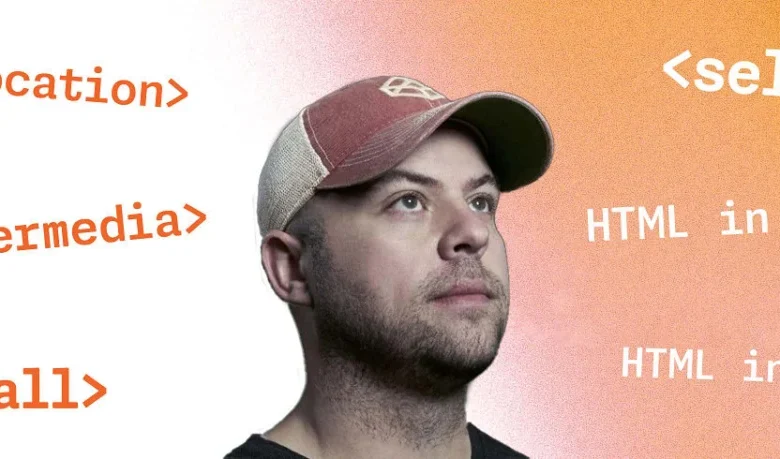
While HTML traditionally evolves at a more conservative pace compared to its dynamic companions, CSS and JavaScript, recent months have introduced several forward-looking features designed to minimize developer reliance on heavy external libraries. In a detailed breakdown published by developer and educator Chris Coyier, the web community has been introduced to several paradigm-shifting additions now available or heavily standardized in mid-2026.
Among the most notable additions is the native geolocation element, which streamlines location-based requests without forcing developers to orchestrate complex JavaScript abstractions. Furthermore, the introduction of HTML-in-Canvas bridges the gap between declarative markup and immediate-mode rendering, allowing richer interactive graphics to be embedded fluidly within standard document flows. Hardware integration has also received native upgrades, with streamlined camera and microphone management now accessible directly via updated usermedia implementations. Perhaps most exciting for immersive web designers is the new model element, designed to render 3D assets natively within the browser DOM without requiring massive WebGL boilerplate scripts.

Conversely, as the standard moves forward, the industry is simultaneously purging decades of technical debt. In an architectural audit conducted by developer Declan Chidlow, the web community was urged to eliminate antiquated HTML snippets and artifacts that continue to haunt legacy codebases. Chidlow’s research highlights remnants of a bygone era—such as conditional comments targeting legacy Internet Explorer versions, obsolete X-UA-Compatible HTTP-equiv tags, and cleartype rendering directives—that provide zero utility in modern rendering engines while introducing unnecessary visual noise and maintenance overhead.
W3C Opens 2026 Community Survey to Shape Future Standards
In parallel with technological advancements, the World Wide Web Consortium (W3C) has officially launched its 2026 community-wide survey. The initiative serves as a vital barometer for the global web development community, offering developers, accessibility advocates, browser vendors, and enterprise stakeholders an institutional platform to voice their priorities.
The W3C’s annual and periodic consultation processes have historically guided the timeline and focus of core web standards, influencing everything from CSS Houdini proposals to accessibility mandates. With the 2026 survey, the consortium is placing specific emphasis on gathering empirical data regarding developer friction points, the adoption rate of modern web APIs, and the integration of emerging technologies into everyday workflows. Industry analysts expect the feedback gathered from this survey to directly influence the W3C’s operational roadmap for the late 2020s, ensuring that future specifications align closely with real-world engineering challenges.
Architectural Performance: Custom Scrollbars and the Expensive Main Thread
Performance optimization remains a critical pillar of frontend engineering, particularly as user expectations for instantaneous responsiveness continue to rise. Two distinct methodologies have captured the attention of performance-focused developers: replacing heavy JavaScript scroll management with modern CSS, and auditing the high operational costs of the browser’s main thread.
Alexander Inkin recently outlined a modern blueprint for creating high-performance custom scrollbar components. Historically, achieving bespoke scrollbar styling and behavior required complex JavaScript arithmetic to calculate thumb positioning, handle drag events, and sync viewports. However, modern CSS features now allow developers to handle sizing, custom styling, and visibility entirely within the stylesheet. This CSS-first approach drastically reduces main-thread blocking, eliminates layout thrashing, and yields butter-smooth scrolling experiences across disparate device types.

Complementing this focus on visual fluidity, developer Sunhyoup Lee published an exhaustive technical analysis regarding the hidden costs of the browser’s main thread. Through a series of interactive demonstrations, Lee illustrated how poorly managed JavaScript execution can cause jank, delayed input responses, and degraded frame rates. The research emphasizes sophisticated task scheduling techniques—including splitting large payloads into manageable micro-tasks, batching DOM reads and writes, prioritizing critical user interactions, and deferring non-essential background work. Furthermore, the analysis explores off-main-thread architectures, urging developers to leverage Web Workers for heavy computational workloads to keep the primary execution thread unencumbered.
Security Vulnerabilities: CSS as a Weapon in Your Inbox
While performance and feature sets dominate developer discussions, security researchers continue to uncover alarming vulnerabilities within seemingly benign web technologies. In one of the most shocking security disclosures of the year, renowned researcher Gareth Heyes published findings detailing how Cascading Style Sheets (CSS) can be effectively weaponized against popular webmail providers.
Traditionally viewed as a safe presentation layer responsible solely for colors, fonts, and layouts, CSS can—under specific, vulnerable email client implementations—be manipulated to execute unauthorized actions. Heyes demonstrated that weaponized style sheets can successfully deface webmail user interfaces, bypass image proxies designed to protect user privacy and track IP addresses, and in severe cases, function as a functional keylogger capable of exfiltrating sensitive user inputs.
This research serves as a stark reminder to enterprise email providers and security architects that input sanitization must extend far beyond blocking active script tags like <script> or onload attributes. The ability of declarative styles to exfiltrate data or alter application state highlights the ongoing tension between rich email rendering capabilities and absolute user security.
Infrastructure and Domain Lifecycle Changes
Beyond the browser and the document, foundational elements of internet infrastructure are also experiencing shifts. Long-time internet architect Neil Fraser published an important notice regarding the impending termination of .name third-level domains. For years, the .name generic top-level domain (gTLD) provided individuals with a specialized space to establish personal online identities.

The phase-out of these third-level domain structures forces affected individuals and small creators to migrate their digital footprints to alternative TLDs or modern decentralized hosting solutions. While domain migrations are routine occurrences in internet history, the deprecation of .name underscores the fragility of personal branding tied to hyper-specific niche domain registries and encourages a broader industry migration toward resilient, independent web presences.
Open-Source Tools and Developer Resources
To assist developers in translating these modern standards into practical applications, the open-source community has introduced several notable tools, libraries, and utilities during this cycle.
Daniel White introduced Drawably, a lightweight, zero-dependency library designed to generate hand-drawn UI controls. Weighing in at approximately 7 KB of gzipped JavaScript paired with a compact 3-stylesheets footprint, Drawably utilizes seeded randomness to render organic, animated pen sketches for buttons, inputs, and containers, giving web applications a distinctive human-crafted aesthetic without sacrificing performance.
In the realm of web accessibility, Proper Access B.V. released WCAG Radar, a dual bookmarklet and browser extension designed to audit live web pages against WCAG 2.1 and 2.2 AA accessibility standards. Operating entirely locally within the user’s browser for maximum privacy, the tool visually marks up accessibility violations directly on the active DOM. While offering 28 core checks completely free of charge, the tool provides an optional paid tier for 18 advanced compliance checks, catering to enterprise QA teams seeking rigorous accessibility verification.
Additionally, the developer ecosystem welcomed the preview of a new minimal browser tailored for macOS, designed to strip away the bloat of modern enterprise browsers in favor of extreme resource efficiency, speed, and a distraction-free user interface.

Broader Impact and Industry Implications
The convergence of these developments paints a clear picture of an industry maturing through simplification. Whether through adopting native HTML features to reduce JavaScript bloat, leveraging CSS-driven components to bypass heavy rendering scripts, or auditing main-thread performance to enhance user experience, frontend engineering in mid-2026 is defined by a pursuit of efficiency.
At the same time, the startling discoveries regarding CSS-based vulnerabilities in webmail remind the engineering community that innovation must always be matched with rigorous defensive security paradigms. As the W3C compiles its community survey results and developers integrate these new tools and standards, the web remains a resilient, continuously evolving platform balancing rich interactivity with foundational stability.