Beyond the Hype: Anina Botha on Redefining Human-Computer Interaction Through Intentional Product Design

In an industry currently obsessed with rapid deployment and "vibe-coding," product strategist Anina Botha has chosen a divergent path, prioritizing academic rigor and behavioral psychology over the immediate integration of trending artificial intelligence features. Over the past six months, Botha’s work has focused on the fundamental tension between human psychology and machine automation, specifically addressing the phenomena of trust and automation bias. Her approach marks a shift in the product design sector, moving away from the "copy-paste" mentality of AI implementation toward a framework that treats human behavior as the primary constraint and guide for software architecture.
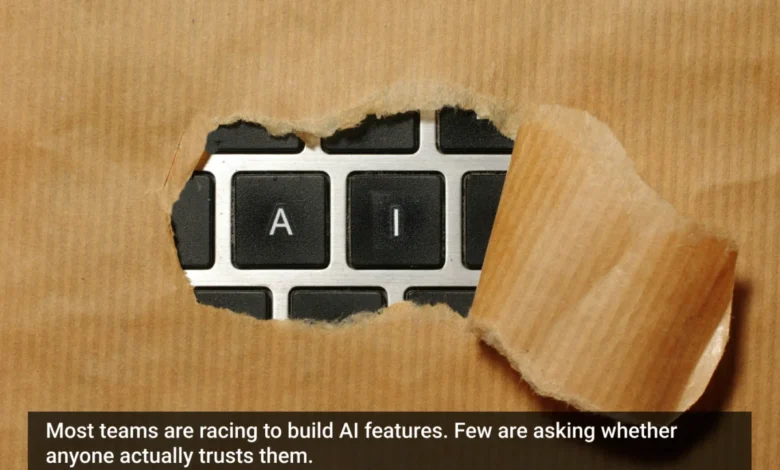
This shift comes at a critical juncture in the technology sector. As generative AI models reach a level of maturity that allows for widespread corporate adoption, product teams have frequently prioritized the speed of feature delivery over the quality of user interaction. Botha’s research suggests that this haste is a primary contributor to the "trust gap"—a disparity between the capabilities of an AI system and the willingness of a user to rely on it.
The Chronology of a Methodological Pivot
The last two quarters of the tech calendar have been defined by a race to incorporate Large Language Models (LLMs) into standard software suites. During this period, the prevailing market strategy involved rapid prototyping and the iterative testing of prompts. Botha, however, redirected her focus in late 2023 to synthesize six months of intensive study on the cognitive underpinnings of human-technology interaction.
While peers focused on optimizing prompt engineering, Botha conducted an audit of existing academic research on human-computer interaction (HCI). By translating dense, theoretical papers into actionable design frameworks, she identified that the failure of AI features is rarely a technical limitation of the underlying model. Instead, it is an architectural failure to account for user psychology. Her findings suggest that for AI to be effective, designers must treat trust not as an abstract feeling, but as a measurable, variable component of the user journey.
The Psychology of Automation Bias
Automation bias—the human tendency to favor suggestions from automated decision-making systems even when contradictory information is presented—remains a significant hurdle for product designers. Recent studies from the fields of cognitive ergonomics indicate that users often oscillate between extreme skepticism and over-reliance.
Botha’s research categorizes these behaviors into manageable design challenges. She advocates for "cognitive forcing," a design strategy that introduces friction into high-stakes workflows. By forcing a user to manually review or confirm an AI-generated decision, the interface mitigates the risks associated with complacency. This is not merely an aesthetic choice; it is a safety mechanism that recognizes the user’s cognitive load. If a system is designed to remove all friction, it inadvertently encourages users to abandon critical thinking, a result that can have severe implications in sectors like healthcare, finance, and legal tech.
Supporting Data and Industry Context
The necessity for this design-first approach is underscored by recent market data. According to industry reports from 2024, nearly 40% of organizations that implemented generative AI tools reported a struggle with user adoption, citing a lack of transparency and trust as the primary drivers of churn.
Furthermore, research published in the Journal of Human-Computer Interaction highlights that trust in automated systems is heavily contingent on the "perceived competence" and "transparency" of the agent. When an AI provides a recommendation without context or a path for manual oversight, user trust typically declines by approximately 22% over a thirty-day usage period. Botha’s work seeks to reverse this trend by baking "transparency mechanisms" directly into the UI, ensuring that the user understands the limitations of the system before they are asked to commit to a decision.
Translating Theory into Actionable Product Design
Botha’s methodology involves a systematic deconstruction of the user interface. She argues that the "invisible" aspects of human behavior—such as frustration, hesitation, or cognitive overload—can be made visible through data telemetry. By observing how users interact with non-responsive elements or how they pause before clicking, designers can adapt interfaces to better align with the user’s mental model.
This approach is highly contextual. A product that works for a high-frequency professional user will often fail for a casual consumer. Botha emphasizes that "one-size-fits-all" design is an artifact of legacy software development. In the age of AI, the design must adapt to the user’s environment, mobility, and specific needs. Using the analogy of physical architecture, she notes that buildings are designed with diverse accessibility requirements—ramps, elevators, and wide corridors—because engineers understand that users arrive at the same goal via different physical realities. Digital product designers, she suggests, must adopt this same level of empathy.
Broader Implications for the Tech Sector
The industry’s reaction to this call for "intentional design" has been significant. Many product leads have begun to recognize that the "AI-in-a-box" model is reaching its ceiling. The next phase of product evolution will likely be defined by the "Human-in-the-Loop" (HITL) paradigm, where the software is designed not to replace the human, but to enhance human judgment through transparent, legible, and trustworthy interfaces.
The implications for product teams are clear:
- The End of Prompt-Centric Design: Teams must shift focus from crafting clever prompts to designing clear guardrails that allow users to manage the AI’s output.
- Contextualization is Mandatory: Products must be able to adapt to the specific context of the user, requiring a deeper investment in user research and behavioral analytics.
- Responsibility of Design: Designers and developers are now the primary custodians of how AI is perceived. If a user rejects a feature, it is an indictment of the product’s design language, not the user’s technical literacy.
Conclusion: Making the Invisible Visible
As the technology sector moves into the second half of the year, the conversation is shifting from "what can AI do?" to "how should humans interact with AI?" Anina Botha’s work serves as a reminder that the most sophisticated AI model is ineffective if it ignores the biological and psychological realities of the end-user.
By transforming abstract academic research into pragmatic design principles, Botha is establishing a new standard for product development—one that favors the deliberate, the intentional, and the human-centric. In an era of automated, copy-pasted innovation, the ability to build with context and empathy is becoming the most valuable skill in the designer’s toolkit. The future of software is not in the automation of the user, but in the sophisticated, intentional, and transparent integration of machine capability into the human experience. As product teams grapple with the complexities of AI, the primary challenge remains the same as it has always been: understanding the human on the other side of the screen.