Navigating the 3 AM Cloud Crisis: AWS Architecture Best Practices and the Rise of Simulated Incident War Games

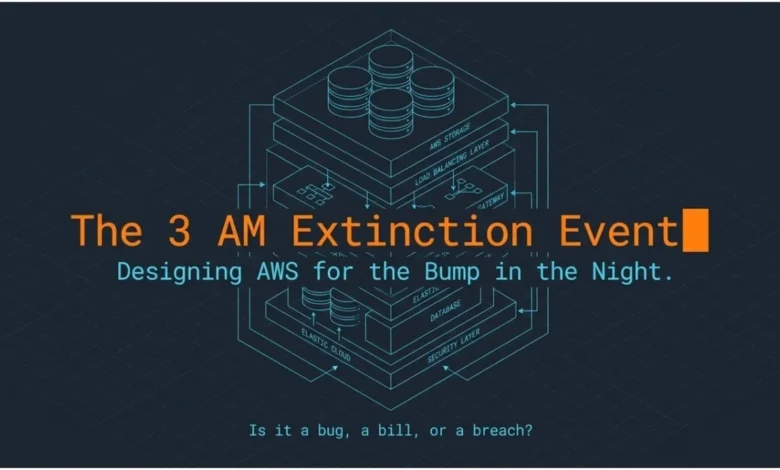
It is 3:00 AM, and production is down. Across organizations worldwide, the midnight page triggers a familiar cascade of dread for engineering teams, where every minute of downtime translates directly into lost revenue, tarnished reputations, and mounting pressure from corporate leadership. Determining the root cause—whether it stems from an unexpected application bug, an explosive cloud billing anomaly, or a malicious security breach—requires rapid diagnosis under immense scrutiny. According to industry veterans who spend their careers mitigating high-stakes architectural failures, the trajectory of these midnight crises is rarely determined during the incident itself; rather, it is dictated months in advance by the quiet, seemingly mundane decisions made on ordinary afternoons when convenience was chosen over robust engineering.
The Anatomy of Cloud Complexity and Architectural Vulnerabilities
Cloud computing platforms like Amazon Web Services (AWS), Microsoft Azure, and Google Cloud Platform offer unprecedented scalability and flexibility, yet they also introduce staggering complexity. Modern cloud environments feature thousands of distinct micro-services ranging from machine learning pipelines and quantum ledger databases to automated robotics simulations. For growing companies, navigating this expansive catalog without a disciplined strategy often leads to architectural bloat, unexpected expenditure spikes, and severe security blind spots.
Industry experts emphasize that stabilizing enterprise cloud operations begins with rejecting manual provisioning in favor of Infrastructure as Code (IaC). Utilizing declarative automation tools such as Terraform, OpenTofu, or AWS CloudFormation ensures that infrastructure states are tracked within version control systems, preventing the catastrophic scenario where a forgotten manual configuration change brings down production with no reproducible trail. Furthermore, adopting containerization frameworks via Docker and Amazon Elastic Container Service (ECS) eliminates the perilous habit of nursing individual virtual machines—transforming servers from fragile pets into disposable, dynamically scalable cattle.
Identity, Access, and the Dangers of Over-Privileging
Security vulnerabilities in cloud environments frequently trace back to poor identity and access management (IAM). A prevalent misstep among development teams is embedding static AWS access keys directly into application codebases or unprotected environment configuration files. Security monitoring initiatives continue to highlight how rapidly automated bots scan public code repositories like GitHub, harvesting exposed cryptographic keys and utilizing them to orchestrate malicious payloads—such as deploying millions of unauthorized programmatic emails or crypto-mining operations—within minutes of exposure.
To mitigate these risks, organizations must abandon static access keys entirely, favoring IAM roles attached directly to compute resources such as AWS Lambda functions or EC2 instances. This practice ensures that services operate under the principle of least privilege, possessing only the exact permissions required to interact with specified resources. The indiscriminate use of wildcard asterisks within IAM policies—granting broad permissions like s3:*—remains a primary vector for catastrophic data leaks and accidental resource deletion. Restricting permissions down to precise resource ARNs and specific directory paths drastically reduces the attack surface for both human error and lateral movement by malicious actors.
Network Segmentation and Perimeter Defense
Securing cloud architecture requires rigorous network segmentation through Virtual Private Clouds (VPCs), subnets, and security groups. Deploying backend databases and sensitive data layers directly onto public subnets invites unauthorized access and circumvents foundational defense-in-depth strategies.
Industry standards dictate a clear separation of duties: public subnets should exclusively house edge components such as Application Load Balancers and Content Delivery Networks (CDNs) like Amazon CloudFront, while core data storage systems reside securely within isolated private subnets. Additionally, security groups must act as stringent firewalls, strictly limiting inbound and outbound traffic to explicitly authorized ports and IP addresses. Relying on overly permissive rules, such as opening port 22 or database ports to the entire internet (0.0.0.0/0), exposes infrastructure to automated botnets and compromises internal network integrity. When administrative access is required, employing AWS Systems Manager (SSM) Session Manager offers a secure, auditable alternative to traditional bastion hosts and static SSH key management.
Cost Management and the Financial Impact of Unchecked Scale
Beyond security and availability, cloud financial management—often termed FinOps—has emerged as a critical discipline for engineering leadership. The elasticity of cloud infrastructure can easily transform into a financial hazard when automated scaling lacks appropriate guardrails. High-profile incidents involving sudden five-figure billing spikes on serverless and edge computing platforms underscore the necessity of implementing strict cost alerts, budget thresholds, and resource tagging strategies.
Organizations must regularly audit data storage lifecycles to ensure that expensive production databases are not bogged down by legacy historical records that belong in cost-effective data lakes utilizing compressed columnar formats like Apache Parquet. Furthermore, tracking service deprecations and end-of-life upgrade cycles prevents unexpected surges in maintenance fees levied by cloud providers for legacy software versions.
Proactive Resilience through Cloud War Games
Recognizing that theoretical knowledge is insufficient when faced with an active outage or security breach, modern DevOps culture has increasingly embraced proactive failure testing, often referred to as chaos engineering or Cloud War Games. Pioneered by organizations specializing in incident response simulations, these exercises intentionally inject catastrophic failures—such as dropping database tables, severing network routes, or simulating distributed denial-of-service (DDoS) attacks—into non-production environments.
The primary objective of Cloud War Games is stress inoculation. By subjecting engineering teams to high-pressure, simulated outages, organizations cultivate psychological resilience, refine incident command structures, and eliminate the paralysis that frequently accompanies real-world emergencies. Post-incident reviews and blameless post-mortems following these simulations ensure that procedural bottlenecks and communication gaps are identified and resolved before they manifest in a high-stakes production environment.
Ultimately, achieving long-term stability and security in the cloud requires an organizational shift from reactive firefighting to proactive architectural discipline. By enforcing rigorous infrastructure as code, adopting least-privilege IAM policies, maintaining strict network segmentation, and conducting regular simulation exercises, technology leaders can safeguard their infrastructure against the inevitable bumps in the night.