Frontend Engineering Milestones: GitHub Ditch CSS-in-JS, Anthropic Speeds Up Claude, and Cutting-Edge CSS Techniques Reshape Web Development


Recent developments in frontend engineering have highlighted a major industry-wide shift toward performance optimization, architectural refinement, and the clever exploitation of native browser capabilities. From massive infrastructure overhauls at global platforms like GitHub and Anthropic to ingenious CSS-only solutions for complex UI challenges, developers are continuously redefining the boundaries of web performance. This wave of optimization demonstrates that the industry is actively moving away from heavy runtime abstractions in favor of lean, native, and standards-compliant methodologies that drastically improve user experience.
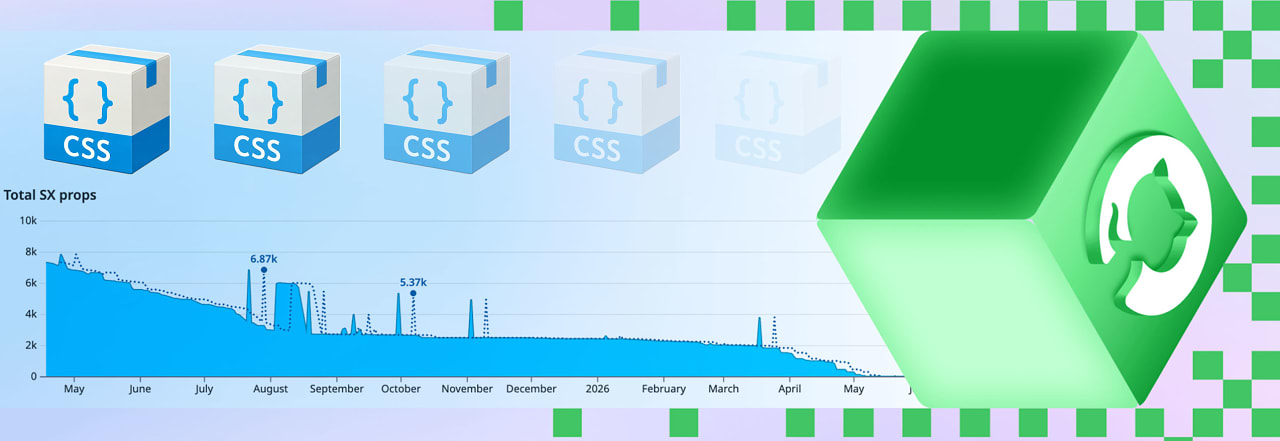
GitHub’s Three-Year Migration Away from CSS-in-JS
In one of the most significant architectural case studies of recent years, GitHub engineering leads Josh Black and Marie Lucca detailed a monumental three-year initiative to purge styled-components and general ‘CSS-in-JS’ methodologies from github.com. The platform, which serves tens of millions of developers worldwide, has officially transitioned entirely to CSS Modules.

The rationale behind this massive undertaking was rooted in server-side rendering (SSR) bottlenecks and runtime overhead. While CSS-in-JS libraries gained immense popularity in the mid-2010s for their scoped styling and component-level encapsulation, they often introduced severe performance penalties on the server. Generating styles dynamically during runtime creates a heavy computational burden, delaying the time it takes for a server to deliver a fully rendered HTML page to the client.
Paradoxically, GitHub’s migration resulted in shipping a larger raw volume of CSS to the browser. However, because CSS Modules rely on bundler conventions to rewrite class names into unique, collision-free identifiers at build time rather than runtime, the performance gains were staggering. GitHub reported a remarkable 55% reduction in the time required to server-side render a page. This proves that minimizing network payload size is only one piece of the performance puzzle; reducing CPU bottlenecks on the server and eliminating runtime JavaScript overhead can yield vastly superior Core Web Vitals and user-perceived performance.
Anthropic’s Sprint to Accelerate the Claude Web Application
Simultaneously, AI leader Anthropic shared the behind-the-scenes engineering narrative of how its team dramatically accelerated the Claude web application. Through a focused optimization sprint—in which the AI assistant itself played an active role in diagnosing bottlenecks—the engineering trio of Wang, Attard, and G managed to cut Claude’s time-to-typeable metric at the 75th percentile from a sluggish 3.1 seconds down to an impressive 0.55 seconds.
The engineering team tackled a series of nuanced and deeply technical performance regressions. Among the culprits identified were subtle layout shifts that were previously too minor to trigger standard Cumulative Layout Shift (CLS) metrics, yet impactful enough to degrade user experience. Furthermore, the team discovered that a single :root:has() CSS selector was imposing a costly 24-millisecond penalty on every individual Document Object Model (DOM) change. Another unexpected performance hurdle was traced back to a browser behavior where Google Chrome prematurely pre-rendered the page at an incorrect height, forcing expensive layout recalculations.
By systematically addressing these microscopic inefficiencies, Anthropic demonstrated that modern web application performance is not merely about writing clean JavaScript frameworks, but requires deep, granular profiling of browser rendering pipelines, CSS selector complexity, and layout thrashing.
Advanced CSS Techniques Revolutionize UI Development
While core infrastructure changes drive server and application speed, recent breakthroughs in CSS are pushing the boundaries of what is possible without relying on JavaScript libraries. Frontend developers are increasingly leveraging advanced CSS features—such as anchor positioning, style container queries, and scroll-driven animations—to solve complex UI states natively.

Ahmad Shadeed recently published a technique for detecting when page elements overlap using purely CSS. Traditionally, intersection detection required heavy JavaScript event listeners monitoring bounding client rectangles on every scroll or resize event. Shadeed’s innovative approach combines anchor positioning with scroll-driven animations and an overflowing measurement element to trigger layout awareness natively within the browser styling engine.
Similarly, Temani Afif introduced a proof-of-concept technique enabling developers to extract structural grid information—such as total rows, columns, and item placements—using only CSS. By creatively harnessing scroll-driven animations, Afif proved that stylesheets can compute and convey layout metadata without JavaScript intervention.
In the realm of typography, developer Donnie D’Amato reignited the debate surrounding fluid scaling. D’Amato argued against the growing trend of using container queries for fluid font sizes, noting that unpredictable container widths can lead to chaotic typography hierarchies. He advocates for a return to traditional viewport units to maintain strict, predictable control over typography across varying screen sizes.

Complementing these code-level discoveries, Jakub Krehel released "The Interface Cheat Sheet," an illustrated compendium of fundamental UI design guidelines. The resource covers critical design nuances, including optimal border radius scaling, transition timing, color theory, and accessibility compliance, offering developers a quick reference for crafting polished digital experiences. Furthermore, Keith Cirkel introduced a custom attributes polyfill, enabling developers to test proposed specifications that allow custom attributes to attach reusable behaviors and lifecycle hooks directly to any DOM element.
Emerging Tools and Novelty Resources
The ecosystem of developer tooling and creative experimentation continues to expand, offering both practical utilities and unconventional novelties.
For developers working with cutting-edge hardware, designer Chris Bennett launched a browser-based utility that allows creators to generate High Dynamic Range (HDR) versions of logos and interface graphics. By leveraging modern browser support for HDR color spaces, the tool enables logos to render up to 7.5 times brighter than standard white on compatible displays in browsers like Chrome and Safari.

On the more whimsical side of engineering, the experimental font foundry "Bastardica" emerged, offering developers the ability to programmatically merge glyphs from two entirely distinct web fonts. The resulting typography—such as a hybrid between Times New Roman and Comic Sans—yields startling and eccentric aesthetic outcomes, proving that web experimentation remains as vibrant as ever.
Implications and Future Outlook
The convergence of GitHub’s structural rejection of CSS-in-JS, Anthropic’s relentless pursuit of micro-optimization, and the discovery of advanced native CSS capabilities points toward a clear industry trajectory. Developers are increasingly valuing runtime efficiency, platform native standards, and predictable rendering pipelines over developer convenience abstractions that burden the end user’s device.
As browsers continue to introduce powerful layout primitives like anchor positioning and scroll-driven animations, the line between CSS styling and application logic will continue to blur. Organizations that prioritize these low-level performance metrics will likely see higher user retention, improved search engine optimization rankings, and more resilient web applications capable of scaling gracefully across diverse hardware ecosystems.
Related posts: