Bringing Disney’s 12 Basic Principles of Animation into Modern Web Development


The 12 Basic Principles of Animation, a seminal framework established in 1981 by Disney legends Ollie Johnston and Frank Thomas, were originally conceptualized to elevate the fluidity and emotional resonance of hand-drawn cinematic masterpieces like Aladdin and Beauty and the Beast. While these principles were developed for the analog era of cel animation, their utility has transcended traditional media, finding a new, vital application in the realm of user interface design and web development. Among these tenets, "squash and stretch" stands out as a foundational technique for simulating weight, gravity, and flexibility in digital objects.
The Evolution of Animation in Web Standards
Historically, web animation was constrained by performance limitations and browser inconsistencies. However, as the industry transitioned from static pages to dynamic, application-like experiences, the demand for "micro-interactions"—small, subtle animations that provide feedback to user inputs—has grown exponentially. According to recent industry surveys on front-end development, over 65% of high-performing web applications now integrate sophisticated motion design to improve user retention and engagement.
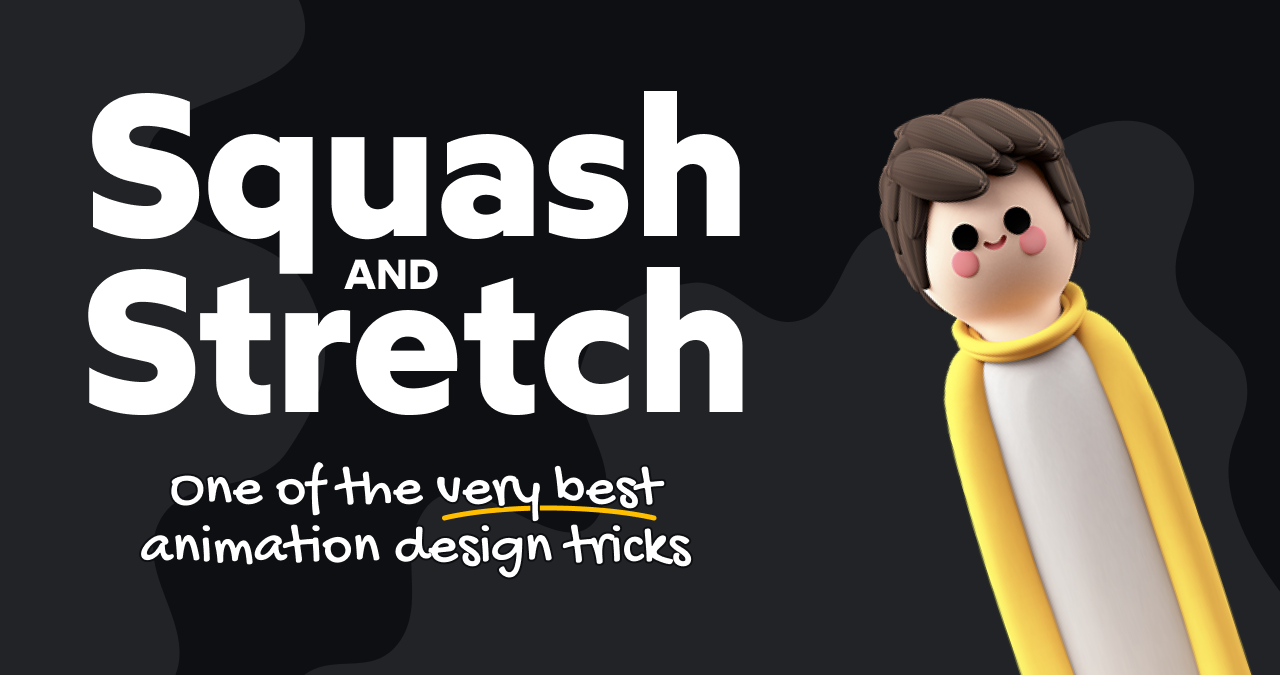
The "squash and stretch" principle operates on the premise that as an object moves, it should deform in relation to its velocity and impact. In a digital context, this is achieved by manipulating the geometry of vector-based graphics, typically SVGs (Scalable Vector Graphics). When a button or an icon deforms slightly during a hover or click event, it signals to the user that the interface is responsive and physical, rather than a rigid, unresponsive overlay.
Technical Implementation and Browser Compatibility
The implementation of these effects relies heavily on the manipulation of SVG path data. Developers define an initial state for an icon—such as a standard arrow—and a secondary, deformed state that is triggered by user interaction. By interpolating between these two states, developers create the illusion of elasticity.
As of early 2026, browser support for CSS-based path transitions remains a subject of concern for developers. While the d attribute in CSS is supported by the majority of modern browsers, Safari’s implementation has historically lagged, leading to fragmented cross-browser experiences. Data from web compatibility tracking platforms indicate that native CSS path animation support currently hovers at approximately 79%. This creates a technical divide: developers must either accept reduced functionality on specific platforms or opt for more complex JavaScript-based animation libraries.
Libraries such as "Motion" have emerged as the industry standard for bridging this gap. By leveraging the Web Animations API, these libraries perform manual frame-by-frame calculations that bypass the limitations of CSS. This approach ensures that animations remain consistent across browsers while maintaining performance, as the heavy lifting is often offloaded to a dedicated animation thread, preventing the main browser thread from stuttering during complex interactions.
The Role of Spring Physics in Natural Motion
The shift from standard Bézier easing to spring-based physics represents a significant milestone in interface design. Standard easing functions are often predictable and mathematical, whereas spring physics—modeled on real-world Newtonian dynamics—mimic the way physical objects settle after movement. By adjusting variables such as stiffness and damping, developers can achieve a "rubbery" effect that feels more natural to the human eye.
This shift is particularly impactful for interactive elements like buttons. By replacing static transitions with spring-based responses, designers can evoke a sense of playfulness. Furthermore, recent trends show a move toward "event-based" rather than "state-based" animations. In a state-based model, an icon remains in its stretched position as long as the cursor is present. In an event-based model, the deformation occurs as a brief, instantaneous burst of movement upon interaction, which then resets immediately. This technique is credited with creating more "delightful" user experiences, as it subverts the common expectation of static hover states.
Accessibility and Ethical Considerations
A critical aspect of implementing these animations is the adherence to user-defined accessibility settings. The prefers-reduced-motion media query has become an essential tool in the developer’s toolkit. It allows users to signal their preference for minimized motion, which is crucial for individuals with vestibular disorders or motion sensitivities.
Professional standards now dictate that any UI animation—no matter how subtle—must respect these settings. Failing to do so can lead to a degraded user experience for a significant portion of the population. By wrapping animation logic in conditional checks that detect system-level motion preferences, developers ensure that their design choices remain inclusive without sacrificing the aesthetic quality for users who benefit from visual feedback.
Broader Industry Impact and Future Outlook
The integration of cinematic animation principles into web development reflects a broader trend: the "consumerization" of the web. As user expectations rise, the line between software utility and entertainment continues to blur. Educational resources, such as specialized courses on whimsical animation, are seeing an influx of professional developers seeking to bridge the gap between technical implementation and design theory.
The implications for the industry are twofold. First, it requires a higher level of cross-disciplinary skill; a modern front-end developer is increasingly expected to understand both the underlying code and the principles of motion design. Second, it pushes the browser vendors to prioritize the performance of animation APIs, as the demand for rich, interactive, and "squashy" interfaces continues to climb.
As we look toward the remainder of 2026 and beyond, the use of SVG-based animation will likely become even more streamlined. With continued advancements in JavaScript frameworks and CSS specifications, the overhead required to implement these effects will decrease, allowing for more widespread adoption of high-fidelity, interactive components. While the 12 principles of animation were born in the studios of the 20th century, their application today serves as a reminder that the most effective digital experiences are those that ground their interactivity in the physical realities of the world we live in. Through careful manipulation of geometry, physics, and event timing, developers are effectively redefining the tactile nature of the digital landscape.