The Rise of the Researcher-Maker: Why Professional Observers are Becoming Product Architects

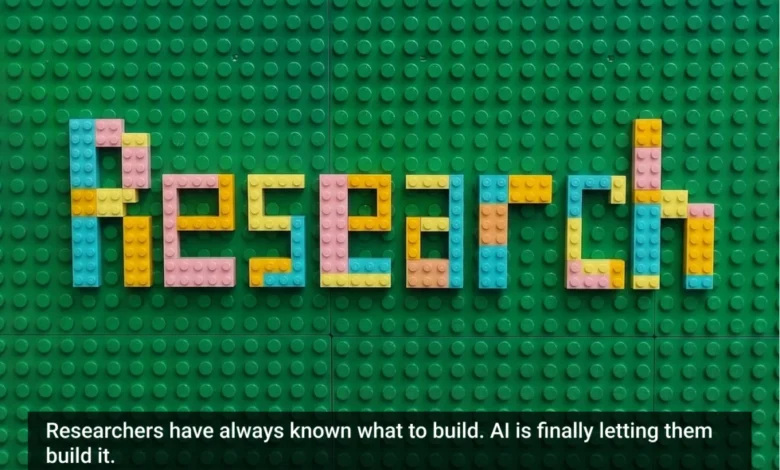
Freeze-dried backpacking food, specialized personal finance software, bespoke photo booths, community-driven social initiatives, and AI-powered educational tools—these diverse creations share a singular origin: they were all conceptualized and built by user researchers. For decades, the professional role of a researcher was defined by proximity to influence rather than the act of production. Researchers functioned as the "eyes and ears" of an organization, providing the data necessary for others to build. Today, that paradigm is shifting. The democratization of development tools, coupled with a fundamental change in corporate expectations, is compelling researchers to cross the threshold from being observers of product development to becoming active architects of the products themselves.
The Evolution of the Researcher’s Role
Traditionally, the researcher’s journey has been one of indirect impact. They navigated the corporate hierarchy, leveraging qualitative and quantitative insights to sway product managers, designers, and engineers. The standard operating procedure was to identify a problem, articulate it through reports or presentations, and hope for implementation.
However, the rapid proliferation of generative AI and low-code/no-code platforms has lowered the barriers to entry for creation. What was once a specialized endeavor requiring massive engineering teams is now accessible to individuals with a command of logic and human-centric design. Over the past twenty-four months, this shift has moved from a theoretical "could" to a practical "should," and in many enterprise environments, an organizational "must." Companies are increasingly demanding that research teams produce not just insights, but functional prototypes, automated tooling, and even production-ready code.
Chronology of a Professional Pivot
The transition toward the "researcher-maker" identity has been punctuated by three distinct phases over the last three years. In 2022, the emergence of advanced Large Language Models (LLMs) sparked a wave of experimentation. Researchers began using these tools for basic automation, such as qualitative coding and sentiment analysis. By 2023, the focus shifted toward prototyping. The ability to generate code snippets and UI layouts allowed researchers to test hypotheses without waiting for engineering bandwidth.
As of 2024, the trend has entered a maturation phase. We are seeing a cohort of professionals—like Neha, the founder of the financial app Incluya, and Jen, who built a specialized photography equipment business—who have fully embraced the founder mantle. These individuals represent a departure from the traditional career trajectory, treating their research skills not as a separate department, but as the foundational architecture of their own commercial ventures.
Data and Market Realities
The pressure to evolve is mirrored in the broader job market. According to recent industry surveys, the "researcher as a service" model is becoming increasingly fragile. As layoffs hit tech sectors, the reliance on external employment has plummeted. Data indicates that nearly 40% of displaced researchers are now exploring independent ventures or "solopreneurship."
This pivot is not merely a reaction to job insecurity; it is an analytical response to the inefficiency of the traditional product development cycle. By owning the full lifecycle—from identifying the user need to shipping the solution—researchers are effectively removing the "translation loss" that occurs when insights are handed off across departments. However, this shift comes with significant trade-offs. The researcher-maker must contend with the "tax of production": the burden of sales, supply chain management, legal compliance, and financial sustainability.
The Duality of the Researcher-Maker
A critical analysis of this movement reveals that the most successful researcher-makers do not abandon their core identity; they adapt it. The "researcher’s way of making" is distinct from the conventional "move fast and break things" startup ethos. It is inherently deliberative, ethical, and iterative.
Take, for instance, the case of Brian, who developed the AI Kids Club. His approach was not to blitzscale but to build a curriculum that prioritized cognitive development over rapid user acquisition. Similarly, Matthieu, who is developing financial planning tools, discovered that while AI is an efficient tool for building, it lacks the discernment required for product-market fit. He frequently relies on peer reviews and human-centric testing—practices standard in research but often overlooked in rapid-fire startup environments—to refine his output.
Organizational Implications and Challenges
For the modern enterprise, the rise of the researcher-maker presents both an opportunity and a challenge. Organizations that empower researchers to build may see a higher velocity of innovation. However, this creates a potential conflict of interest and an identity crisis for the employee. Many researchers report that their professional identity—rooted in objectivity—feels compromised when they are tasked with "selling" or "marketing" a product they helped build.
The psychological impact of this transition is significant. Professionals who once derived their value from being a "neutral voice" now find themselves accountable for commercial outcomes. This shift is not universally welcomed. There remains a segment of the research community that believes the dilution of the researcher’s role—by forcing them to become makers—risks losing the rigor and impartiality that makes research valuable in the first place.
The Reality of "Founder" Friction
The romanticism of the "founder" title often obscures the material reality. As noted by industry practitioners, the transition is fraught with hazards:
- The Isolation Gap: The shift from a collaborative research team to a solitary maker role can lead to significant professional burnout and loneliness.
- Skill Asymmetry: While researchers excel at discovery, they often struggle with the "nitty-gritty" of operations, such as tariff regulations, tax compliance, and cash-flow management.
- The Financial Barrier: The ability to pivot into making is often contingent on pre-existing financial stability. Without a "runway"—whether through savings or a partner’s income—the move is often characterized by extreme personal and professional precarity.
Toward a New Professional Identity
The emerging consensus among those who have successfully navigated this transition is that the "hyphenated identity"—Researcher-Founder, Researcher-Developer, Researcher-Artist—is the most sustainable path forward. By adopting a hyphenated identity, professionals can maintain the ethical and analytical rigor of their primary field while expanding their output into new domains.
The future of research is likely to be bifurcated. One path will remain deep in the realm of high-level strategic advisory, focusing on complex, non-commercial research problems. The other will embrace the "maker" model, leveraging the democratization of technology to build solutions that were previously trapped in the purgatory of "recommendation reports."
Ultimately, the rise of the researcher-maker is a testament to the versatility of the research skill set. The ability to frame a problem, empathize with a user, and iterate based on feedback is not just a methodology for understanding the world; it is a blueprint for changing it. Whether this moment represents a permanent transformation or a temporary reaction to the current tech climate, the evidence is clear: the wall between the person who understands the problem and the person who builds the solution is crumbling. The researchers who thrive in this new era will be those who can hold both the lens of the observer and the hammer of the builder.