JetBrains has officially unveiled PyCharm 2026.3, a major release that marks a fundamental shift in how Python developers interact with artificial intelligence, project environments, and complex dependency architectures. At the heart of this update is the integration of "JetBrains Air," a dedicated layer for agentic development that aims to standardize how developers build, monitor, and verify multi-agent workflows. Beyond the AI advancements, the release introduces refined workspace management, native support for Python 3.15 lazy imports, and advanced visualization tools for FastAPI applications, signaling a concerted effort to support the evolving demands of modern, large-scale software engineering.
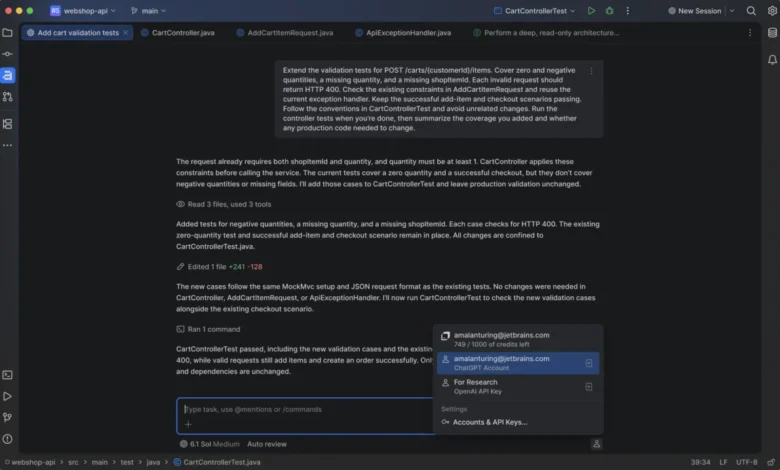
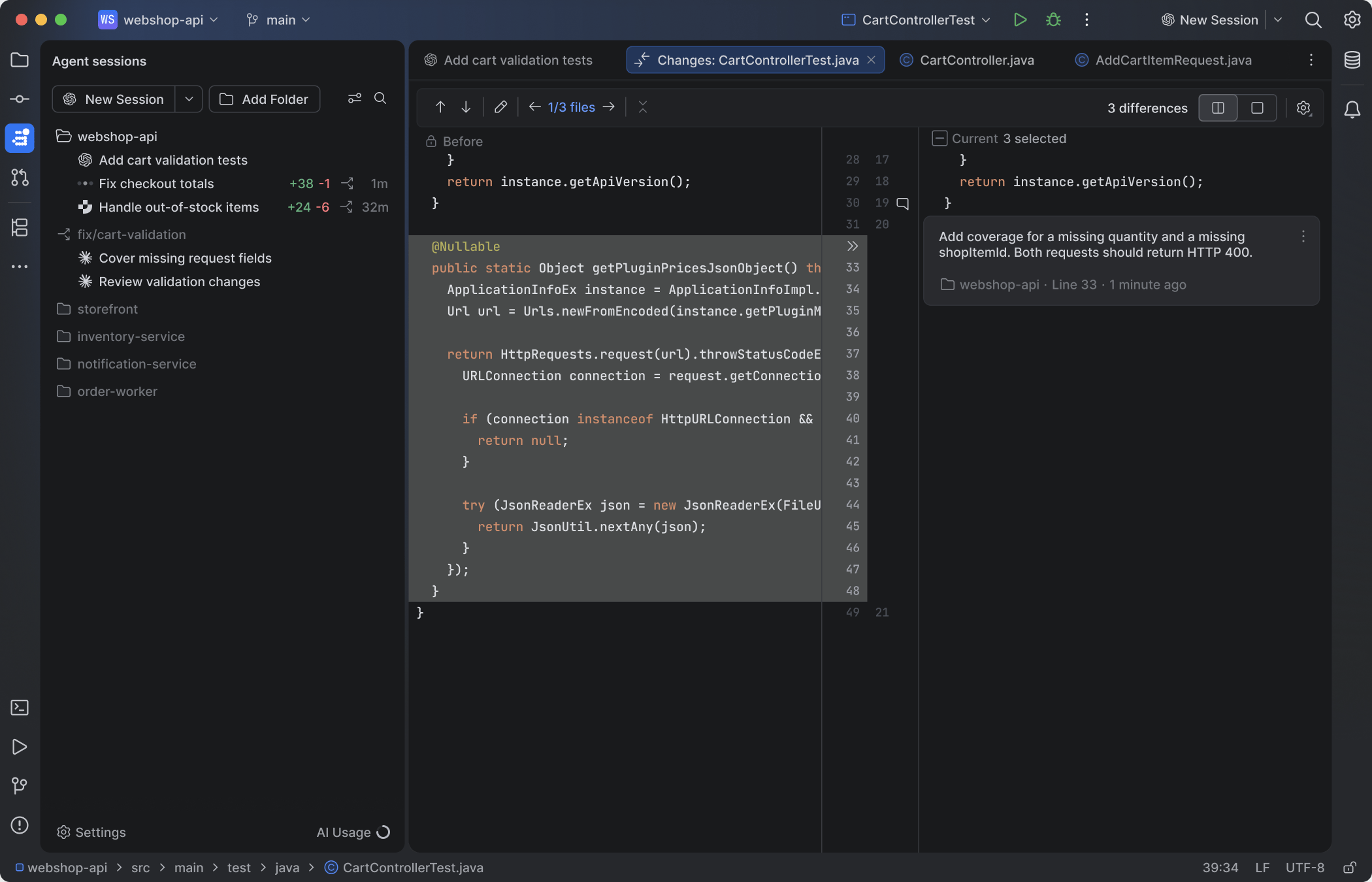
The introduction of JetBrains Air represents the culmination of a multi-year shift in the software development lifecycle (SDLC) toward autonomous or semi-autonomous agents. Unlike previous iterations of AI assistants, which functioned primarily as code-completion or chat-based querying tools, Air is architected as an orchestration layer. It allows developers to plug in their preferred models—including Claude, Gemini, and various OpenCode implementations—directly into the IDE environment. By centralizing the management of these agents, JetBrains is addressing a growing industry pain point: the fragmentation of agent-based workflows. Data from recent developer ecosystem surveys suggest that while 70% of professional developers are now utilizing some form of AI in their coding tasks, the overhead of managing disparate subscriptions and debugging agent outputs often negates the efficiency gains. Air mitigates this by providing a unified interface to track agent actions, review code diffs with full project context, and provide human-in-the-loop feedback.
The Evolution of Agentic Workflows
The architectural design of Air reflects a broader trend in the IDE market, where the IDE is evolving from a text editor with plugins into a collaborative cockpit. JetBrains has ensured compatibility with the Agent Capability Protocol (ACP), allowing developers to retain their existing subscriptions and API configurations without being locked into a proprietary ecosystem. This interoperability is critical for enterprise environments where security protocols often dictate which LLMs or local models can be utilized. By providing a "Junie Lite" configuration for free, JetBrains is also lowering the barrier to entry for developers who are curious about agentic development but are not yet ready to commit to paid enterprise-grade AI subscriptions.
The review interface within Air is particularly noteworthy. It allows developers to anchor feedback directly to specific lines of code within the agent’s generated diffs. This granularity ensures that the "feedback loop"—the iterative process of correcting an AI agent’s behavior—is significantly faster and more precise. The migration path from the legacy "AI Assistant" to Air is designed to be seamless, with automatic transfers of existing configurations and credentials, ensuring that the transition does not disrupt ongoing project timelines.
Refined Workspace Management and Subproject Support
PyCharm 2026.3 also introduces significant improvements to workspace management, specifically targeting developers working within monolithic repositories or complex multi-package setups. The new subproject support allows each directory or module within a workspace to maintain its own independent Python console and terminal. This is a vital improvement for projects utilizing modern package managers like uv, Hatch, or Poetry.
Historically, IDEs struggled to manage multiple virtual environments simultaneously, often forcing developers to manually switch interpreters or rely on global settings that could lead to environment contamination. By isolating the console and terminal environment to the specific subproject, PyCharm ensures that dependency resolution remains consistent with the project’s defined pyproject.toml file. This level of environmental fidelity reduces the "it works on my machine" phenomenon, which remains one of the most persistent hurdles in collaborative Python development. Furthermore, the ability to convert existing folders into subprojects via the Project tool window streamlines the adoption of modular architectures, allowing developers to refactor legacy codebases into modern, decoupled structures without losing the IDE’s intelligent code completion or navigation capabilities.
Adapting to Python 3.15 and Advanced Dependency Mapping
The inclusion of native support for Python 3.15’s lazy imports is a strategic move to address the "import-time" performance penalty that plagues large-scale applications. As projects grow, the time spent loading dependencies at application startup can increase exponentially. Lazy imports defer the execution of module imports until they are explicitly called, a feature that can significantly reduce cold-start times for serverless functions, microservices, and CLI tools. PyCharm’s decision to parse and resolve these lazy imports while maintaining full IDE code insight is a technical feat that ensures developers do not have to choose between performance optimization and developer experience.

For backend developers, the new FastAPI dependency visualization is perhaps the most practical addition. FastAPI relies heavily on dependency injection via Depends() and Security() calls, which can quickly become a "spaghetti" of function calls spread across dozens of files. PyCharm 2026.3 now automatically maps these relationships, rendering them as a clear, navigable graph. This feature allows developers to instantly identify circular dependencies—a common cause of runtime errors—and to trace how a change in a low-level dependency propagates through the application’s endpoints. This transparency is essential for maintaining complex RESTful APIs where manual documentation often fails to keep pace with rapid code evolution.
The Redesigned Interpreter Widget
The overhaul of the Python interpreter widget is a direct response to the increasing variety of environment management tools in the Python ecosystem. By moving away from a one-size-fits-all approach, the new widget acts as a command center for environment management. Whether a developer is using conda, uv, or a traditional venv, the widget provides a unified view of available environments and the tools that manage them. This simplification reduces the cognitive load on developers, allowing them to focus on code logic rather than environmental troubleshooting. The ability to recreate environments or download missing Python versions directly from the status bar is a quality-of-life improvement that aligns with JetBrains’ commitment to removing friction from the developer experience.
Broader Implications for the Industry
The release of PyCharm 2026.3 underscores a pivotal moment for JetBrains and the broader IDE market. By prioritizing agentic development as a core architectural feature rather than an add-on, the company is signaling that the era of "AI as a chatbox" is ending, replaced by "AI as a teammate."
From a competitive standpoint, this move puts pressure on other IDE providers—such as Microsoft’s Visual Studio Code—to provide similar, deep-level agent integration. While VS Code currently relies heavily on an extension-based model for agent integration, PyCharm’s approach is more opinionated, providing a robust, built-in framework that guarantees consistency. The implications for professional developers are profound: the expectation is moving toward an environment where the IDE actively participates in the development process, validating code against dependencies, managing multi-agent workflows, and optimizing execution patterns in real-time.
As development teams continue to scale, the tools provided in this release—specifically the dependency graphs and the subproject environment isolation—will likely become standard requirements for maintaining code quality. The shift toward "agentic orchestration" suggests that the next few years will see a rapid increase in the complexity of tasks that developers can delegate to machines. PyCharm 2026.3 is not merely an update; it is an infrastructure-level adjustment designed to prepare the development community for a future where the line between human author and AI agent continues to blur.
Looking ahead, industry analysts expect that the success of JetBrains Air will depend on the stability of the Agent Capability Protocol and the willingness of third-party model providers to maintain high levels of interoperability. For now, however, the professional consensus is that JetBrains has provided a necessary framework for the next phase of software engineering, combining the reliability of a traditional, robust IDE with the cutting-edge capabilities of modern generative AI. Developers are encouraged to explore these new features through the latest version, which is currently available for download, and to participate in the ongoing refinement of these tools via the JetBrains issue tracker, which serves as a primary hub for user feedback and iterative development.