The Python ecosystem is undergoing a quiet, high-performance revolution driven by an unexpected catalyst: Rust. While Python remains a dominant force in data science, artificial intelligence, and web development due to its dynamic nature and developer-friendly syntax, performance bottlenecks in large-scale applications have long forced developers to look elsewhere for heavy lifting. Historically, that meant dropping down into C or C++. Today, however, systems programming language Rust has emerged as the premier choice for supercharging Python infrastructure, powering everything from lightning-fast linters and package managers to data manipulation libraries and production web servers.
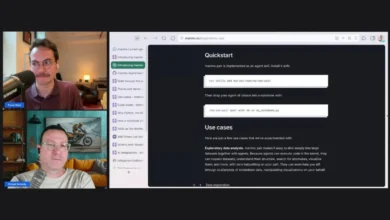
This intersection of Rust and Python was the focal point of a recent episode of the Talk Python To Me podcast, hosted by Michael Kennedy and featuring software consultant and educator Christopher Trudeau. The discussion highlighted how Rust has infiltrated the Python universe, offering developers a bridge to systems-level performance without requiring them to become low-level memory management experts.
The Three Pillars of Rust in Python
Rust’s integration into the Python ecosystem generally manifests in three distinct ways, each serving a unique architectural purpose.
The first category comprises standalone development tools that happen to be written in Rust. Because these tools are distributed via standard package managers, developers often utilize them daily without ever needing to touch or compile Rust code themselves. A prime example is Ruff, an extremely fast Python linter and code formatter. Written entirely in Rust, Ruff can analyze and lint the entire CPython codebase from scratch in a mere 0.3 seconds—an operation that takes just three blinks of an eye. This unprecedented speed fundamentally changes developer workflows, replacing the traditional cycle of launching a linter and waiting for results with near-instantaneous feedback. Other tools like Astral’s package installer, uv, have similarly disrupted the Python tooling space by offering blistering execution speeds.
The second category involves libraries that Python imports and runs natively. High-performance data libraries such as Polars, validation powerhouses like Pydantic, and cryptography modules are increasingly built on Rust cores with thin Python wrapper layers. Python has historically excelled at integration, designed from its inception to interface smoothly with compiled languages through C-compatible application binary interfaces (ABIs). Projects like PyO3—a Rust crate that facilitates seamless interoperability with Python—allow developers to write performance-critical algorithms in Rust and expose them as standard Python modules. To the end user, these libraries behave like any other pure Python package, yet they execute with the raw speed of compiled machine code.
The third and most structurally inverted category consists of application servers that run Python code inside of Rust. High-performance web servers and ASGI gateways like Granian invert the traditional stack relationship. Instead of a Python process managing incoming requests and spawning worker threads, a robust Rust binary acts as the primary runtime environment, embedding the Python interpreter directly into its core. This allows web applications to leverage Rust’s exceptional concurrency and connection-handling capabilities while still executing standard Python web frameworks.
Bridging the Memory Management Divide
For developers coming exclusively from dynamic languages like Python or PHP, adopting Rust introduces a steep learning curve, primarily centered around memory management. Python abstracts memory allocation and cleanup entirely through automatic reference counting and a built-in garbage collector, allowing developers to pass objects around freely without tracking their lifecycle.
Rust takes a radically different, highly disciplined approach enforced at compile time by its famous "borrow checker." The core rule of Rust’s memory model is that any given value can have only one owner at a time, and references to that value are strictly governed by lifespan scopes. Attempting to pass variables around with the casual abandon common in Python will result in immediate compiler errors rather than runtime memory leaks or segmentation faults.
While this stringent constraint can lead to initial frustration—often leading to the running joke that a Rust developer’s primary job is negotiating with the compiler—it entirely eliminates entire classes of bugs common in C and C++, such as null-pointer dereferences, buffer overflows, and data races in multi-threaded environments. Furthermore, Rust’s compiler error messages are notably explicit and educational, frequently diagnosing the exact logical flaw and suggesting the correct syntax to satisfy the borrow checker.
Beyond memory management, transitioning to Rust requires developers to confront hardware-level realities regarding data types. Python integers possess arbitrary precision, growing dynamically to accommodate numbers of virtually any size, supported by hidden runtime overhead. Rust, conversely, maps types directly to CPU architecture. Developers must explicitly choose between signed and unsigned integers (such as i32 or u32) and manage exact bit-widths. While this forces upfront design decisions, it removes performance-draining abstraction layers, allowing compiled binaries to execute operations directly on CPU registers with zero overhead.
The Evolution of Packaging and Ecosystem Maturity
The influx of Rust-based tools has also accelerated modernization within Python’s packaging and distribution workflows. For decades, Python package management was plagued by fragmentation, slow dependency resolution, and complex compilation requirements for C-extensions. The emergence of standardized binary wheels, alongside modern package managers inspired by Cargo—Rust’s built-in package manager and build system—has dramatically streamlined deployment.
Cargo itself represents a unified philosophy of software distribution. Unlike Python’s historical reliance on a sprawling array of third-party tools for testing, building, and publishing, Cargo provides a cohesive command-line interface that handles dependency resolution, compilation targeting, and project scaffolding natively. Tools like Maturin now allow Python developers to easily package Rust extensions into standard wheels, bridging the gap between Cargo’s robust build ecosystem and PyPI’s distribution network.
Broader Implications and Future Outlook
The growing symbiosis between Rust and Python signals a broader shift in systems and application architecture. Rather than viewing languages as mutually exclusive silos, modern engineering increasingly embraces polyglot solutions where each language plays to its distinct strengths.
Python remains unrivaled for rapid prototyping, developer velocity, readability, and high-level orchestration, particularly within the data science and artificial intelligence domains. However, as computational demands grow—driven by massive datasets and real-time processing requirements—relying purely on interpreted execution becomes untenable. By offloading performance-critical bottlenecks to Rust modules, the Python community can retain its high-level productivity while scaling execution speeds to meet modern demands.
As educational resources like Christopher Trudeau’s Up and Running with Rust continue to lower the barrier to entry for Python developers, the boundary between high-level scripting and systems programming will continue to blur. Ultimately, the integration of Rust is not replacing Python, but rather reinforcing its foundations, ensuring that Python remains competitive, scalable, and performant for the next generation of software development.