The Evolution of Multilingual NLP
Historically, the standard procedure for classifying text in multiple languages involved one of two suboptimal strategies. The first, machine translation, required developers to pipe all incoming text through a translation API to convert it into a dominant language like English. This approach was inherently flawed due to high latency, significant financial costs associated with API usage, and the inevitable loss of cultural nuance and semantic precision during the translation process. The second strategy, training individual classifiers for every supported language, created a maintenance nightmare. A business operating in twenty languages would need to manage, monitor, and retrain twenty separate models, each requiring its own labeled dataset.
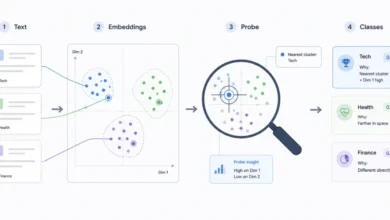
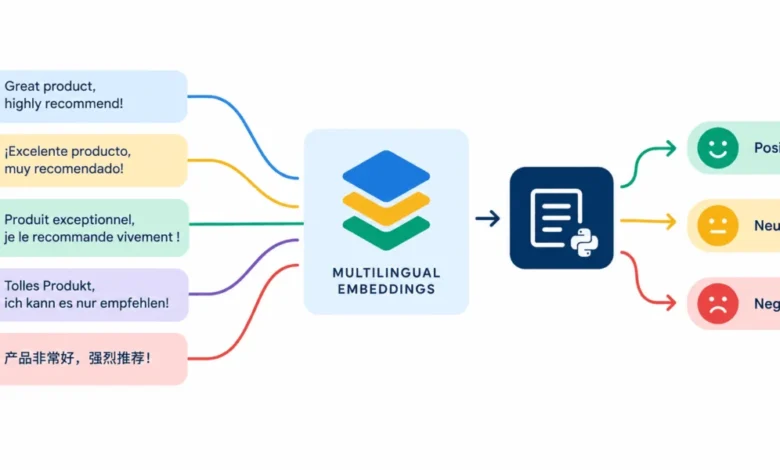
The emergence of multilingual embedding models—such as the BGE-M3 (BAAI General Embedding) model—has fundamentally altered this landscape. These models are pre-trained on massive, diverse datasets spanning over 100 languages, allowing them to map disparate linguistic inputs into a shared, high-dimensional vector space. In this space, the semantic representation of a sentiment in Spanish is mathematically adjacent to the same sentiment expressed in English. Consequently, the downstream classifier, such as a logistic regression model, does not need to understand the source language; it only needs to interpret the mathematical coordinates of the provided embeddings.
Technical Implementation and Infrastructure
To build a robust, localized pipeline that avoids the pitfalls of proprietary, cloud-based dependencies, developers are increasingly turning to open-source orchestration tools. The setup process involves integrating Scikit-LLM with local inference engines like Ollama. This transition away from external providers provides several strategic advantages: data privacy, cost predictability, and independence from internet connectivity constraints.
The process begins by installing the necessary dependencies, including the Scikit-LLM library and the Datasets package, which facilitates efficient data handling. By deploying the Ollama distribution locally, developers can run state-of-the-art models like BGE-M3 directly on their hardware. The initialization of the Ollama server acts as a local API endpoint, which the Scikit-LLM configuration module can then target. This architecture essentially turns a local machine into a private, high-performance inference server capable of generating dense vector embeddings in real-time.
Data Strategy and Pipeline Construction
A critical component of this methodology is the curation of a balanced, representative dataset. For example, using the Amazon Multi-language Reviews dataset allows for a controlled experiment where models can be trained on English and Spanish inputs simultaneously. To ensure the model does not develop a bias toward a specific language or class, the data must be rigorously shuffled and balanced. In a typical implementation, taking a sample of 2,000 reviews—evenly distributed between languages—provides a sufficient baseline for testing the efficacy of the pipeline.
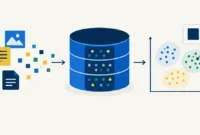
The pipeline architecture itself is remarkably elegant. It follows a two-stage process:
- Vectorization: The raw text is passed through the GPTVectorizer, which utilizes the BGE-M3 model to convert the text into numerical vectors.
- Classification: The vector outputs are fed into a standard Scikit-learn classifier, such as a Logistic Regression or Random Forest model, which maps the vectors to the target labels (e.g., 1-star to 5-star ratings).
This modular approach ensures that the vectorization logic is decoupled from the classification logic, allowing developers to swap models or update the classification algorithm without redesigning the entire system.
Performance Analysis and Challenges
When evaluating this approach, the results often reveal a nuanced performance landscape. Typically, these models show high precision when distinguishing between extreme sentiments—such as identifying a highly negative (1-star) review versus a highly positive (5-star) review. However, intermediate ratings often present a greater challenge.
There are two primary reasons for this performance discrepancy. First, the inherent ambiguity of intermediate ratings (3-star reviews) often stems from conflicting feedback, where a user might praise a product’s quality but criticize its shipping time. These "mixed signals" are more difficult for a linear classifier to categorize than the clear, polarized language of extreme reviews. Second, data scarcity for specific classes can lead to underfitting. If the training set contains fewer examples of 2-star or 3-star reviews, the model’s ability to learn the specific features of those categories is limited.
To improve these results, practitioners might consider hyperparameter tuning on the Logistic Regression model, increasing the size of the training dataset, or implementing a more sophisticated classifier like a Gradient Boosting machine. Furthermore, incorporating domain-specific fine-tuning on the embedding model itself can significantly enhance performance in niche industries, such as legal or medical text classification, where general-purpose embeddings might miss industry-specific terminology.
Broader Implications for Global Enterprises
The shift toward unified multilingual classification has profound implications for global enterprises. Companies can now launch products in new international markets without the need to hire data science teams proficient in the local language of that region. Because the underlying embedding space is language-agnostic, a model trained on English data can immediately perform inference on data in French, German, or Japanese, provided those languages are covered by the embedding model’s training set.
This scalability is a major competitive advantage. In the retail sector, for instance, a company can analyze customer sentiment from a global dashboard, allowing for a consolidated view of product quality across all regions. This reduces the fragmentation of business intelligence and enables faster, more informed decision-making.
Furthermore, the environmental and economic impact of this approach cannot be overlooked. By minimizing the need for massive, redundant training pipelines, companies can reduce their carbon footprint—a growing concern for large-scale AI operations—and lower their infrastructure costs. The reliance on open-source, local-first inference tools represents a maturing of the AI industry, moving away from the "black box" model toward more transparent, controllable, and efficient workflows.
Conclusion
The methodology of building multilingual pipelines through LLM-powered embeddings marks a transition into a more efficient, accessible, and scalable era of machine learning. By utilizing powerful, open-source models like BGE-M3 and integrating them into standard, well-documented frameworks like Scikit-learn, developers can overcome the long-standing challenges of cross-lingual data processing. While the current performance is subject to data quality and the complexity of the task, the architecture provides a solid foundation for continuous improvement. As embedding models continue to evolve and become more efficient, the gap between language-specific performance and universal multilingual performance will likely continue to close, making global text classification a standard capability for even the smallest technical teams. The future of NLP lies not in creating more models, but in creating more capable, versatile, and unified representations of the human experience across all languages.