Mastering Large Language Model Lifecycle Management: Versioning and Tracking Scikit-Learn Pipelines with Scikit-LLM and MLflow

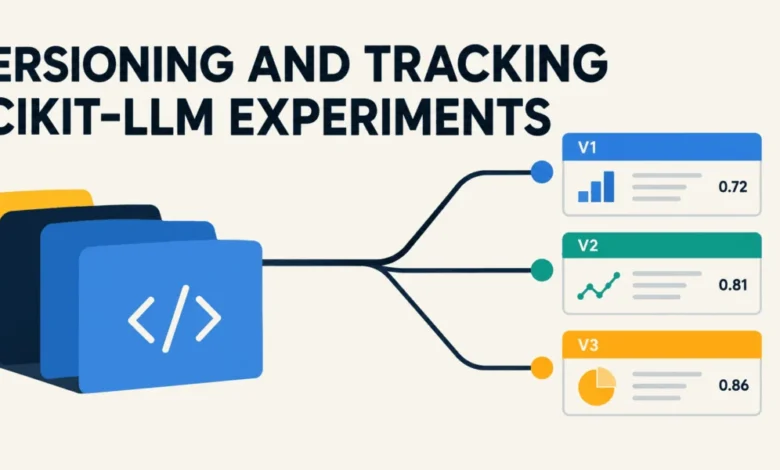
In the rapidly evolving landscape of artificial intelligence, the transition from experimental prototype to robust, production-grade machine learning pipelines remains a significant hurdle for engineering teams. As Large Language Models (LLMs) are increasingly integrated into traditional scikit-learn architectures, the complexity of maintaining reproducibility, auditing model lineage, and ensuring performance consistency across various model backends has escalated. The synergy between the Scikit-LLM library—which bridges the gap between LLMs and the familiar scikit-learn API—and MLflow, the industry-standard lifecycle management platform, provides a structured framework for addressing these challenges. By leveraging these tools, developers can effectively build, track, compare, and register LLM-infused pipelines, ensuring that every iteration of a model is accounted for within a secure, centralized registry.
The Evolution of LLM Integration in Machine Learning
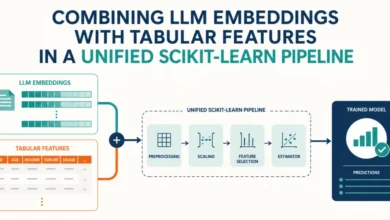
The integration of LLMs into standard workflows has traditionally been hampered by the lack of native support for LLM lifecycle management. While standard machine learning models like Random Forests or Support Vector Machines are easily serialized and versioned, LLMs—often requiring specific API keys, varying token limits, or local weight files—introduce significant overhead. Scikit-LLM was developed specifically to address this, allowing engineers to treat LLM inference as a standard transformer object within a scikit-learn pipeline.
However, simply running an LLM within a pipeline is insufficient for enterprise requirements. Organizations need to answer critical questions: Which specific version of an Orca or Falcon model was used for this prediction? How did the performance of this zero-shot classifier change when we swapped the backend? By combining Scikit-LLM with MLflow, practitioners can capture parameters such as LLM backend configurations, model file paths, and environment settings, effectively "freezing" the state of the experiment for future audits.
Setting the Foundation for Reproducible Experiments
The process begins with a standardized configuration environment. Whether operating in a local development environment or a cloud-based Jupyter notebook, the initial requirement is the installation of core dependencies. Utilizing pip install "scikit-llm[gpt4all]" mlflow ensures that the necessary local model execution wrappers are included.
Configuring the environment requires careful attention to the backend. By initializing SKLLMConfig with appropriate credentials—or using placeholder keys for local Gpu4All execution—developers define the scope of their model’s capabilities. Furthermore, establishing a persistent database backend, such as a local SQLite file, is vital for the MLflow Model Registry. This registry acts as the "source of truth," storing the history of every successful training run, which is essential for compliance and debugging in professional machine learning environments.
Chronology of the Pipeline Lifecycle
The workflow follows a rigorous, sequential path: definition, parameterization, execution, and registration.
In the initial phase, a baseline pipeline is defined using a lightweight model, such as the Orca Mini 71M. This model is ideal for early-stage testing and zero-shot classification tasks. Once the pipeline is defined, the developer initiates an MLflow "run." This step is critical; it creates a timestamped entry that tracks the specific LLM model file used. By wrapping the pipeline execution within an MLflow context manager, the developer ensures that all artifacts, including the serialized pipeline object, are saved and accessible.
The secondary phase involves the "Upgraded Pipeline" strategy. As models are swapped—for example, moving from the Orca Mini to a Falcon-based architecture—the system automatically logs the new configuration in a distinct, isolated run. This allows for direct side-by-side comparison. By utilizing cloudpickle as the serialization format, developers can ensure that even complex, non-standard Python objects within the scikit-learn pipeline are correctly captured and reproducible.
Comparative Analysis and Data-Driven Selection
One of the most powerful features of this integrated approach is the ability to query the entire experimental history. Once multiple runs are completed, the MLflow search API allows engineers to extract a comprehensive DataFrame representing every attempt. This audit trail is more than just a record; it is a diagnostic tool.
In a typical production environment, developers might run dozens of variations of a classification task. The ability to filter these results based on metrics—such as classification accuracy, latency, or even specific hardware usage parameters—allows for an objective, data-driven selection process. For instance, an engineer can compare a Falcon-based model against a baseline and instantly identify which version delivered superior results on the validation set. This capability mitigates the risk of "model drift" and provides clear documentation of why a specific version was promoted to production.
Official Registration and Deployment Readiness
The transition from an experimental "run" to a "registered model" is the final, decisive step in the pipeline lifecycle. Registration creates a managed entry in the MLflow Model Registry, assigning a version number to the model. This versioning system is essential for CI/CD pipelines, as it allows deployment infrastructure to point to "Version 1" or "Production" without needing to manually update file paths or codebases.
Furthermore, by programmatically searching for the top-performing model based on specific metrics—such as metrics.accuracy DESC—teams can automate the deployment process. This "champion-challenger" model deployment pattern ensures that only the best-performing models reach the end-user, while the registry maintains a full history of all previous iterations for roll-back purposes.
Broader Implications for Enterprise AI
The adoption of a formal versioning and tracking strategy for LLM-integrated pipelines has profound implications for the industry. First, it addresses the "black box" nature of many LLM applications. By tracking the exact model file, the input data, and the pipeline configuration, organizations can provide transparency in how decisions are made by their AI systems—a requirement increasingly demanded by regulatory bodies.
Second, this workflow significantly reduces the technical debt associated with experiment management. In many teams, model versions are tracked via disorganized file naming conventions or disparate spreadsheets. The use of MLflow centralizes this data, fostering collaboration between data scientists, machine learning engineers, and operations teams.
Finally, the ability to rapidly iterate through different LLM backends allows organizations to stay at the cutting edge of research. As more efficient, quantized, or specialized models are released, teams can integrate them into their existing scikit-learn pipelines with minimal friction, confident that the MLflow framework will capture and validate the performance of these new assets.
Conclusion
Building, tracking, and registering LLM-powered pipelines is no longer a luxury but a necessity for sustainable AI development. Through the combination of Scikit-LLM’s flexible architecture and MLflow’s robust management capabilities, developers can move beyond ad-hoc experimentation. By creating a standardized, audit-ready lifecycle for these models, engineering teams can ensure that their AI deployments are not only innovative but also reliable, reproducible, and scalable. The ability to distinguish between successful experiments and failed attempts within a unified interface ensures that only the most capable, thoroughly tested models move forward, providing a solid foundation for the next generation of intelligent applications.