Talk Python To Me Episode 553 Features a Special Crossover With Python Bytes Focusing on Essential Developer and Business Owner Tools

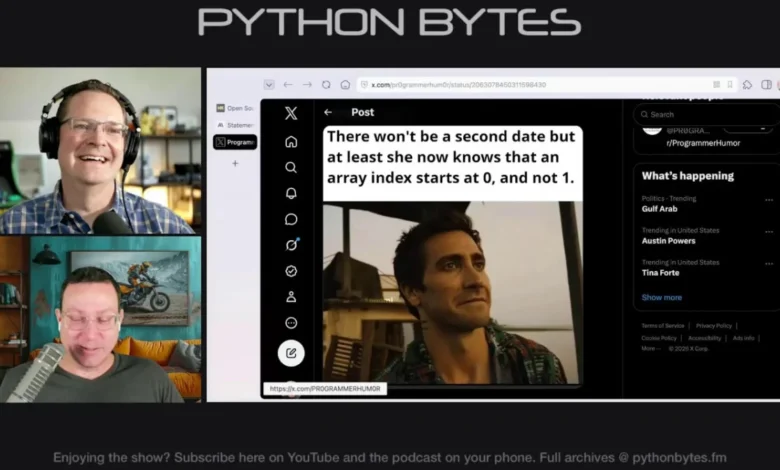
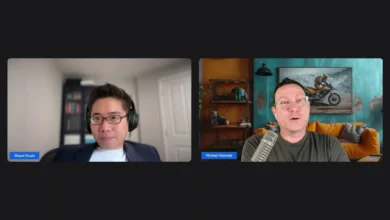
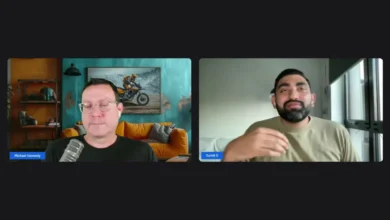
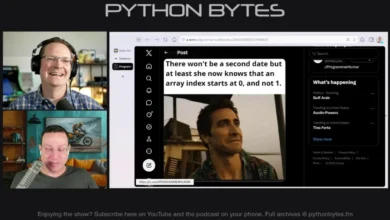
In Episode 553 of the long-running podcast Talk Python To Me, host Michael Kennedy presents a special crossover episode originally broadcasted as Episode 484 of Python news and tips podcast Python Bytes on June 16, 2026. This installment marks a significant structural transition for Python Bytes, highlighting the departure of longtime co-host Brian Okken and welcoming Calvin Hendryx-Parker as the new permanent co-host. To commemorate this new era, the hosts dedicated an extended, introspective episode titled "All Our Tools," wherein they examine the most useful day-to-day utilities that software developers and business owners rely on to maintain high efficiency and productivity.
The positive reception of this candid discussion prompted Kennedy to share the conversation with the broader Talk Python audience. Throughout the episode, both hosts unpack their preferred ecosystem of hardware setups, command-line enhancements, artificial intelligence agentic harnesses, and security architectures.
Transition of Co-Hosts and the Genesis of All Our Tools
Python Bytes has established itself over the years as a primary weekly digest for Python developers seeking concise updates, tips, and emerging library highlights. The departure of Brian Okken introduced a transitional phase for the program, which Kennedy and Hendryx-Parker chose to address not by introducing external guests or rushing into routine news items, but by deeply examining their personal developer toolchains.
Choosing software and hardware items proved to be a challenging task for the hosts, who likened the selection process to choosing favorite children. The resulting discussion ultimately reflects decades of cumulative engineering experience—Kennedy brings over 25 years of coding background and Python Software Foundation fellowship perspective, while Hendryx-Parker contributes extensive enterprise development and business ownership insights.
Terminal-First Workflows and AI Agentic Harnesses
A dominant theme throughout the episode is the reliance on terminal-first workflows, augmented heavily by modern AI agentic frameworks. Calvin Hendryx-Parker, whose history with the command line dates back to learning vi tutor in college, detailed his preference for minimalist, high-control environments over heavier integrated development environments.
Pi and Superpowers: Unconstrained Coding Agents
Hendryx-Parker introduced Pi, an open-source, terminal-first coding agent harness that provides users with maximum control and customizability. Unlike opinionated AI tools that enforce strict guardrails, Pi acts as a flexible framework where developers can bring their own models—whether utilizing Anthropic’s Claude, Google’s Gemini, OpenAI models, or local open-weight options via Ollama.
Pi stands out for its robust session management, treating the development process as a branching tree. This allows engineers to time-travel, rewinding or branching off from any point in a session if an AI model heads down an unproductive rabbit hole, thereby saving valuable context windows and token expenditure.
To govern the agentic workflow, Hendryx-Parker pairs Pi with Superpowers, a lightweight, specification-driven development tool. Rather than allowing an AI agent to blindly loop and generate excessive, bloated code, Superpowers enforces a structured workflow consisting of brainstorming, planning, test-driven development (TDD) via red-green cycles, execution, verification, review, and merging.
Warp, Kitty, and the Modern Command Line
Michael Kennedy offered a complementary perspective by highlighting Warp, a modern terminal built with GPU acceleration and team collaboration features. While acknowledging Warp’s native AI integration, Kennedy utilizes it primarily as a reliable, high-performance terminal host while maintaining his long-standing allegiance to Oh My Zsh.
The conversation expanded into terminal multiplexing and remote shell persistence. Hendryx-Parker outlined his use of the Kitty terminal—a GPU-accelerated application that supports tiling and window layouts natively—combined with Tmux for session persistence. To bridge the gap between desktop workstations and mobile devices during travel, Hendryx-Parker relies on Blink Shell on iOS devices alongside Mosh (Mobile Shell). Mosh allows developers to maintain persistent SSH-like connections across unstable networks, intermittent Wi-Fi drops, and laptop sleep cycles, enabling seamless transitions from a powerful desktop to an iPad at a coffee shop without losing active Tmux sessions.
Dictation and Local Audio Processing
Addressing physical ergonomics and repetitive strain injuries (RSI), Hendryx-Parker and Kennedy discussed the increasing viability of voice dictation and transcription for software engineers. Both hosts heavily endorse MacWhisper, a macOS application utilizing local Whisper models (such as Whisper Large V3 Turbo) and NVIDIA Parakeet models for fast, on-device audio transcription.
MacWhisper allows developers to dictate into any text field across the operating system using push-to-key shortcuts. By integrating fast models like Claude Haiku into the transcription pipeline, dictation inputs are instantly cleaned up, formatted, and corrected for technical terms like "PyPI," transforming raw spoken thoughts into polished emails or documentation strings without cloud privacy compromises. For non-macOS users, open-source alternatives like Handy provide similar cross-platform dictation capabilities.
Infrastructure Security and Network Overlays
Security and remote access formed a critical operational segment of the episode. Hendryx-Parker and Kennedy emphasized the necessity of avoiding insecure port exposures on the public internet, particularly when hosting local databases, large language model servers (such as LM Studio instances running on Mac Mini M4 Pro hardware), and development environments.
While Hendryx-Parker utilizes Ubiquiti’s Teleport virtual private network infrastructure, Kennedy advocates for Tailscale as an overlay network solution. Tailscale enables developers to securely connect distant workstations, home servers, and mobile clients into a unified private mesh network without exposing standard administration ports (like SSH port 22) to the open internet. This architecture allows engineers to securely execute remote maintenance, database queries, and AI model inference from any external location while routing traffic through a trusted home exit node.
Broader Implications and Industry Context
The extensive discussion on developer toolchains underscores a broader shift in software engineering. As AI coding assistants, local execution environments, and zero-trust networking tools mature, the modern developer’s workstation is evolving from a mere viewing window into a powerful edge-computing node.
By emphasizing open-source flexibility, token efficiency, and rigorous specification-driven workflows over unguided "vibe coding," engineering leaders like Kennedy and Hendryx-Parker demonstrate how practitioners can harness artificial intelligence as a genuine technical partner while maintaining absolute ownership over their codebases and data privacy.