Mastering Modern Motion: The Evolution of CSS Animation with the Linear Easing Function

The introduction of the linear timing function represents a significant milestone in the evolution of web design, moving beyond the constraints of traditional Bézier curves to enable complex, physics-based animations natively within CSS. For years, web developers were restricted to cubic-Bézier curves to define how elements transitioned between states. While these curves provided a standard method for easing, they proved insufficient for mimicking realistic motion, such as the natural bounce or oscillation of a physical spring. Consequently, developers were often forced to rely on heavy JavaScript libraries to handle these nuanced effects. However, such dependencies frequently introduced performance bottlenecks, as JavaScript-based animations often compete for resources on the browser’s main thread, leading to stuttering during periods of high application activity. The advent of the linear() function fundamentally changes this paradigm by allowing developers to define custom easing curves directly in CSS, resulting in smoother, more performant, and more sophisticated user interfaces.
A Technical Shift from Curves to Data Points
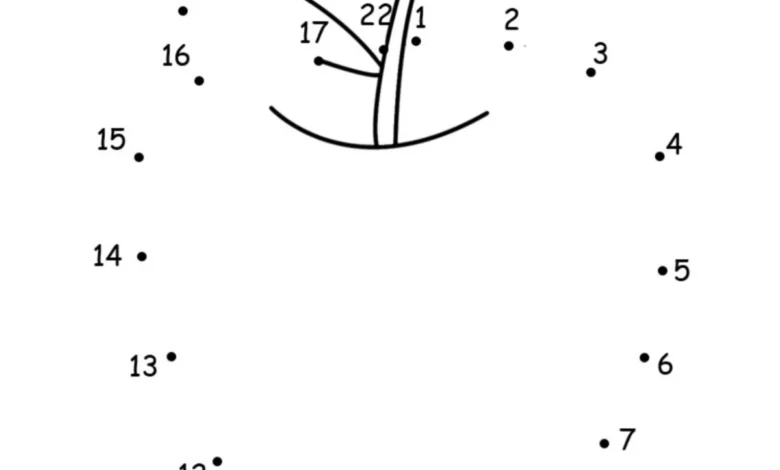
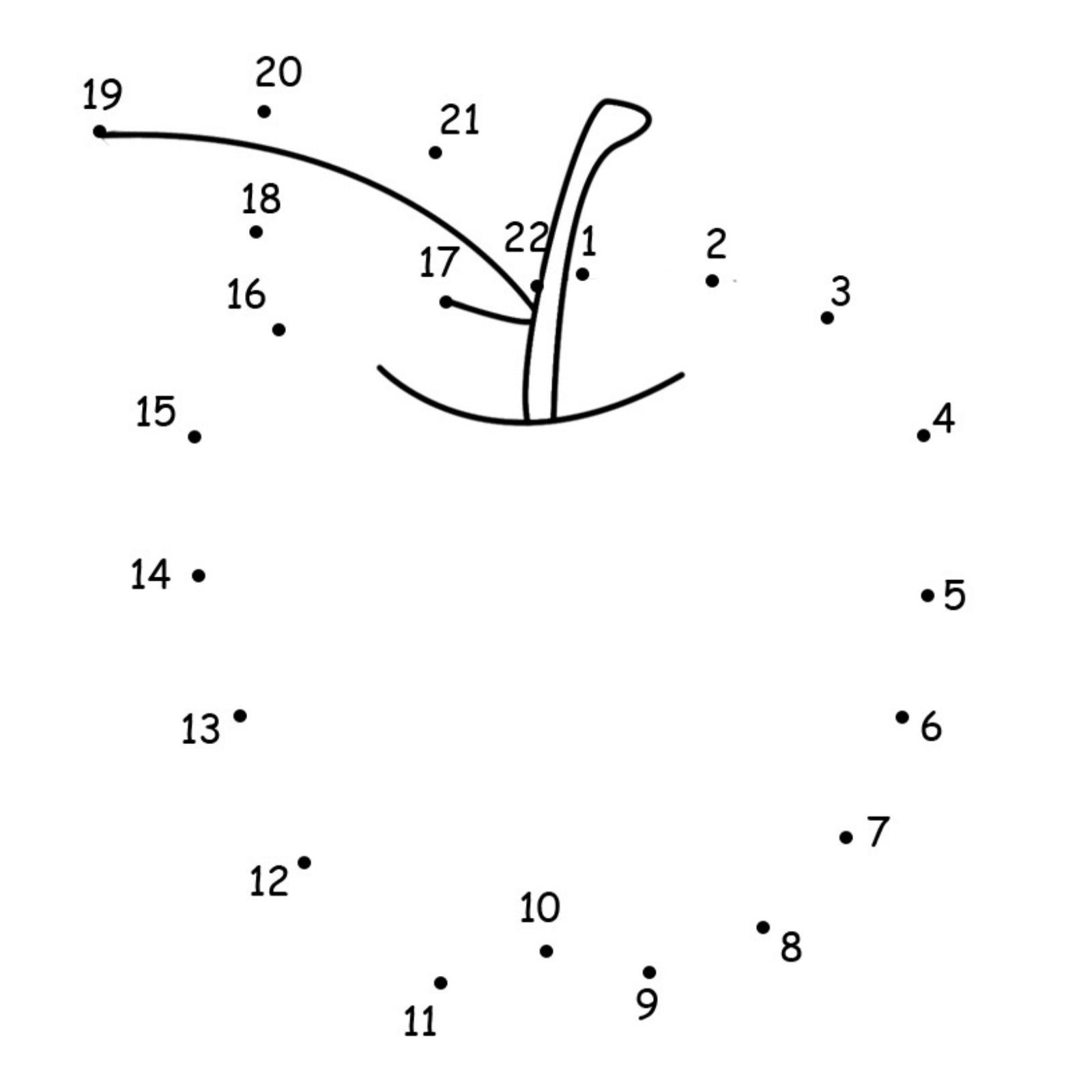
To understand the mechanics of the linear() function, one must look at how it differs from its predecessor, the cubic-Bézier curve. A cubic-Bézier curve is a mathematical function that produces a smooth path based on four control points. While aesthetically pleasing, it cannot easily represent the rapid, multi-stage oscillations required for realistic spring physics. In contrast, the linear() function operates by allowing developers to specify a sequence of individual progress values—essentially a set of coordinates on a Cartesian plane. The browser then connects these points with straight line segments, creating a custom easing curve.
This "connect-the-dots" approach may seem rudimentary, but when the density of these points is sufficiently high, the human eye perceives a seamless, organic motion. For instance, an approximation of an "ease" curve can be achieved with a relatively small number of points, while a high-fidelity spring animation may require dozens of data points to capture the subtle deceleration and acceleration inherent in physical movement. By moving away from rigid mathematical formulas and toward discrete, calculated values, the linear() function provides a level of creative control that was previously only accessible through complex animation frameworks.
Chronology of Development and Browser Implementation
The movement toward native, high-performance CSS animations has been a multi-year effort within the W3C and browser vendor communities. Early attempts to improve web motion focused on standardized easing keywords like "ease-in" or "ease-out," but as design trends moved toward more playful, interactive interfaces, these presets became outdated.
In late 2022 and early 2023, major browser engines began experimenting with the linear() specification. The goal was to provide a mechanism that was as powerful as JavaScript animation libraries—such as React Spring or Framer Motion—but with the performance benefits of native browser execution. By 2024, support for the linear() function became widespread across Chromium-based browsers, Safari, and Firefox, marking a turning point where developers could safely incorporate these functions into production-grade applications without fear of breaking the user experience on older browser versions.
Quantitative Impact on Performance and Bundle Size
One of the most critical concerns for modern web developers is the performance cost of implementing new features. When developers first adopted linear() to simulate complex springs, there was apprehension regarding whether the sheer number of required data points—often exceeding 50 or 100 per animation—would negatively impact page load times or rendering speed.
Empirical testing has largely debunked these concerns. Comparative analysis indicates that even when an animation utilizes over 100 data points, the rendering performance remains identical to that of a simple linear transition. Because the calculation of these points is handled by the browser’s optimized layout engine rather than the JavaScript main thread, the risk of "jank"—or frame rate drops—is virtually eliminated. Furthermore, the impact on file size is negligible. Even with dozens of complex animations, the additional CSS code typically accounts for less than 2 kilobytes of data. On a standard 3G mobile connection, this translates to a load time difference of approximately 5 milliseconds, a latency period that is entirely imperceptible to the end user.
The Challenge of Interrupts and State Reversion
Despite its advantages, the linear() function is not without limitations, particularly regarding how it handles user interaction mid-animation. One of the most complex challenges in web development is the "interrupt" scenario—when a user interacts with an element while it is already in motion.
In JavaScript-based physics libraries, the system calculates the current velocity and inertia of the element to determine its path after an interruption. This results in a smooth, continuous flow where the element "swings" back or continues its momentum. CSS transitions, however, operate on a time-based model. When a transition is interrupted, the browser’s default behavior is to snap to a new path or shorten the animation duration using a "reversing shortening factor." This can result in an unnatural, robotic movement that lacks the fluid grace of physical objects. While developers can mitigate this by carefully managing state, the inherent nature of CSS transitions means that emulating complex, reactive physics will always be more challenging than using a dedicated physics engine.
Best Practices and Future Outlook
To successfully integrate the linear() function into modern workflows, developers are increasingly turning to dedicated utility tools. Projects like the Linear Easing Generator and Easing Wizard allow designers to model spring parameters—stiffness, damping, and mass—and automatically export the corresponding linear() code. This automation is essential, as manually coding 50-plus data points is prone to error and highly inefficient.
Industry experts recommend a strategy of progressive enhancement. Developers should define standard Bézier transitions as a base, then use the @supports CSS rule to inject the more sophisticated linear() values for browsers that support the modern syntax. This ensures that users on older systems still experience a functional, albeit less dynamic, transition, while modern browsers display the optimized, high-fidelity animation.
Looking forward, the adoption of linear() signals a shift toward a more expressive web. As design systems continue to favor "whimsical" or "delightful" interactions, the ability to define motion that feels grounded in physical reality will become an essential skill. By leveraging CSS variables to store these complex easing strings, teams can maintain clean, maintainable codebases while delivering experiences that feel more responsive and human-centric. The transition from rigid, pre-defined curves to custom-generated data points represents not just a technical improvement, but a fundamental expansion of the artistic vocabulary available to web developers globally. As browsers continue to refine their rendering engines, the gap between web-based animations and native application performance will continue to shrink, setting a new standard for interactive digital experiences.