
Remains Mayan Palace Mexico

Unveiling the Royal Residences: A Deep Dive into Mayan Palace Remains in Mexico
The archaeological landscape of Mexico is indelibly marked by the grandeur and sophistication of the ancient Maya civilization. Among their most impressive achievements, the remnants of Mayan palaces stand as testaments to their complex social hierarchies, architectural prowess, and deep connection to religious and political power. These imposing structures, scattered across the Yucatán Peninsula and beyond, offer invaluable insights into the lives of Maya royalty, the administration of their city-states, and the intricate tapestry of their ceremonial practices. Unlike the ubiquitous pyramids that dominate popular imagination, palaces were the administrative and residential heart of Mayan urban centers, serving as the focal point for governance, diplomacy, and the display of royal authority. Their study reveals a civilization not solely focused on the afterlife and cosmic cycles, but also on the earthly realities of power, wealth, and the intricate workings of a sophisticated society.
The definition of a "Mayan palace" itself is a broad term encompassing a variety of architectural forms and functions. Generally, these complexes were multi-roomed structures, often built on raised platforms or integrated into larger ceremonial precincts. They were not singular, monolithic buildings but rather an arrangement of courtyards, halls, chambers, and sometimes elevated terraces, designed to accommodate a significant royal retinue. The complexity of their layout often reflected the size and influence of the ruling elite. Smaller city-states might have possessed a more modest palace complex, while dominant centers like Tikal, Palenque, or Calakmul boasted sprawling royal residences that rivaled modern-day governmental and administrative centers in their scale and scope. These structures served multiple purposes: as the primary residence of the ruler and their immediate family, as a hub for governmental administration, a venue for diplomatic meetings and receiving tribute, and as a stage for elaborate public ceremonies and rituals designed to legitimize royal power and reinforce the ruler’s divine mandate.
The architectural styles and materials employed in Mayan palaces varied considerably across different regions and time periods. However, certain common features are discernible. Limestone was the ubiquitous building material, quarried and meticulously shaped into blocks that were then assembled with remarkable precision, often without the use of mortar. Plaster, derived from calcified limestone, was extensively used to create smooth, polished surfaces for walls and floors. This plaster was frequently adorned with vibrant polychrome murals depicting scenes of courtly life, warfare, religious ceremonies, and mythological narratives. These painted narratives provide some of the most direct and evocative glimpses into the visual culture and historical events of the Maya. Decorative elements, such as intricate stucco friezes and carved stone reliefs, were also common, further embellishing the facades and interiors. These carvings often depicted rulers in ceremonial regalia, mythological creatures, and hieroglyphic inscriptions detailing dynastic histories and achievements. The presence of numerous rooms, often interconnected by corridors and passageways, facilitated the complex activities of a royal court, from private chambers for the ruler and their family to administrative offices and reception halls for visiting dignitaries.
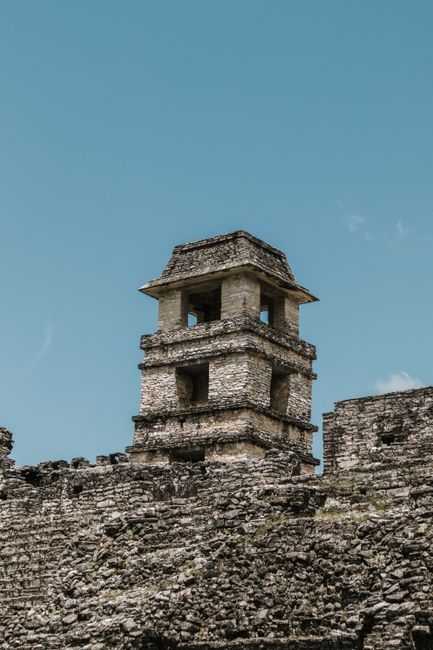
Among the most famous and well-preserved Mayan palace remains in Mexico, the Palenque Palace in Chiapas stands as a paramount example of architectural sophistication and royal grandeur. This sprawling complex, characterized by its elevated platform, interconnected buildings, and the iconic Tower, served as the residence of the Palenque rulers during the Classic Period. Its intricate stucco sculptures and extensive hieroglyphic inscriptions provide invaluable information about the city’s history and its ruling dynasty. The Palace of the Governors at Palenque, with its distinctive tower, likely served as an administrative and observation point, offering panoramic views of the surrounding landscape and the city itself. The intricate details of its construction, including sophisticated drainage systems and internal courtyards designed for natural ventilation and light, speak to the advanced engineering capabilities of the Maya. The walls of these structures were once alive with vibrant murals, fragments of which, though faded, still offer tantalizing glimpses into the artistic and narrative conventions of the time.
Further north, the Uxmal Palace in Yucatán offers a different, yet equally impressive, architectural vision. Renowned for its Puuc architectural style, characterized by precise stonework, elaborate ornamentation, and undulating decorative friezes, the Palace of the Governors at Uxmal is a masterpiece of Mayan design. Unlike the more monumental Palenque Palace, Uxmal’s palace complex is renowned for its refined aesthetic and integration with the natural topography of the site. The Governor’s Palace, in particular, is celebrated for its long, arcaded facade, adorned with thousands of intricately carved stones depicting masks of the rain god Chaac and geometric patterns. This palace was not just a dwelling but a symbolic representation of the ruler’s authority and connection to the divine, particularly through its association with Chaac, a crucial deity in the arid Yucatán environment. The courtyards within Uxmal’s palace complex were likely used for public audiences and ceremonies, further emphasizing the ruler’s role as a mediator between the earthly and divine realms.
The Mayan city of Chichen Itza, a UNESCO World Heritage Site, also boasts significant palace remains that underscore its former importance as a major political and religious center. While the iconic El Castillo pyramid often dominates the visitor’s attention, structures like the Nunnery Complex and the Caracol (Observatory) are prime examples of royal and administrative buildings. The Nunnery Complex, a large, multi-chambered structure, is believed to have housed royal women or served as an administrative center. Its facade is adorned with intricate carvings, including representations of the Chaac rain god and serpent motifs. The Caracol, though primarily an astronomical observatory, also possessed features indicative of elite use, suggesting a connection between celestial observation, royal ceremony, and governance. The sheer scale and architectural diversity of Chichen Itza’s palace structures reflect its long and influential history, incorporating elements from both the Puuc and Maya-Toltec periods.
Beyond these prominent examples, numerous other Mayan sites across Mexico contain significant palace remains, each offering unique insights into regional variations in political organization, architectural styles, and cultural practices. Calakmul, an ancient superpower in the Maya world, features a vast royal complex that rivaled Tikal in its scale and complexity, signifying its dominant position. Copan in Honduras, though not in modern Mexico, provides crucial comparative data for understanding Mayan palace structures and their evolution across the Maya lowlands. The sheer number of these structures, often found within the ceremonial cores of Mayan cities, highlights the pervasive nature of royal authority and the importance of centralized governance in Maya society.
The functions of Mayan palaces extended far beyond mere residential purposes. They were the nerve centers of their respective city-states, where decisions were made, alliances forged, and justice dispensed. The presence of numerous interconnected rooms suggests specialized functions, with certain areas dedicated to receiving petitioners, others for administrative record-keeping, and private quarters for the royal family. The courtyards likely served as public gathering spaces for ceremonies, markets, and judicial proceedings. The elevated platforms on which many palaces were built emphasized the ruler’s elevated status and provided a commanding presence over the surrounding populace. The construction of these complexes was a monumental undertaking, requiring extensive labor forces and sophisticated logistical planning, further demonstrating the centralized authority of the rulers who commissioned them.
The discovery and ongoing excavation of Mayan palace remains continue to enrich our understanding of this ancient civilization. Archaeological investigations often uncover a wealth of artifacts within these structures, including pottery, jade carvings, obsidian tools, and even human remains, offering clues about daily life, trade networks, and burial practices of the elite. Hieroglyphic inscriptions found on stelae, lintels, and wall panels within palace complexes are particularly crucial, providing dynastic histories, genealogies, accounts of warfare, and rituals performed by the rulers. The interpretation of these inscriptions, a specialized field within Mayan archaeology, allows researchers to reconstruct the political landscape, the reigns of individual rulers, and the complex relationships between different city-states.
The process of decay and destruction, accelerated by centuries of neglect and looting, has unfortunately led to the loss of much of the original splendor of these Mayan palaces. However, the enduring stone structures and the invaluable information gleaned from ongoing archaeological research provide a powerful testament to the Maya’s enduring legacy. Preserving these sites and continuing their study is paramount to understanding not only the history of Mexico but also the broader narrative of human civilization, its capacity for complex societal organization, artistic expression, and sophisticated governance, all vividly reflected in the silent grandeur of these ancient royal residences. The exploration of Mayan palaces in Mexico is an ongoing journey, a continuous unveiling of a sophisticated past that continues to resonate through the architectural remnants and the rich tapestry of their civilization.


