
Istanbul Shiny New Airport Worlds Biggest

Istanbul’s Shiny New Airport: A Global Hub Redefined
Istanbul Airport (IST), the colossal new gateway to Turkey and a burgeoning global aviation nexus, has officially surpassed its predecessors to claim the title of the world’s largest airport. This ambitious infrastructure project, a testament to Turkey’s vision for the future of travel, is not merely a new terminal; it represents a fundamental reimagining of airport operations, passenger experience, and international connectivity. With a phased opening and ongoing expansion, Istanbul Airport is poised to become a dominant force in the global aviation landscape, offering unparalleled capacity, cutting-edge technology, and a strategic location that bridges continents.
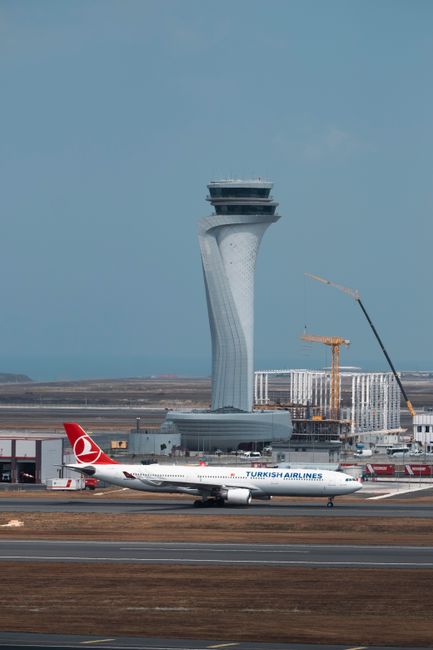
The sheer scale of Istanbul Airport is staggering, dwarfing many existing international hubs. Designed to eventually handle an astonishing 200 million passengers annually, its current operational capacity already positions it as one of the busiest. The initial phase, which opened in stages, encompasses a sprawling complex that incorporates a central control tower, four runways, and an expansive main terminal building. This terminal, a marvel of modern architectural design, boasts an impressive footprint, housing a multitude of check-in counters, security screening points, immigration booths, and baggage handling systems. The intelligent layout prioritizes passenger flow and efficiency, aiming to minimize transit times and alleviate the congestion often associated with mega-airports. Advanced baggage systems, utilizing automated sorting and tracking technologies, are designed to handle the immense volume of luggage with speed and accuracy. The integration of artificial intelligence and machine learning is also a key component, promising predictive maintenance for infrastructure and optimized operational strategies.
Beyond its sheer size, Istanbul Airport distinguishes itself through its comprehensive suite of passenger amenities and retail offerings. Recognizing that airport transit can often be a stressful experience, designers have focused on creating a welcoming and comfortable environment. The retail space is expansive, featuring a diverse array of luxury brands, duty-free shops, local artisan boutiques, and everyday essentials. This "airport city" concept aims to provide passengers with a seamless shopping experience, transforming downtime into an opportunity for discovery and indulgence. Food and beverage options are equally varied, catering to a global palate with international chains, gourmet restaurants, and casual cafes. Dedicated lounges, both airline-specific and pay-per-use, offer a tranquil escape from the main concourse, equipped with comfortable seating, Wi-Fi, and catering services. For families, dedicated play areas and nursing rooms ensure a more relaxed journey for younger travelers. Furthermore, the airport incorporates extensive green spaces and natural light, aiming to create a less institutional and more inviting atmosphere. This focus on passenger well-being extends to its connectivity, with robust Wi-Fi coverage throughout the terminal and charging stations readily available.
The strategic geographical location of Istanbul Airport is a critical factor in its ascent as a global hub. Situated on the European side of Istanbul, it is ideally positioned to serve as a bridge between Europe, Asia, and Africa. This advantageous placement allows for efficient flight routing and significantly reduced travel times for a vast number of international passengers. Airlines are already leveraging this by introducing new routes and increasing frequencies, further solidifying Istanbul’s role as a crucial transit point. The airport is designed to facilitate seamless transfers, with integrated systems and clear signage to guide passengers between international and domestic flights. Its proximity to the Bosphorus Strait, a vital maritime trade route, also adds to its strategic importance, potentially fostering intermodal connections between air and sea cargo. The Turkish government’s commitment to developing Istanbul Airport as a major global aviation hub has been unwavering, supported by significant investment in infrastructure and promotional efforts to attract airlines and passengers. This long-term vision underscores Turkey’s ambition to become a preeminent player in the global travel and logistics industries.
Technological innovation is at the heart of Istanbul Airport’s operational efficiency and passenger experience. The airport utilizes a state-of-the-art air traffic control system, incorporating the latest radar and communication technologies to manage the complex airspace efficiently and safely. Biometric identification systems are being progressively integrated to expedite passenger processing at check-in, security, and boarding gates, aiming for a contactless and streamlined experience. The airport’s infrastructure is designed with future scalability in mind, allowing for the addition of new terminals and runways as passenger demand grows. Smart building management systems optimize energy consumption, lighting, and climate control, contributing to the airport’s sustainability goals. Digital signage and interactive information kiosks provide real-time updates on flight information, gate changes, and airport services, accessible in multiple languages. The implementation of advanced data analytics helps in understanding passenger behavior, optimizing resource allocation, and predicting potential bottlenecks. This commitment to technological advancement ensures that Istanbul Airport remains at the forefront of aviation innovation, adapting to the evolving needs of air travel.
The economic impact of Istanbul Airport is projected to be substantial, not only for the city of Istanbul but for Turkey as a whole. As a major international gateway, it is expected to drive tourism, stimulate business travel, and create a significant number of jobs across various sectors, including aviation, hospitality, retail, and logistics. The airport’s operational capacity will enable it to handle a greater volume of cargo, further boosting Turkey’s position as a key player in global trade. The development of surrounding infrastructure, such as new roads, hotels, and business parks, will also contribute to the economic growth of the region. Furthermore, the airport acts as a catalyst for further investment in the Turkish aviation industry, fostering the growth of domestic airlines and related businesses. The successful operation of such a massive infrastructure project demonstrates Turkey’s capacity for large-scale development and its ability to attract international partnerships and investment. The airport’s contribution to the national GDP is anticipated to be significant, solidifying its status as a national strategic asset.
Sustainability was a key consideration in the design and construction of Istanbul Airport, despite its immense scale. The airport has implemented several measures to minimize its environmental footprint. These include the use of energy-efficient lighting systems, water conservation technologies, and waste management programs. The airport’s design incorporates features to maximize natural light, reducing the need for artificial illumination during daylight hours. Green building certifications and standards are being pursued to ensure that the airport meets international benchmarks for environmental performance. The aim is to create an airport that is not only functional and efficient but also environmentally responsible. This commitment to sustainability is crucial in an era of increasing awareness about climate change and the need for eco-friendly infrastructure. The ongoing operations will continue to be monitored and optimized for environmental impact, with a focus on reducing carbon emissions and promoting sustainable practices.
The phased opening of Istanbul Airport has been a strategic approach to managing its immense scale and complexity. The initial phases have focused on establishing core operational capabilities, allowing for meticulous testing and refinement of systems. As passenger traffic increases and demand dictates, further phases will see the expansion of terminals, the addition of more runways, and the enhancement of existing facilities. This evolutionary approach ensures that the airport can adapt to changing market conditions and technological advancements without disruption. The long-term vision includes the development of a comprehensive airport city, complete with hotels, convention centers, and entertainment facilities, further cementing its role as a self-sufficient destination. The commitment to continuous development and improvement underscores the airport’s ambition to remain a leading global aviation hub for decades to come. The ongoing construction and development projects are carefully managed to minimize impact on ongoing operations, ensuring a smooth transition.
The impact on existing airports, particularly Istanbul Atatürk Airport (IST), has been significant. Atatürk Airport, once a major hub, has largely ceased its commercial passenger operations, with most flights transitioning to the new facility. This consolidation of traffic at the new Istanbul Airport is crucial for maximizing its potential and optimizing air traffic management in the region. The transition has been a complex undertaking, requiring extensive coordination between airlines, airport authorities, and regulatory bodies. The closure of Atatürk Airport’s passenger operations marks the end of an era for a historic aviation landmark, but it paves the way for Istanbul’s new airport to fully realize its ambitious goals. The land previously occupied by Atatürk Airport is being earmarked for redevelopment, promising further economic and urban regeneration for the city. This strategic shift highlights the forward-thinking approach taken by Turkish authorities in prioritizing the development of a world-class, state-of-the-art aviation infrastructure.


