Attractions Museums Galleries Best Museums In
The Ultimate Guide to the World’s Best Museums: A Deep Dive into Must-See Attractions and Cultural Treasures
Museums offer unparalleled windows into human history, artistic achievement, scientific discovery, and cultural heritage. For travelers seeking enrichment, education, and awe-inspiring experiences, the world’s premier museums stand as essential destinations. This comprehensive guide explores the top attractions, delves into what makes them exceptional, and highlights the best museums across various categories, ensuring a fulfilling cultural journey for every visitor. From ancient artifacts to cutting-edge contemporary art, these institutions preserve, interpret, and present humanity’s collective story, inviting exploration and sparking curiosity.
The Louvre Museum, Paris, France, reigns supreme as the world’s largest art museum and a historic monument. Its vast collection, spanning millennia and continents, is anchored by iconic masterpieces like Leonardo da Vinci’s Mona Lisa and the Venus de Milo. Beyond these celebrated works, the Louvre houses an astounding array of Egyptian antiquities, Greek, Etruscan, and Roman art, Islamic art, sculptures, decorative arts, and paintings from European masters. The sheer scale of the Louvre can be overwhelming; strategic planning is essential. Visitors often focus on specific wings or periods. The Denon Wing, home to the Mona Lisa and Italian Renaissance paintings, is perennially popular. The Sully Wing offers a journey through Egyptian antiquities and the medieval foundations of the palace, while the Richelieu Wing showcases French sculpture, decorative arts, and Mesopotamian treasures. Navigating the Louvre requires comfortable shoes and a willingness to embrace the experience. Pre-booking tickets online is highly recommended to bypass long queues. The museum’s architectural grandeur, from its historic palace setting to I.M. Pei’s modern glass pyramid, adds another layer to its appeal. Special exhibitions, often featuring loans from other major institutions, provide unique opportunities to see rare and significant works. For those with limited time, guided tours can offer a curated experience of the highlights. Beyond the permanent collections, the museum shop and cafés provide respite and opportunities to acquire souvenirs and refreshments. The Louvre is not merely a repository of art; it is a living testament to human creativity and a cornerstone of global cultural tourism.
The Metropolitan Museum of Art (The Met) in New York City is a titan of the museum world, boasting a collection of over two million works of art, divided among thirty-five major departments. Its scope is breathtaking, encompassing virtually every field of art and art history. From the ancient Egyptian Temple of Dendur, meticulously reassembled within the museum, to European paintings by masters like Rembrandt and Vermeer, to an unparalleled collection of American art, and cutting-edge contemporary works, The Met offers a comprehensive artistic survey. Notable highlights include its extensive collection of Greek and Roman antiquities, its comprehensive Islamic art wing, its European sculpture and decorative arts, and its fashion and textile department, which often hosts critically acclaimed temporary exhibitions. The Met’s embrace of diverse cultures is evident in its vast Asian art collection, its African art galleries, and its Oceanic art holdings. The museum’s location on Fifth Avenue, bordering Central Park, provides a stunning setting. The Met engages visitors with interactive exhibits, educational programs, and a constant rotation of special exhibitions that draw international attention. The rooftop garden offers panoramic views of Central Park and the Manhattan skyline, providing a unique vantage point for contemplation. For a deeper dive, consider exploring thematic routes or focusing on specific periods or cultures that pique your interest. The Met’s membership program offers significant benefits, including free admission and access to special events, which can be advantageous for frequent visitors or those planning extended stays in New York.
The British Museum in London is a global treasure trove, housing a vast collection of world art and artifacts. Its mission is to "collect, care for, and display the material culture and history of people from all times and all places." This mission is realized through an astonishing 8 million objects, making it one of the largest and most comprehensive ethnographic museums in existence. Iconic pieces include the Rosetta Stone, the Elgin Marbles (Parthenon Sculptures), and Egyptian mummies. The museum’s galleries are organized geographically and chronologically, allowing visitors to trace the development of human civilization across continents. The Egyptian sculpture gallery, with its colossal statues and sarcophagi, is a perennial highlight. The Roman Britain gallery offers insights into daily life in the province, while the Mesopotamia galleries showcase the cradle of civilization. The British Museum also possesses extensive collections of Asian, African, and American art and artifacts. The sheer volume of objects means that a single visit can only scratch the surface. The museum offers themed tours, family trails, and a wealth of online resources to aid in planning and understanding. Admission is free, which makes it an accessible cultural hub for locals and tourists alike. The Great Court, with its stunning glass roof, is a magnificent central space that serves as a focal point for the museum. Special exhibitions at the British Museum often delve into specific historical periods or cultural phenomena, attracting significant scholarly and public interest.
The Vatican Museums in Vatican City, Rome, represent one of the most significant collections of art and history in the world, accumulated by the Catholic Church over centuries. The sheer opulence and artistic brilliance on display are staggering, with over 70,000 works in total, of which approximately 20,000 are on public display. The undeniable crown jewel is the Sistine Chapel, with Michelangelo’s breathtaking ceiling frescoes and The Last Judgment on the altar wall. However, the Vatican Museums are far more than just the Sistine Chapel. The Pinacoteca Vaticana houses masterpieces by Giotto, Leonardo da Vinci, Raphael, and Caravaggio. The Pio-Clementino Museum showcases classical sculpture, including the Laocoön and His Sons and the Apollo Belvedere. The Raphael Rooms, elaborately decorated by Raphael and his workshop, are a testament to High Renaissance artistry. The Gregoriano Etruscan Museum offers a fascinating glimpse into the pre-Roman civilization of Etruria. The Vatican Museums are a complex labyrinth of galleries, courtyards, and chapels, requiring careful navigation and often considerable time to fully appreciate. Pre-booking tickets is not just recommended; it is essential to avoid hours of waiting. Guided tours can significantly enhance the experience, providing context and highlighting key works. The museum’s layout can be confusing, and the crowds, especially during peak season, can be substantial. Visiting early in the morning or late in the afternoon, if available, can offer a slightly less crowded experience. The combination of religious significance, artistic mastery, and historical depth makes the Vatican Museums an unparalleled cultural pilgrimage.
The Smithsonian National Museum of Natural History in Washington, D.C., is a cornerstone of American scientific and cultural institutions. As one of the most visited museums in the world, it houses over 145 million specimens and artifacts, representing the diversity of the natural world and the history of human cultures. Its permanent exhibitions are legendary, including the Hall of Mammals with its iconic African Bush Elephant, the glittering Hope Diamond, the Hall of Human Origins, and the Dinosaur Hall. The Hall of Geology, Gems, and Minerals showcases an extraordinary collection of precious stones and minerals, providing insight into Earth’s formation and the forces that shape our planet. The museum’s focus extends to anthropology, with exhibits on human origins and cultures from around the globe. The ocean hall, marine life exhibits, and insect zoo further broaden the scope of natural wonders on display. The Smithsonian Institution, comprising nineteen museums and galleries, offers an unparalleled educational experience, and the Museum of Natural History is a prime example of its commitment to public understanding of science. Interactive displays and hands-on activities make it particularly engaging for families and younger visitors. Special exhibitions often delve into timely scientific topics, from climate change to the latest archaeological discoveries. The museum’s vast collection also supports ongoing scientific research, making it a vital hub for the scientific community.
The State Hermitage Museum in Saint Petersburg, Russia, is a colossal institution housed within six magnificent buildings, including the Winter Palace, a former imperial residence. Its collection is one of the largest and oldest in the world, with over three million works of art and artifacts, spanning prehistoric times to the present day. The Hermitage boasts an extensive collection of Western European art, including masterpieces by Rembrandt, Leonardo da Vinci, Michelangelo, and Raphael. Its Impressionist and Post-Impressionist collection is particularly notable. Beyond painting, the museum holds vast collections of sculpture, decorative arts, numismatics, and archaeological artifacts. The Egyptian antiquities, Greek and Roman art, and Scythian gold are particularly significant. The opulence of the Winter Palace itself, with its gilded interiors, ornate ceilings, and lavish decorations, complements the art on display, offering a glimpse into the lavish lifestyle of the Russian tsars. Navigating the Hermitage requires considerable time and energy. The sheer scale of the collections means that focusing on specific areas of interest is advisable. The museum offers guided tours that can help visitors prioritize and understand the vast holdings. Special exhibitions are frequently held, often featuring loans from other major international museums. The Hermitage is not just a museum; it is a historical monument and a testament to Russia’s rich cultural heritage.
The Prado Museum in Madrid, Spain, is one of the world’s finest art museums, renowned for its unparalleled collection of Spanish painting, particularly works by the Golden Age masters Diego Velázquez, Francisco Goya, and El Greco. The museum houses over 8,000 paintings and 700 sculptures, meticulously curated and displayed. Velázquez’s Las Meninas is arguably the museum’s most famous and influential masterpiece, a complex and enigmatic portrayal of the Spanish royal family. Goya’s The Third of May 1808 and his Black Paintings are profoundly moving and historically significant. El Greco’s elongated figures and intense spirituality are vividly represented. Beyond these titans, the Prado boasts important works by Italian Renaissance masters like Titian and Raphael, as well as Flemish and Dutch painters such as Bosch, Rubens, and Rembrandt. The museum’s collection of ancient Greek and Roman sculpture is also noteworthy. The Prado has undergone recent renovations and expansions, enhancing its visitor experience and exhibition space. The museum’s layout is organized by artist and period, allowing for a chronological exploration of artistic development. For those with limited time, focusing on the Spanish masters is a common and rewarding approach. The museum’s commitment to preservation and scholarly research ensures its continued relevance as a custodian of Western art.
The Rijksmuseum in Amsterdam, Netherlands, is the national museum of the Netherlands, dedicated to arts and history. Its collection focuses on the Dutch masters of the Golden Age, with a particular emphasis on Rembrandt van Rijn and Johannes Vermeer. The museum’s most celebrated masterpiece is Rembrandt’s The Night Watch, a monumental and dynamic group portrait that dominates the Gallery of Honour. Other iconic works include Vermeer’s The Milkmaid and works by Frans Hals and Jan Steen. The Rijksmuseum’s collection extends beyond painting to encompass a vast array of Dutch decorative arts, historical artifacts, and sculptures, providing a comprehensive overview of Dutch cultural heritage from the Middle Ages to the present day. The museum’s recent renovation, completed in 2013, revitalized its exhibition spaces and enhanced its visitor experience, including a dedicated children’s museum. The building itself, a magnificent neo-Gothic structure, is an architectural masterpiece. The Rijksmuseum’s focus on Dutch history and art makes it an essential destination for anyone interested in the Netherlands’ rich artistic and cultural past. The museum also hosts temporary exhibitions that explore various aspects of Dutch art and history, often featuring loans from other prominent institutions.
The National Museum of China in Beijing is one of the largest museums in the world, dedicated to showcasing the rich and extensive history of Chinese civilization. Its mission is to preserve, research, and display the cultural relics of China, offering a comprehensive journey through its millennia-long narrative. The museum houses over 1.4 million artifacts, spanning prehistoric times to the present day. Its permanent exhibitions are organized thematically and chronologically, guiding visitors through various dynasties, historical periods, and artistic developments. Highlights include ancient bronzes, calligraphy, ceramics, paintings, and jade artifacts. The Hall of Ancient China is a cornerstone, presenting the evolution of Chinese society from its earliest beginnings. The Hall of Chinese Folk Art showcases the diversity of traditional crafts and customs. The museum’s expansive galleries also feature exhibits on Chinese revolutionary history and modern China, reflecting the nation’s dynamic transformation. The scale of the National Museum of China is immense, and a thorough exploration requires significant time. The museum’s modern architecture and well-designed exhibition spaces contribute to an immersive experience. Special exhibitions often highlight specific historical events, archaeological discoveries, or artistic movements, attracting considerable attention both domestically and internationally.
The Uffizi Gallery in Florence, Italy, is a premier art museum housing one of the most important collections of Renaissance art in the world. Originally built to house the administrative offices of the Florentine magistrates, the Uffizi was transformed into an art gallery in the late 16th century. Its vast collection is dominated by masterpieces from the Italian Renaissance, featuring works by Sandro Botticelli, Leonardo da Vinci, Michelangelo, Raphael, Titian, and Caravaggio. Botticelli’s The Birth of Venus and Primavera are arguably the gallery’s most famous and beloved pieces, epitomizing the beauty and ideals of the Florentine Renaissance. The Uffizi’s chronological arrangement allows visitors to trace the evolution of art from the Middle Ages through the High Renaissance. The gallery’s architecture, with its distinctive loggias, offers stunning views of Florence. The sheer volume of masterpieces can be overwhelming, making pre-booking tickets essential. Guided tours can enhance understanding and appreciation of the complex iconography and historical context of the works. The Uffizi is a cornerstone of any visit to Florence, offering an unparalleled immersion into the artistic achievements of one of history’s most creative periods.
The Musée d’Orsay in Paris, France, occupies a magnificent former Beaux-Arts railway station, the Gare d’Orsay, built between 1898 and 1900. This unique architectural setting provides a stunning backdrop for its extensive collection of French art from 1848 to 1914. The Musée d’Orsay is particularly renowned for its unparalleled collection of Impressionist and Post-Impressionist masterpieces, featuring works by Claude Monet, Édouard Manet, Edgar Degas, Pierre-Auguste Renoir, Paul Cézanne, Paul Gauguin, and Vincent van Gogh. Visitors can admire iconic paintings such as Manet’s Olympia, Monet’s Impression, Sunrise, Degas’s The Ballet Class, and Van Gogh’s self-portraits. Beyond painting, the museum also houses impressive collections of sculpture, decorative arts, photography, and architecture from the period. The open, light-filled central nave of the former station showcases large-scale sculptures and architectural elements, while the surrounding galleries house the paintings. The Musée d’Orsay offers a focused yet comprehensive look at a pivotal era in art history, bridging the gap between the Louvre and the Centre Pompidou. The clock faces on the exterior of the building offer unique photographic opportunities.
The National Gallery in London, England, is one of the world’s most comprehensive art collections, housing over 2,300 paintings dating from the mid-13th century to 1900. Its collection is particularly strong in European painting, featuring masterpieces from virtually every major European school. Visitors can admire works by Italian masters such as Leonardo da Vinci, Raphael, and Titian; Dutch masters like Rembrandt and Vermeer; Spanish greats including Velázquez and Goya; and French painters such as Poussin and Claude Lorrain. The National Gallery’s collection is arranged chronologically and by school, allowing for a clear understanding of art historical development. The museum’s iconic building on Trafalgar Square is a landmark in itself. Admission to the permanent collection is free, making it an accessible cultural resource for millions. The National Gallery hosts a vibrant program of temporary exhibitions, often featuring loans from other leading international museums, which draw significant crowds. The museum’s research facilities and commitment to public education further solidify its position as a leading institution.
The Getty Center in Los Angeles, California, is a spectacular architectural and artistic complex that houses the J. Paul Getty Museum. Perched atop the Santa Monica Mountains, the center offers breathtaking views of Los Angeles, Los Angeles County, and the Pacific Ocean. The museum’s collection focuses on pre-20th-century European paintings, drawings, sculpture, illuminated manuscripts, and decorative arts, alongside a significant collection of photography from its inception to the present day. Highlights include works by artists such as Rembrandt, Rubens, Titian, and Van Gogh. The architecture of the Getty Center, designed by Richard Meier, is a masterpiece of modern design, featuring travertine stone, expansive gardens designed by Laurie Olin, and a tranquil central courtyard. The Central Garden is a particularly serene and beautiful space for contemplation. The Getty Center also includes the Getty Research Institute and the Getty Conservation Institute, underscoring its commitment to scholarship and the preservation of art. The photography collection, housed in a separate pavilion, is a testament to the medium’s evolution and its artistic significance. Admission to the Getty Center and the museum is free, though a parking fee is charged.
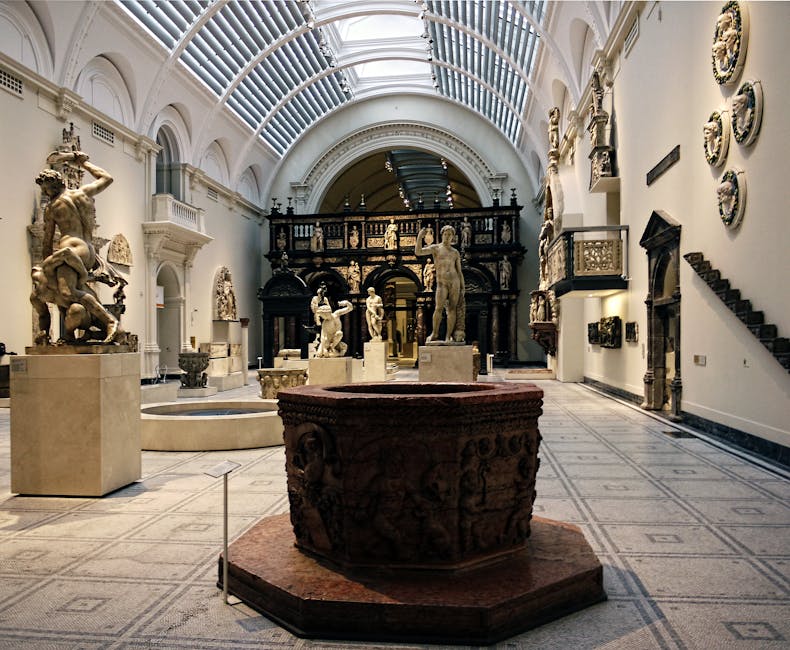
The Victoria and Albert Museum (V&A) in London, England, is the world’s leading museum of art and design. Its vast and diverse collection spans over 5,000 years of human creativity, from ancient times to the present day, covering a wide range of disciplines including fashion, textiles, furniture, ceramics, glass, jewelry, metalwork, sculpture, and painting. The V&A’s collections are global in scope, with significant holdings from Europe, Asia, Africa, and the Americas. Renowned for its fashion and textile collections, the museum often hosts highly anticipated exhibitions that explore the history and evolution of style. The cast courts, featuring full-scale plaster casts of major architectural works from antiquity and the Renaissance, are a unique and impressive feature. The museum’s commitment to design extends to its own stunning architecture, which blends historic buildings with modern extensions. The V&A’s interactive displays, educational programs, and constant rotation of exhibitions make it a dynamic and engaging destination for visitors of all ages. The museum’s courtyard, often featuring temporary installations, provides a welcome space for relaxation.
The Van Gogh Museum in Amsterdam, Netherlands, is dedicated to the works of Vincent van Gogh and his contemporaries. It houses the largest collection of Van Gogh’s paintings and drawings in the world, offering an unparalleled opportunity to trace the artist’s development from his early, somber works to his vibrant, iconic masterpieces. The museum’s collection includes over 200 paintings, 400 drawings, and 700 letters by Van Gogh, providing deep insights into his life, artistic process, and influences. Beyond Van Gogh’s own creations, the museum also showcases works by artists who influenced him or were influenced by him, such as Paul Gauguin, Henri de Toulouse-Lautrec, and Émile Bernard. The museum’s modern building, designed by Gerrit Rietveld and completed in 1973, was expanded with a contemporary addition by Kisho Kurokawa in 1998. The Van Gogh Museum’s immersive exhibitions and accessible presentation of information make it a compelling destination for art lovers and those seeking to understand the life and legacy of one of art history’s most beloved figures. Pre-booking tickets is strongly advised due to high demand.
The Museum of Modern Art (MoMA) in New York City is a globally recognized institution dedicated to fostering understanding and appreciation of modern and contemporary art. MoMA’s collection encompasses a vast array of artistic expressions, including painting, sculpture, drawing, prints, photography, architecture, design, film, and electronic media, spanning from 1880 to the present. Iconic works in MoMA’s collection include Vincent van Gogh’s The Starry Night, Pablo Picasso’s Les Demoiselles d’Avignon, Salvador Dalí’s The Persistence of Memory, and Andy Warhol’s Campbell’s Soup Cans. The museum’s galleries are meticulously organized, allowing visitors to explore different periods, movements, and mediums. MoMA’s commitment to contemporary art is evident in its ongoing acquisitions and its dynamic exhibition program, which often features groundbreaking works by living artists. The museum’s film collection and archives are extensive, offering a significant resource for cinema studies. MoMA’s innovative approach to exhibition design and its integration of digital technologies enhance the visitor experience, making it a vital hub for contemporary artistic discourse.
The Art Institute of Chicago in Chicago, Illinois, is a world-renowned art museum with a remarkably diverse collection that spans centuries and cultures. It is particularly celebrated for its extensive holdings of Impressionist and Post-Impressionist paintings, featuring iconic works such as Georges Seurat’s A Sunday on La Grande Jatte, Grant Wood’s American Gothic, and Edward Hopper’s Nighthawks. Beyond these celebrated pieces, the Art Institute boasts significant collections of ancient and Asian art, European decorative arts, and a comprehensive survey of American art. The museum’s modern wing, designed by Renzo Piano, provides a stunning architectural setting for its contemporary art holdings and offers breathtaking views of Millennium Park. The Art Institute’s commitment to accessibility is reflected in its free admission for children and its numerous educational programs. The museum’s location in the heart of Chicago makes it a central cultural landmark. Temporary exhibitions at the Art Institute are often critically acclaimed, drawing international attention and contributing to the museum’s reputation as a leading cultural institution.
The Louvre Abu Dhabi in Abu Dhabi, United Arab Emirates, is a universal museum designed to bring together the world’s cultural treasures and foster dialogue between civilizations. The museum’s architecture, designed by Jean Nouvel, is a marvel, featuring a striking dome that creates a "rain of light" effect. The permanent collection of the Louvre Abu Dhabi spans millennia and continents, organized thematically to highlight universal human experiences and the connections between different cultures. Highlights include ancient artifacts, Islamic art, European masterpieces, and contemporary works. The museum’s emphasis on universal themes encourages visitors to see the interconnectedness of human history and creativity. Special exhibitions, often in collaboration with Parisian museums, provide further opportunities to experience diverse artistic expressions. The Louvre Abu Dhabi represents a bold vision for cultural exchange and understanding in the 21st century. Its ambitious scope and its prime location on Saadiyat Island make it a significant addition to the global museum landscape.
The Acropolis Museum in Athens, Greece, is a modern archaeological museum built to house the artifacts found on the Acropolis of Athens. Located just 300 meters from the Parthenon, the museum offers a breathtaking setting for viewing the sculptures and architectural fragments that once adorned this ancient citadel. The museum’s design emphasizes transparency and light, allowing visitors to gaze upon the Acropolis itself while exploring the exhibits. The Caryatids, the graceful female figures that once supported the Erechtheion, are a particular highlight, displayed in a dedicated gallery. The Archaic Gallery showcases sculptures from the early periods of the Acropolis’s history. The Parthenon Gallery, located on the museum’s top floor, presents the remaining frieze, metopes, and pedimental sculptures from the Parthenon, allowing for a reconstruction of its original splendor. The Acropolis Museum provides an essential complement to a visit to the archaeological site, offering a deeper understanding of its historical and artistic significance. The museum’s modern architecture and its state-of-the-art presentation of ancient treasures make it a compelling destination for anyone interested in classical antiquity.
These museums, each a repository of immense cultural significance, offer experiences that transcend mere sightseeing. They are places of learning, reflection, and inspiration, inviting visitors to connect with the past, understand the present, and contemplate the future through the enduring power of art, history, and science.