Mastering the Executive Presentation: How Strategic Slide Design Transforms Corporate Communication and Decision-Making

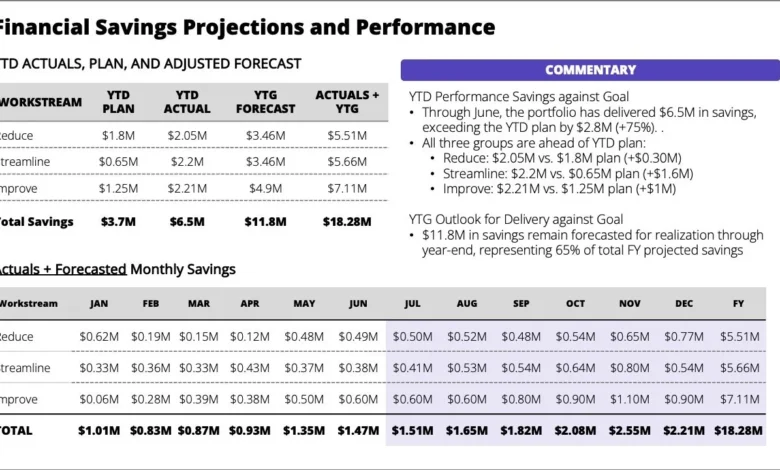
In the fast-paced world of modern corporate governance, the medium through which business performance is communicated often dictates the quality of the strategic decisions that follow. Recent workplace efficiency studies conducted by corporate management analysts indicate that executive leaders spend an average of twenty-three hours per week in meetings, with a staggering percentage of that time consumed by reviewing dense reports, complex spreadsheets, and overburdened slide decks. Within this high-stakes environment, the design of a single corporate slide can either catalyze decisive action or create cognitive gridlock among senior stakeholders. When executives are presented with a standalone slide featuring dense commentary, the core message frequently gets lost in translation. Rather than absorbing the critical takeaway immediately, the reader is forced to laboriously parse through tables, data points, and bulleted text to identify what truly matters and why. A well-crafted pre-read document or briefing slide should function as an efficient intelligence briefing, helping leaders arrive at the boardroom fully informed and primed for strategic debate. Instead, poorly structured presentations leave attendees scanning columns of figures during the meeting itself, severely undermining the efficiency of the executive session.
The friction caused by poorly optimized presentation materials becomes even more pronounced in live delivery settings. When a presenter displays a busy slide filled with multiple tables and competing text blocks, human psychology dictates an immediate split in audience attention. Attendees are forced into a cognitive tug-of-war, attempting to simultaneously read the fine print on the screen while listening to the speaker’s verbal narrative. Even when organizations enforce a policy where stakeholders are expected to review materials in advance, human behavior consistently reveals that participants will revert to hunting for specific details during the live presentation. This multitasking drastically reduces audience engagement, resulting in a passive, disjointed communication experience. Communication experts and presentation designers emphasize that live delivery achieves maximum impact only when attention is deliberately guided. By revealing one cohesive idea at a time rather than dumping an entire data ecosystem onto the screen at once, presenters can maintain absolute control over the audience’s cognitive load and narrative journey.
The Anatomy of a Flawed Executive Slide
To understand why traditional corporate slides frequently fail, one must examine the common pitfalls of information architecture in business settings. Historically, corporate culture has favored the "document-slide hybrid"—a format that attempts to serve simultaneously as a standalone report, a meeting agenda, a teleprompter for the speaker, and a historical archive of metrics. This omnibus approach violates foundational principles of cognitive science, particularly cognitive load theory, which posits that human working memory has strict limitations regarding how much new information it can process simultaneously.
When a slide contains year-to-date performance figures, full-year forecasts, granular financial breakdowns, multiple risk registers, and strategic workstream updates all on a single canvas, the brain experiences sensory overload. In typical enterprise environments, this manifests as a prolonged silence at the beginning of an agenda item as executives silently read the slide, followed by fragmented questions that address peripheral data points rather than core strategic imperatives. The fundamental utility of the meeting is thus degraded, shifting from high-level strategic alignment to a line-by-line audit of textual and numerical minutiae.
Starting with the Purpose: Defining Intent Before Design
To rectify these persistent inefficiencies, corporate communication strategists advocate for a rigorous pre-design phase anchored in intentionality. Being specific about the operational situation and the desired outcome is the single most effective way to improve presentation design. Before opening presentation software or drafting bullet points, communicators must ask three foundational questions: What specific action does this slide need to drive? Who will be consuming this information? And in what physical or virtual setting will this communication occur?
Once these parameters are definitively established, shaping the underlying narrative and selecting the appropriate structural format becomes a streamlined process. For instance, consider a recent enterprise case study where a client needed to communicate a complex operational and financial update to its executive committee. The overarching message was nuanced: although the organization’s year-to-date performance was running comfortably ahead of the initial financial plan, a substantial volume of difficult work remained to secure the projected year-end forecast. Furthermore, the primary call to action for the leadership team was twofold: first, to reiterate strategic priorities to ensure cross-functional teams remained locked onto three critical workstreams; and second, to establish a rapid-response mechanism for quickly escalating any operational blockers threatening the realization of projected cost savings.
In the original, unoptimized version of the presentation, all of this vital context—financial performance deltas, workstream priorities, and escalation protocols—was crammed into a single, text-heavy slide. The result was predictable confusion. By stepping back and articulating the core goal first, the design team was able to determine precisely what information needed to be retained, what could be relegated to an appendix, and how the narrative architecture needed to be restructured to fit the dual demands of pre-meeting distribution and live delivery.
Adapting Content for Asynchronous Pre-Reads Versus Live Settings
A critical error in modern corporate communication is treating pre-reading materials and live presentation slides as interchangeable. They serve fundamentally different cognitive functions and therefore require distinct architectural strategies.
Asynchronous pre-reads are consumed independently, often on desktop monitors or mobile devices days or hours before a meeting takes place. Because the reader controls the pacing, a pre-read can afford a higher density of information, provided it is logically organized with clear hierarchical headings, executive summaries, and easily digestible data tables. The objective of a pre-read is to level the playing field, ensuring that every participant enters the boardroom with an identical baseline of context, freeing up valuable meeting time for debate, dissent, and decision-making.
Live delivery environments, by contrast, operate under entirely different constraints. When presenting in person or via video conferencing, the speaker controls the pacing of the information flow. Consequently, there is no operational necessity to cram every microscopic detail onto a single viewable surface. In a live setting, effective presentations unfold sequentially, moving the audience through a carefully curated narrative arc where each visual element supports one, and only one, specific point.
Structuring the Live Experience: A Step-by-Step Methodology
Transitioning from a cluttered, single-slide dump to an engaging, sequential live presentation requires breaking down complex enterprise data into a logical narrative progression. Rather than showing everything at once, communicators can sequence the information to guide executive attention naturally through the problem, the current reality, and the required action.
Applying this methodology to the aforementioned client scenario—where year-to-date gains had to be balanced against future execution risks—illustrates the power of sequential design. Instead of presenting a monolithic slide displaying financial charts alongside workstream priorities and escalation workflows, the narrative is systematically unspooled across a series of focused visual views.
The first step in the sequence addresses the baseline reality: the current financial standing. By dedicating an initial, uncluttered slide exclusively to the year-to-date performance figures, the presenter establishes credibility and highlights the positive momentum without immediate distraction. The visual focus is narrow, emphasizing that the organization is currently ahead of plan.
Once the positive baseline is established and acknowledged by the room, the presentation logically transitions to the second step: the forward-looking forecast and the inherent gap that remains. This view introduces the reality check, demonstrating that despite current successes, complacency poses a tangible threat to achieving the ultimate year-end targets. By isolating this comparison on its own slide, the speaker ensures that the executive audience fully internalizes the scale of the remaining labor without getting bogged down in how those targets will be operationally managed.
With the context fully established and the stakes clearly understood, the presentation arrives at its third and final sequential phase: the call to action and strategic focus areas. This concluding view outlines the three core workstreams and introduces the rapid-escalation protocol for potential blockers. Because the audience’s cognitive capacity has not been taxed by premature exposure to financial tables and operational text blocks, they are fully receptive to absorbing these priorities and committing to the required operational discipline.
Broader Business Implications and Enterprise Adoption
The implications of adopting deliberate, audience-centric presentation design extend far beyond aesthetic improvements or time saved in meetings; they touch directly upon organizational velocity and strategic agility. In large multinational enterprises, executive bandwidth is arguably the scarcest and most valuable corporate resource. When meetings are bogged down by poorly structured briefing materials, decision-making cycles lengthen, strategic momentum stalls, and employee frustration mounts.
Industry analysts studying corporate productivity have noted a growing trend toward "presentation hygiene" initiatives within Fortune 500 companies. Progressive organizations are increasingly replacing traditional slide decks with structured narrative memos for pre-reads, while restricting live presentations to minimalist, highly visual slide formats designed strictly to reinforce spoken commentary. This dual-track approach respects the distinct cognitive demands of reading versus listening.
Furthermore, standardizing these design principles across an enterprise yields significant cultural benefits. When communication becomes cleaner, more transparent, and less cognitively burdensome, cross-functional collaboration improves. Misunderstandings driven by ambiguous data presentations decrease, and accountability for strategic initiatives becomes sharper. Escalation pathways—often obscured in dense bureaucratic reporting—are brought into high relief, allowing executive leadership to intervene proactively before operational roadblocks metastasize into major business crises.
Ultimately, mastering the art of the executive presentation requires recognizing that slides are not merely storage vessels for corporate data, but active tools for human persuasion and alignment. By carefully analyzing the purpose of the communication, separating asynchronous pre-reads from live delivery formats, and sequencing information to guide audience attention deliberately, organizations can transform their meetings from tedious exercises in document review into dynamic arenas of strategic execution.