The evolution of autonomous AI agents has reached a critical juncture where the mechanism by which models interact with external systems has become as significant as the reasoning capabilities of the models themselves. As developers transition from simple chatbots to sophisticated agents capable of complex workflows—such as financial auditing, logistics management, and large-scale data analysis—the architectural choice between "tool calling" and "code execution" has emerged as a defining factor in performance, cost, and reliability. This decision is not merely a stylistic preference; it is a fundamental engineering trade-off that determines how an agent manages its "context window," handles data privacy, and mitigates the risk of hallucinations during multi-step processes.
Understanding the Mechanics of Agentic Action
To grasp the distinction, one must first define an "action primitive." In the context of LLM-based agents, an action primitive is the bridge between the model’s latent space and the external world. It is the protocol that governs how a model’s intent is translated into a system call, such as a database query, a file operation, or an API request.
Tool calling represents the traditional, highly structured approach. In this paradigm, a model outputs a specific JSON payload designed to trigger a pre-defined function within the host application. The process is synchronous and iterative: the model requests a tool, the environment executes it, and the resulting output is fed back into the model’s context as a new message. This creates a highly auditable, linear trail of "thought-action-observation," which has been the industry standard since the introduction of function calling in models like GPT-4 and Claude 3.
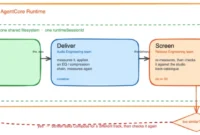
Conversely, code execution—often categorized under "Programmatic Tool Calling"—shifts the paradigm by allowing the model to write and execute its own scripts. Instead of requesting a single data point, the model writes a block of Python or TypeScript code, which is then executed in a sandboxed, secure environment. The model only receives the final output of that execution, rather than the intermediate steps.
The Cost of Context and the Case for Efficiency
The primary motivation for adopting code execution is the optimization of the model’s context window. Consider a scenario involving the reconciliation of twenty employee travel budgets. If an agent utilizes traditional tool calling, it must perform twenty individual queries. Each query returns a list of receipts, all of which are pushed into the model’s active memory. In a practical deployment, this could easily exceed 50KB of raw data—the vast majority of which is irrelevant noise for the final task of calculating a total sum.
This "context bloat" is a hidden tax on agentic performance. By using code execution, the agent can instead write a simple loop to iterate through the expense data, perform the arithmetic internally within the sandbox, and return only the final answer to the model. This reduces token consumption, minimizes latency, and prevents the model from becoming overwhelmed by excessive data points.
Historical Context and Industry Evolution
The trajectory toward code execution began in earnest in early 2024, following the publication of the CodeAct research paper by Wang et al. The researchers demonstrated that agents utilizing code-based action primitives achieved a 20% improvement in success rates on complex, multi-step benchmarks compared to those relying solely on JSON-based tool calls.
Throughout 2025, major industry players accelerated this trend. Anthropic’s integration of Programmatic Tool Calling in November 2025 served as a watershed moment. By introducing the allowed_callers field, the company allowed developers to restrict specific tools to be called only via generated code, creating a secure boundary between the model’s logic and the execution environment. This mirrored the Model Context Protocol (MCP) pattern, which established a standardized way for agents to interface with local or remote resources through code APIs.
Data-Driven Performance Metrics
The shift from tool calling to code execution has yielded measurable improvements in both accuracy and efficiency. Internal benchmarks conducted during the rollout of advanced tool-use features revealed a 37% reduction in token usage for complex research tasks. More importantly, accuracy on the GAIA (General AI Assistants) benchmark increased from 46.5% to 51.2%.
These figures suggest that offloading logic to a deterministic environment—the code interpreter—is superior to relying on the probabilistic reasoning of an LLM for arithmetic or data-structuring tasks. When a model is tasked with keeping track of a dozen intermediate variables in its "head," the risk of logical drift or calculation error increases. By outsourcing this to a programming environment, developers essentially separate "reasoning" (the model’s domain) from "computation" (the environment’s domain).
When to Choose Each Primitive
The choice between these two primitives depends heavily on the specific requirements of the application. Tool calling remains the gold standard for simple, single-shot lookups. If an agent needs to check the weather or fetch a single record from a database, the overhead of spinning up a sandboxed environment for code execution is unnecessary and increases latency. Furthermore, tool calling is preferred when auditability is the highest priority; since every single interaction is logged in the chat history, it is significantly easier to reconstruct the agent’s decision-making process in the event of a failure.
Code execution, however, is the clear winner for fan-out and aggregation tasks. If an agent is required to process large datasets, perform statistical analysis, or execute complex sequences that involve conditional logic, code execution provides a robust, scalable architecture. It is also the superior choice for handling sensitive data. By keeping PII (Personally Identifiable Information) inside the sandboxed environment and returning only the final, anonymized result to the model, developers can significantly reduce the risk of sensitive data leaking into the model’s logs or being stored in the chat history.
Operational Implications for Development Teams
Implementing code execution is not without its challenges. It requires a more sophisticated infrastructure, including secure sandboxing to prevent arbitrary code from compromising the host server. For teams that do not have existing infrastructure for isolated code execution, the barrier to entry is higher than that of simple tool calling.
Moreover, debugging generated code presents a unique hurdle. While a JSON tool call is easy to parse and inspect, debugging a script written by an LLM in real-time requires developers to have visibility into the execution environment. The industry is currently moving toward "hybrid" architectures where agents utilize a tool-calling framework for the vast majority of simple interactions, while reserving code execution for specific, compute-heavy segments of the workflow.
Broader Impact on the AI Ecosystem
The professionalization of agentic action marks a shift toward more reliable, enterprise-grade AI. As companies move away from proof-of-concept prototypes to production-scale agents, the ability to control how an agent interacts with its environment will be the key differentiator between successful deployments and fragile ones.
The integration of these primitives into major platforms signifies a maturation of the field. No longer is the agent expected to "do everything" through text generation; instead, the agent is becoming a manager of specialized, deterministic tools. This separation of concerns—where the LLM handles the intent and the code handles the execution—is the architecture that will likely underpin the next generation of autonomous business systems. As research continues to refine these methods, the distinction between these primitives will likely blur into a unified framework of "Intelligent Execution," where the model seamlessly decides which primitive is most appropriate for the task at hand, further increasing the autonomy and efficacy of future AI systems.
Related posts: