Coronavirus Most Powerful Passports
The Pandemic’s Power Play: Decoding the Most Powerful Passports in the Coronavirus Era
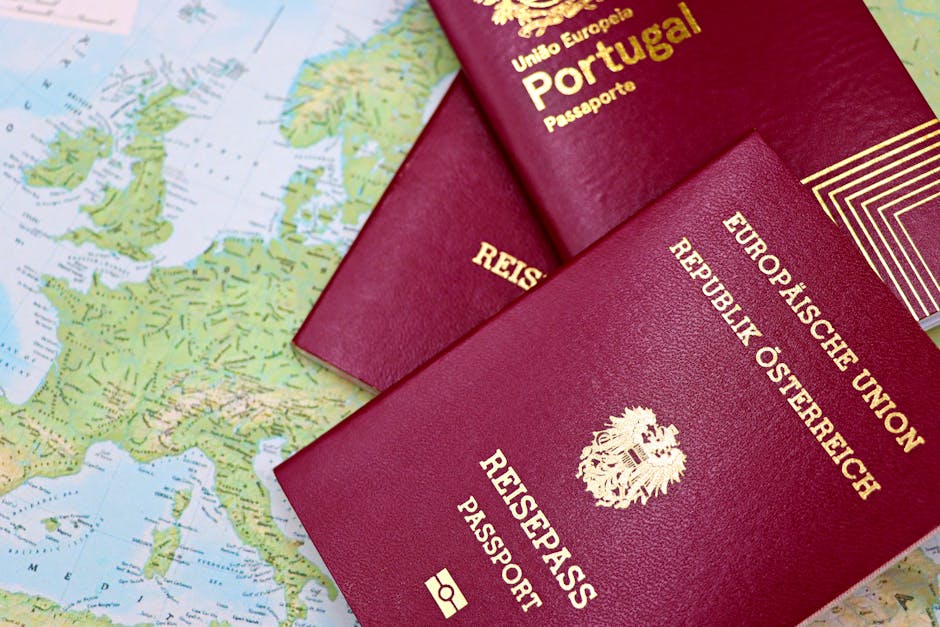
The coronavirus pandemic has irrevocably reshaped global mobility and, by extension, redefined the concept of passport power. While visa-free access has historically been the primary metric for passport strength, the COVID-19 era introduced a complex new layer of considerations: travel restrictions, quarantine mandates, vaccination requirements, and the perceived safety of destinations. This article delves into the passports that have demonstrated the greatest efficacy and resilience in navigating this dynamic global landscape, examining the factors that contribute to their "power" beyond mere visa-free entry, and exploring how the pandemic has permanently altered the criteria for passport dominance. The notion of a truly "powerful" passport has evolved from simply opening doors to ensuring safe passage, privileged entry, and the least amount of friction amidst a landscape of constantly shifting travel regulations.
The Henley Passport Index, a widely recognized benchmark for passport strength, has consistently highlighted the pre-pandemic dominance of East Asian nations. In the post-COVID world, these indices remain relevant, but their interpretation requires a nuanced approach. Passports from countries like Japan, Singapore, South Korea, and the United Arab Emirates have continued to rank highly due to their generally high levels of visa-free access. However, their real-world "power" during the pandemic was heavily influenced by their governments’ ability to negotiate and implement bilateral travel agreements, establish travel corridors, and their citizens’ adherence to public health measures, thereby reducing their perceived risk by other nations. For instance, while a UAE passport holder might have enjoyed visa-free access to many destinations, the effectiveness of this privilege was dictated by whether those destinations were open to travelers from the UAE and under what conditions. The pandemic underscored that a passport’s strength is not just about what it allows you to do, but what the world allows you to do with it.
The concept of "travel bubbles" or "green lanes" became a critical tool for countries seeking to re-establish international travel during the pandemic. Passports from nations that successfully negotiated these agreements, often with countries that had similar or lower infection rates and robust testing and tracing mechanisms, experienced a surge in practical power. This was particularly true for countries that were early adopters of digital health passes and vaccination certificates. The European Union’s Digital COVID Certificate, for example, significantly boosted the practical utility of passports from member states for travel within the bloc. While not a direct passport attribute, the ability of a nation to integrate its citizens into such frameworks and for other nations to recognize these frameworks effectively translated into enhanced passport power for its holders. This highlighted the importance of digital infrastructure and international cooperation in facilitating travel.
The United States passport, historically a symbol of global access, faced a more complex reality during the pandemic. While still granting visa-free access to numerous countries, its power was often curtailed by stringent entry requirements and travel bans imposed by many nations due to the high number of COVID-19 cases. Conversely, countries with strong domestic public health responses and successful containment strategies, even those with historically less "powerful" passports in traditional terms, sometimes found their citizens facing fewer restrictions. This marked a significant shift, where a country’s internal health management became as crucial as its diplomatic agreements in determining passport efficacy. The perceived safety and stability of a nation, as demonstrated by its pandemic response, became a critical factor in other countries’ willingness to grant entry.
The rise of vaccination as a key determinant of international travel also played a pivotal role. Passports from countries with high vaccination rates and demonstrable access to a diverse range of vaccines gained a distinct advantage. This was because many destinations began to prioritize or mandate vaccination for entry, effectively rendering visa-free access secondary to vaccination status. Passports from nations like Israel, which achieved very high vaccination rates early on, found their citizens facing fewer hurdles for international travel, even to countries that were otherwise restrictive. This phenomenon also extended to the recognition of specific vaccines; countries that had authorized a wider range of vaccines were often more amenable to travelers holding passports from nations that administered those approved vaccines.
Furthermore, the economic resilience and recovery trajectory of a nation influenced its passport’s practical power. Countries with strong economies that could afford to implement robust testing, tracing, and vaccination programs were better positioned to negotiate favorable travel agreements and were more likely to be seen as reliable travel partners. This created a feedback loop where economic strength facilitated smoother international travel, further enhancing the perceived power of its passport. Conversely, nations struggling with economic instability and limited healthcare infrastructure often found their citizens facing greater travel impediments, irrespective of their visa-free access entitlements. The pandemic underscored the interconnectedness of public health, economic stability, and international mobility.
The concept of "digital nomad" visas, which gained prominence during the pandemic as a way for countries to attract remote workers, also introduced a new dimension to passport power. Countries offering these specialized visas, often with simplified application processes and favorable tax regimes, effectively created new avenues for passport holders to reside and work internationally, independent of traditional tourist or business visa pathways. This highlighted a strategic use of immigration policy to leverage passport holders’ skills and economic contributions, thereby indirectly increasing the perceived value of those passports. The ability to attract skilled individuals, regardless of their origin country, became a new measure of a nation’s global appeal.
Geopolitical considerations, while always a factor, took on heightened significance during the pandemic. Alliances and existing bilateral relationships influenced the speed and ease with which travel corridors were established. Countries with strong diplomatic ties and a history of cooperation were often quicker to implement reciprocal travel arrangements. This meant that passports from countries embedded within strong regional blocs, such as the Schengen Area in Europe, often retained a higher degree of practical utility for intra-bloc travel, even amidst broader global restrictions. However, the pandemic also revealed the limitations of regional blocs when faced with external threats, as individual nations within these blocs often implemented unilateral restrictions.
The future of passport power in a post-pandemic world will likely continue to be shaped by these evolving dynamics. While visa-free access will remain a fundamental component, the emphasis will increasingly shift towards the traveler’s health status, digital health credentials, and the recipient country’s public health infrastructure. Passports from nations that can demonstrate robust healthcare systems, high vaccination rates, and a proactive approach to public health emergencies will likely hold a sustained advantage. The ability to adapt quickly to new health threats and to foster international cooperation in health surveillance and response will become paramount in determining a passport’s true global power.
Moreover, the increasing sophistication of digital identity and health verification technologies will likely lead to more standardized and interconnected systems for verifying traveler eligibility. Passports that are seamlessly integrated into these digital frameworks, allowing for swift and secure verification of vaccination status and health clearances, will undoubtedly gain a competitive edge. This technological integration promises to streamline international travel, making the "power" of a passport more about its compatibility with global digital infrastructure than its inherent visa-free entitlements.
In conclusion, the coronavirus pandemic has fundamentally reshaped the landscape of passport power. While traditional metrics like visa-free access remain important, the pandemic has introduced a complex interplay of factors including public health response, vaccination rates, digital health credentials, economic resilience, and geopolitical alliances. The most powerful passports in this new era are not just those that grant entry, but those that offer the greatest degree of confidence, security, and seamlessness in navigating a world increasingly defined by health considerations. The ability of a nation to manage its internal health situation and to foster international cooperation in health matters has become as crucial as its diplomatic prowess in determining the true global currency of its passport. The pandemic has served as a stark reminder that in an interconnected world, a nation’s health is its wealth, and its passport’s power is inextricably linked to it.