Airbyte Introduces Unified Context Store for AI Agents, Promising Enhanced Productivity and Reduced Costs

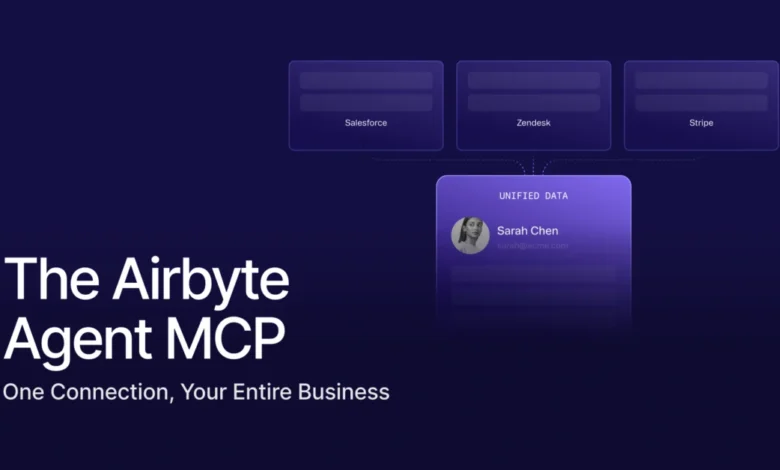
The landscape of artificial intelligence is rapidly evolving, with a surge in the adoption of AI clients and agents for everyday tasks. However, deploying these agents for more complex, data-intensive operations, particularly within business environments, has presented significant challenges. Addressing this gap, Airbyte has launched its Agent MCP (Multi-Client Plugin), a novel solution designed to provide AI agents with a unified and comprehensive view of business data, thereby streamlining operations and optimizing resource utilization.
The traditional approach to integrating AI agents with business systems relies heavily on individual Multi-Client Plugins (MCPs), each querying specific business systems in isolation. While effective for single-tool tasks, this fragmented approach forces agents to manually piece together context from disparate sources. This becomes particularly problematic when agents need to reason across a broad spectrum of an organization’s data. The core issue, as identified by Airbyte, lies in the assumption that raw APIs and most existing MCPs require users to possess pre-existing knowledge of specific endpoints, object IDs, and exact fields. This puts agents at a disadvantage, as their initial step often involves discovery – searching and identifying relevant data sources, parameters, and entities before they can even begin data retrieval. This process grows exponentially more complex as businesses expand and integrate a larger number of systems.
Airbyte’s Agent MCP aims to fundamentally alter this paradigm. By establishing a single connection, it grants AI agents access to an organization’s entire business context, unified and readily queryable. This unified context is powered by Airbyte’s proprietary Context Store, a data index specifically optimized for agentic search. The Context Store consolidates data from across various business systems, creating a cohesive information layer.
The Genesis of the Agent MCP: A Response to Growing Agent Demands
The proliferation of AI assistants like ChatGPT, Claude, and Cursor has underscored the growing need for more sophisticated integration capabilities. As users leverage these tools for increasingly complex workflows, the limitations of fragmented data access became apparent. Airbyte, a company known for its data integration platform, recognized this burgeoning demand for a more cohesive approach to AI agent enablement.
The development of the Agent MCP can be traced back to the observed inefficiencies in current agent deployments. When an agent needs to interact with multiple business systems – for instance, to retrieve customer information from a CRM, check support ticket status from a helpdesk, and review billing records – it traditionally requires separate API calls to each system. This process is not only time-consuming but also computationally expensive, often leading to high token consumption within the AI model’s context window.
Airbyte’s initiative to build a unified MCP was driven by the goal of simplifying this complex interaction. The company’s existing expertise in data connectivity and orchestration provided a strong foundation for developing a solution that could aggregate and present business data in a standardized, easily digestible format for AI agents.
A Singular Connection for Comprehensive Business Context
The Airbyte Agent MCP distinguishes itself by offering a singular point of integration. This unified connection grants an AI agent access to an organization’s entire business context, facilitated by the Context Store. This innovative component acts as a central repository, indexing and optimizing data from across all connected systems for efficient agentic search.
Beyond providing read access to data, the Agent MCP also facilitates direct read and write actions to APIs. This crucial feature empowers agents to not only gather information but also to act upon it, enabling them to update records, create new entries, or trigger workflows within business systems. This bidirectional capability is essential for creating truly autonomous and productive AI agents capable of performing complex operational tasks.
The setup process for the Agent MCP is designed for simplicity and speed. Users connect the Agent MCP once within their chosen AI client. After authenticating with their Airbyte account, individual data sources can be connected directly through the Airbyte UI, utilizing either OAuth or API keys. This streamlined integration minimizes the technical overhead typically associated with connecting multiple disparate systems.
Transforming Agentic Queries from Single-System Lookups to Holistic Insights
With the Agent MCP in place, the nature of agent queries undergoes a significant transformation. Instead of executing single-system lookups, agents can now perform queries that span multiple business functions simultaneously. For example, a request to "find all outstanding issues for our top enterprise clients" can now draw data from CRM, support desk, and billing systems in a unified manner.
Without the Context Store, fulfilling such a request would necessitate multiple API calls, complex data joins, and schema matching across different systems – a process that is prone to errors and significant latency. The Agent MCP, through the Context Store, allows the agent to query a single, unified layer, delivering a comprehensive overview in a matter of seconds.
Furthermore, the enhanced write capabilities of the Agent MCP are crucial for operational efficiency. A growing number of Airbyte’s connectors support write operations, enabling agents to perform actions such as updating customer records in a CRM, creating support tickets in a helpdesk system, or posting updates to collaborative platforms like Slack. This ability to automate actions based on data insights makes AI agents far more valuable in day-to-day business operations.
Significant Efficiency Gains: Reducing Token Consumption and Tool Calls
One of the most compelling benefits of the Airbyte Agent MCP is its impact on efficiency, particularly in terms of token consumption and the number of tool calls made by AI models. Traditional MCPs often flood an AI model’s context window with raw API responses, leading to increased processing costs and potential performance degradation.
In early testing, Airbyte observed that the use of the Context Store resulted in approximately 40% fewer tool calls and up to an 80% reduction in token consumption when compared to querying individual vendor MCPs directly. This significant efficiency gain is attributed to the structured and optimized data provided by the Context Store, which allows the AI model to process information more effectively.
Airbyte conducted comparative tests across five popular connectors: Gong, Linear, Salesforce, Slack, and Zendesk. These tests encompassed scenarios involving data retrieval, listing, and searching. The results consistently demonstrated substantial token savings when utilizing Airbyte’s Agent MCP. For instance, in scenarios involving data retrieval from Salesforce, the Airbyte MCP reportedly achieved a 70% token saving. Similarly, for listing operations in Zendesk, the savings were as high as 80%. Searching for information within Slack also saw significant reductions, with token consumption lowered by approximately 60%.
Airbyte plans to release its benchmark harness publicly, allowing users to replicate these tests and verify the efficiency gains for themselves. This commitment to transparency underscores the company’s confidence in the performance of its new solution.
The Practical Implications of Token Savings: Beyond Cost Reduction
The efficiency savings offered by the Agent MCP extend beyond mere cost reduction. They translate into tangible improvements in AI agent performance and the quality of their outputs. Consider a common request: finding specific information within Slack. While the Slack API offers search functionality, its effectiveness can be hampered by factors such as user permissions, token configurations, and workspace settings. An agent attempting to perform this search directly might need to enumerate channels, parse message histories, and examine individual threads, a process that is both time-consuming and token-intensive.
However, with the Airbyte Agent MCP and its integrated Context Store, Slack data is already indexed. This means the agent can perform a direct, optimized search within the indexed data, bypassing the need to sift through thousands of individual messages. This focused approach keeps the AI model’s context window narrow, providing it with clean, structured data. This allows the model to dedicate more of its computational resources to reasoning and problem-solving, ultimately leading to more accurate and relevant responses. In essence, the efficiency gains enable AI agents to operate with greater clarity and less cognitive load, improving their overall utility.
Ensuring a Consistent and Reliable MCP Experience
A significant challenge in the current AI agent ecosystem is the inherent inconsistency among vendor-specific MCPs. Each MCP returns information in its own unique format, adhering to distinct standards, limitations, and truncation rules. This forces AI agents to dynamically adapt to a multitude of differing data structures and protocols on the fly.
While this can be manageable when an agent is interacting with a single tool, the complexity escalates dramatically when an agent needs to synthesize information from three or four different systems for a single task. The agent is then burdened with deciphering and reconciling the inconsistencies from each source simultaneously. Each additional API call introduces more tokens, increases latency, and heightens the risk of the agent losing track of previously retrieved information.
The Airbyte Agent MCP offers a substantial advantage by providing a consistent and standardized context layer. Because all information flows through the Context Store, the AI agent receives well-structured and uniform context for every task, regardless of the originating system. This uniformity significantly reduces the cognitive load on the AI model, enabling it to process information more efficiently and reliably.
Broadening Access to Advanced AI Agent Capabilities
The Airbyte Agent MCP is positioned to benefit a wide range of users and organizations. It is designed for anyone currently utilizing AI clients like Claude, ChatGPT, or Cursor who aspires to build AI agents that possess a genuine understanding of their business operations. This includes not only technical professionals but also individuals in marketing, human resources, operations, and other departments who have an idea and the necessary tools to implement it.
The product’s ease of use aims to democratize the development of sophisticated AI agents. By abstracting away the complexities of multi-system integration, Airbyte empowers a broader audience to leverage the power of AI for their specific business needs.
The Agent MCP is compatible with a variety of popular AI clients, including Claude Desktop, Claude Code, ChatGPT (with Developer Mode enabled), Cursor, VS Code Copilot, Codex, and any other client that supports the MCP standard. The setup process is reportedly straightforward and takes only a few minutes, irrespective of the client chosen.
Current Status and Future Outlook
Airbyte’s Agent MCP is launching with a robust foundation, offering 50 production-ready connectors that cover a wide array of critical business systems. These include widely adopted platforms such as Salesforce, HubSpot, Zendesk, Jira, Slack, GitHub, Stripe, Gong, and Linear, among others. The company has indicated a commitment to expanding its connector library, with new additions slated for release on a weekly basis.
The Context Store, serving as the unified layer for business context, is now available. Airbyte acknowledges that further development is ongoing and encourages users to anticipate future feature releases. While the current offering is functional and already demonstrating tangible results for early adopters, Airbyte emphasizes its commitment to an open development process, aiming to collaborate with the community on future enhancements.
The Agent MCP is currently available with a generous free plan, catering to initial experimentation and smaller-scale deployments. Paid plans are offered for users who scale their usage, ensuring that the solution can adapt to the evolving needs of growing businesses.
For detailed setup instructions and a comprehensive list of supported clients, users are directed to the official MCP documentation. The overarching message from Airbyte is clear: one MCP can unlock access to an entire business’s context, empowering AI agents with the intelligence they need to drive significant operational improvements. The company invites users to explore the capabilities of the Agent MCP and experience its transformative potential firsthand.